
Inside Milan’s High-Impact Security Sweeps: How Coordinated Multi-Agency Crackdowns Target Urban Crime and Transit Hubs

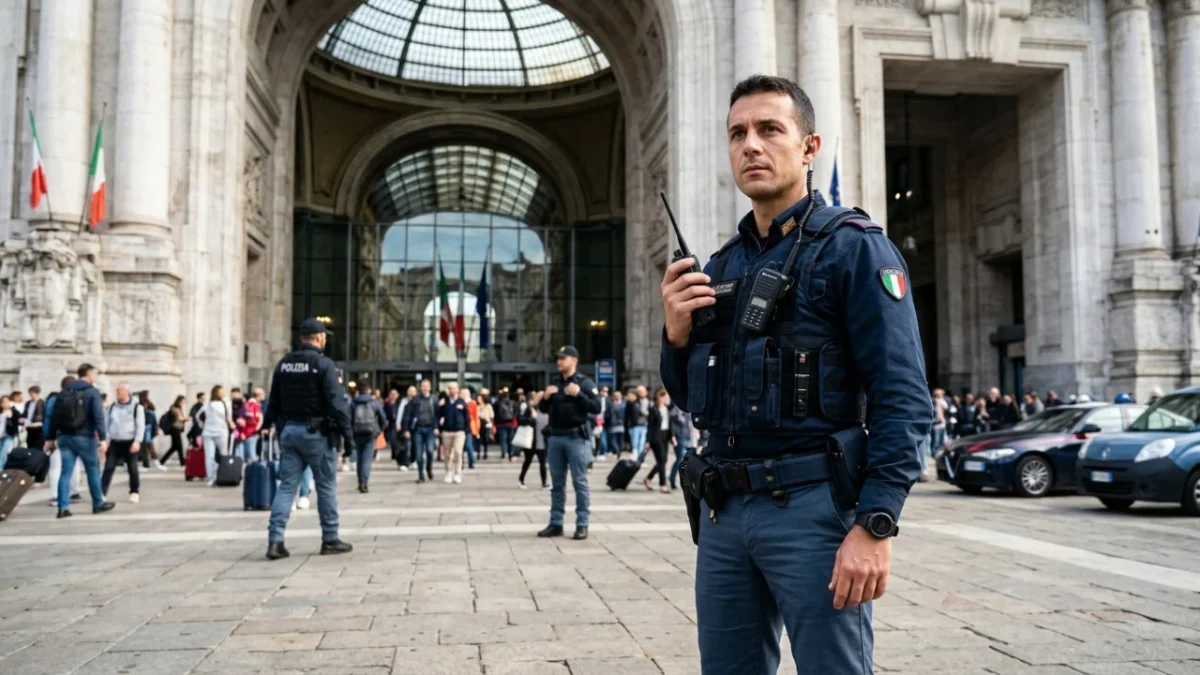
Large-scale police sweeps in major European transit centers rely on simultaneous, multi-agency cordons designed to neutralize organized illicit networks in concentrated urban pockets. When metropolitan authorities launch a wide-scale Milan security blitz, the objective centers on high-density transit corridors, commercial plazas, and persistent street-crime zones to execute outstanding warrants and interdict immediate offenses.
Coordinated interventions of this magnitude often yield dozens of detentions in a single operational window. Past large-scale sweeps across the Lombardy capital have produced tallies reaching 79 arrests across targeted neighborhoods, demonstrating the sheer scale required to disrupt entrenched black markets.
Executing an urban operation with scores of simultaneous detentions requires an intricate tactical architecture before officers ever step into the streets.
What Defines a Multi-Agency Enforcement Operation in Milan?
In Italy, the term “maxi blitz” refers to a pre-planned, saturation-style enforcement wave executed jointly by state and municipal branches. Rather than relying on standard neighborhood beats, these mobilizations integrate the Polizia di Stato (national state police), the Carabinieri (gendarmerie), the Guardia di Finanza (financial and customs police), and local municipal units.
This unified command structure targets high-friction public zones. Commercial avenues, suburban commuter rail nodes, and the immediate perimeter of central transit centers face comprehensive perimeter lockdowns.
By closing off transit choke points, units can verify identification records, inspect suspicious commercial venues, and track narcotics pipelines without allowing suspects to scatter into surrounding districts.
The Anatomy of Coordinated Transit and District Sweeps
Coordinated sweeps do not happen on impulse; they represent the culmination of weeks of digital surveillance and intelligence gathering. Officers map street-level activity around critical travel nodes to pinpoint distribution rings and repeat offenders with pending judicial warrants.
- Perimeter Isolation: Tactical teams seal off specific subway exits, square entrances, and side alleys to prevent rapid exits.
- Cross-Agency Screening: Federal officers cross-reference international watchlists while financial authorities audit licensing and point-of-sale systems in nearby businesses.
- Canine and Tactical Search Units: Specialized drug-detection and weapons teams sweep lockers, luggage storage facilities, and communal benches.
- Expedited Processing: Transport vans rapidly transfer detained persons to centralized processing stations to maintain order on the street level.
Large-scale urban interventions rely on simultaneous perimeter control; without sealed exit corridors, high-density public sweeps lose operational effectiveness within minutes.
The Contrast: Targeted Raids vs. Routine Urban Patrols
A persistent public misconception is that massive enforcement waves represent everyday policing in European hubs. In reality, everyday foot patrols prioritize visible deterrence and minor dispute resolution, whereas an orchestrated operation operates under specialized administrative mandates.
Routine patrols lack the legal infrastructure to execute broad-brush document checks across hundreds of civilians within a few square blocks. An organized sweep, by contrast, deploys dedicated magistrates and immediate transport pipelines to process dozens of individuals under pre-cleared judicial parameters.
| Enforcement Type | Operational Scope |
|---|---|
| Routine Metro Patrols | Visible deterrence, responsive calls, and baseline community safety monitoring. |
| Multi-Agency Sweep | Coordinated cordons, mass warrant executions, and immediate commercial audits. |
Navigating Public Safety Realities in Major Metros
For international visitors and cross-border commuters, encountering a sudden deployment of tactical personnel, search dogs, and mobile command centers can feel alarming. However, understanding standard procedures prevents unnecessary complications during high-intensity sweeps.
- Carry Verifiable Identification: Under local regulations, authorities retain the legal right to request government-issued identification from anyone in a public zone. International travelers should keep physical passports or certified national identity cards accessible.
- Follow Designated Detours Calmly: If subway access points or public plazas are cordoned off with operational tape, avoid lingering or attempting to bypass security perimeters for photos.
- Monitor Verified Municipal Updates: Operation specifics and transit impacts shift rapidly during active law enforcement activity; commuters should verify station statuses through official regional transit portals rather than social channels.
Law enforcement frameworks in dense transit corridors continually adapt their tactical playbooks to address emerging street patterns and jurisdictional priorities.
💬 Multi-agency security crackdowns highlight the delicate balance between transit accessibility and aggressive public safety enforcement.
📱 Staying informed on urban transit protocols ensures seamless navigation whenever major hubs initiate unexpected security operations.
👇 Have you ever witnessed a massive transit security sweep firsthand while traveling? Drop your thoughts and observations in the comments below.
 1
 2
 3
 4
