
When Are the US Midterm Elections Date? The 2026 Vote Is Set for November 3 With Full Control of Congress on the Line

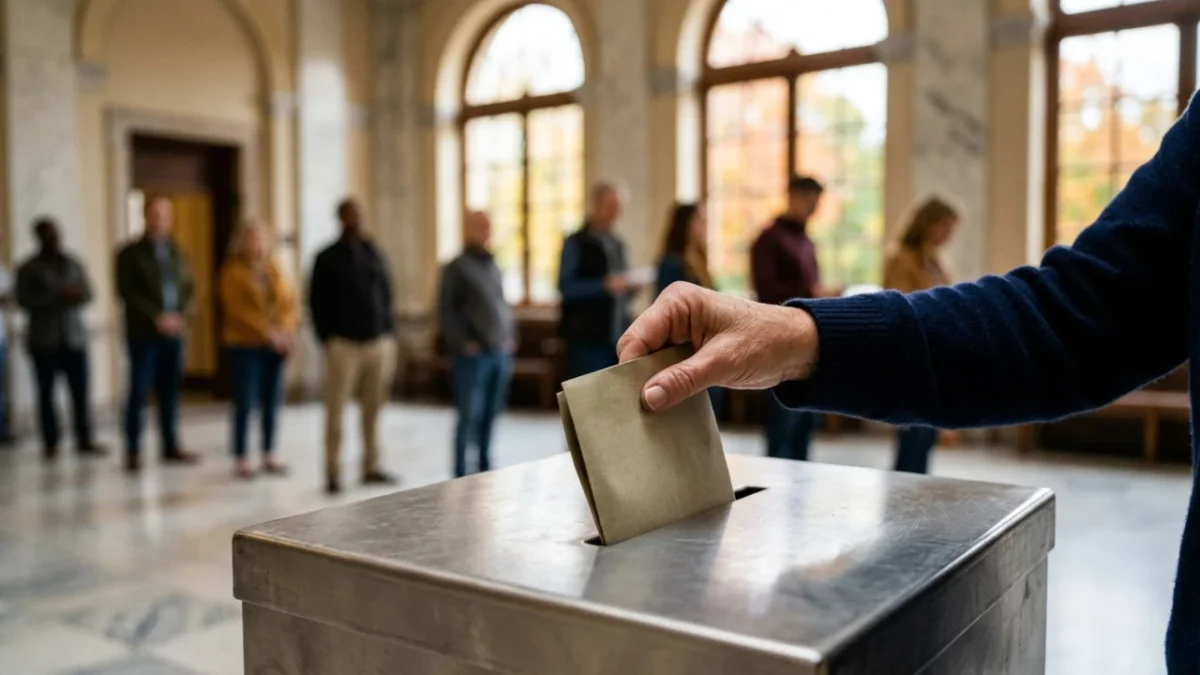
The official US midterm elections date is set for November 3, sending voters across the nation to polling stations to settle pivotal races for Capitol Hill and statehouses. By federal law, general election balloting occurs on the first Tuesday after the first Monday in November, placing the high-stakes 2026 vote squarely on the calendar.
Every single seat in the House of Representatives alongside more than a third of the Senate is on the line. With razor-thin margins currently defining Washington, this national vote acts as a direct referendum on executive power and legislative priorities.
Beyond determining congressional majorities, voters are deciding high-profile gubernatorial contests and critical state ballot initiatives addressing everything from taxes to healthcare access.
How the Midterm Election Calendar Is Decided
Federal statute dictates the exact timing of federal general elections to ensure uniformity across all fifty states. The formula—the first Tuesday following the first Monday in November—prevents the election from ever falling on the first day of the month.
This scheduling structure guarantees that midterms consistently occur exactly two years into a presidential four-year term. While the presidential seat is never on the ballot during a midterm cycle, the outcome directly shapes the legislative boundaries of the administration.
Midterm elections serve as a direct national check on the executive branch, shaping the legislative agenda for the final two years of a presidential term.
Because congressional schedules revolve entirely around these biennial cycles, campaigns and local election boards synchronize voter registration deadlines, early voting periods, and mail-in ballot drop-offs around this single November benchmark.
What Is on the Ballot: Senate, House, and State Contests
The stakes on the US midterm elections date extend across both chambers of Congress as well as down-ballot leadership posts. Democrats need a net gain of four seats to capture the Senate majority, while Republicans hold 53 seats heading into the contest.
Over in the House of Representatives, the math is even tighter. Democrats need a net gain of just three seats to reclaim the speaker’s gavel, navigating a total landscape of 435 district races across the map.
The 2026 Congressional Landscape
The Senate battle revolves around 35 contested seats, featuring five designated toss-up races that election analysts view as the decisive tipping points. Meanwhile, the House contest features 11 major toss-up districts where recent redistricting has intensified competition.
In addition to federal representation, thirty-six states are holding elections for governor. These gubernatorial outcomes will carry long-term consequences for state-level judicial appointments, local infrastructure, and regional policy agendas.
| Chamber / Contest | Seats Up for Election |
|---|---|
| U.S. House of Representatives | All 435 seats |
| U.S. Senate | 35 seats |
| Control Threshold: House | 218 seats needed for majority |
| Control Threshold: Senate | 51 seats needed for majority |
| Party Margin: House | 219 Republicans / 214 Democrats |
| Party Margin: Senate | 53 Republicans / 47 Democrats |
Myth vs. Reality: Midterm Election Powers
A widespread misconception is that midterm elections have the legal authority to remove a sitting president from office directly. In reality, a midterm vote cannot replace the president, whose term is strictly secured for four years under the Constitution.
However, the real power lies in legislative friction. Flipping control of either congressional chamber gives the opposing party subpoena power, committee gavels, and the decisive authority to stall nominations, block judicial appointments, or halt the executive legislative agenda completely.
Steps to Cast Your Ballot on Election Day
- Verify your polling location: Precinct boundaries frequently shift following local redistricting, making it essential to confirm your assigned precinct address before heading out.
- Review state identification mandates: Ensure you carry the precise photo ID or proof of residence required by your state’s voting laws.
- Confirm polling hours: Polling stations follow state-specific hours, but anyone standing in line prior to the official closing time maintains the legal right to vote.
- Track mail-in ballot delivery: If voting absentee or by mail, check that completed ballots meet strict postmark and submission deadlines.
📱 Keeping track of critical voting windows ensures your voice is registered on major decisions affecting local communities and federal policy alike.
✨ From Capitol Hill to state capitals, every vote cast plays a measurable role in defining governance for the next two years.
💬 Drop your thoughts in the comments below on which key races you are tracking closely this election cycle!
 1
 2
 3
 4
