
Senate Shocker: Defeated Democrat Backs GOP Rival as Battle for Congress Reaches Boiling Point in 2026 Midterm Elections

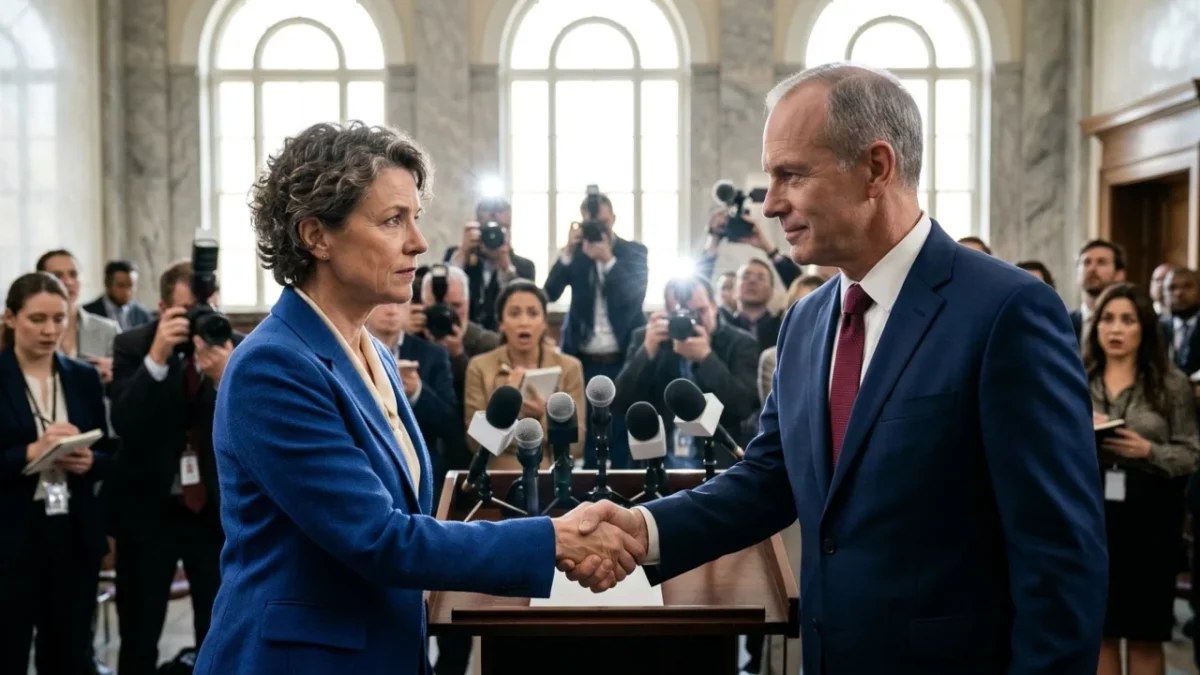
The fight for congressional power has reached a dramatic flashpoint as voters across the country prepare to decide the midterm elections 2026. Control of the Senate has been jolted by an unexpected cross-party endorsement in Michigan, tightening races across traditional strongholds, and lingering economic pressure from record-high gas prices.
Polling conducted by The New York Times and Siena University reveals that Democrats hold leads in six of seven pivotal battleground states that will decide the Senate chamber. Yet, intraparty rifts and aggressive legal fights are rattling both parties down the final stretch.
With razor-thin margins in play, even the smallest tactical surprise could reshape the legislative agenda in Washington for years to come.
The Michigan Shakeup and Fractured Party Lines
Michigan has suddenly become ground zero for internal Democratic turbulence. Representative Haley Stevens officially endorsed Republican nominee Mike Rogers for the U.S. Senate, breaking ranks after her primary defeat to Dr. Abdul El-Sayed.
“I am endorsing Mike Rogers for the United States Senate today,” Stevens said. “I don’t belong in Abdul’s campaign.”
The move triggered immediate outrage from Democratic leadership. Senate Democratic Leader Chuck Schumer publicly slammed the endorsement as a “despicable betrayal,” while El-Sayed brushed off the maneuver, insisting his campaign remains focused squarely on voters.
Despite the high-profile endorsement, recent polling still shows El-Sayed maintaining a double-digit lead over Rogers, underscoring the deep divide between establishment endorsements and grassroots polling strength.
Uncovered Shadow Networks and Digital Warfare
The race in Michigan also spotlighted an alarming shift in online political interference. Investigations have revealed that for-hire digital operations based in India deployed coordinated bot accounts across social platforms during the Michigan primary.
- Targeted Influence: Disinformation researchers identified dozens of accounts on X operating out of India that pushed videos swaying Democratic primary voters, generating over seven million views.
- Loophole Exploitation: Political consultancies leveraged virtual private networks (VPNs) and altered account origins to bypass platform advertising standards on Meta and Google networks.
- Mercenary Tactics: Consultants involved openly acknowledged creating altered video clips and running shadow campaigns designed to damage opponent reputations without formal candidate disclosures.
“We are manipulating elections; there is no other way to say it,” stated Tushar Giri, a New Delhi-based political consultant working on shadow campaigns.
Battleground Map: Key States Deciding Senate Control
The path to a Senate majority runs straight through seven core battlegrounds where voter turnout will determine legislative control.
| Battleground State | Current Senate Outlook |
|---|---|
| Michigan | El-Sayed holds a double-digit edge despite Stevens’ endorsement of Rogers. |
| Iowa | Effectively tied between Ashley Hinson and Democratic challenger Josh Turek. |
| Alaska | Incumbent Dan S. Sullivan faces a tight margin and pre-emptive legal disputes. |
| Kansas | Republican Roger Marshall faces an unexpectedly tight race against Adam Hamilton. |
| Texas | Polling indicates a sizable advantage for the Democratic challenger. |
| Maine & Ohio | Democratic candidates maintain stable leads heading into the vote count. |
Court Interventions and Shifting Ground Games
Legal challenges have simultaneously surfaced in key states. A federal judge recently rejected an attempt by the Trump administration to pre-emptively intervene in Alaska’s state-administered Senate race, marking another courtroom defeat over local ballot administration.
Meanwhile, campaign itineraries signal unexpected vulnerabilities. Presidential campaign stops in historically conservative bastions like Kansas highlight serious Republican defense efforts, as voter dissatisfaction over economic strains and foreign conflict in Iran dampens turnout enthusiasm.
High gas prices reaching historic levels have added friction to the trail, forcing candidates from both sides of the aisle to pivot their messaging on everyday living costs.
Myth vs. Reality in Modern Polling Surprises
A widespread assumption in campaign politics is that sudden, high-profile cross-party endorsements instantly erase a frontrunner’s lead. Yet state-level survey data paints a far different picture.
While cross-party endorsements dominate cable news headlines and generate massive social media outrage, data confirms that core voting blocs in races like Michigan remain largely resilient. Policy priorities, candidate trust, and local ground organizing continue to outweigh late-breaking endorsement drama.
Outside of Washington, high-profile figures are already mapping out the future. In California, Governor Gavin Newsom and former Vice President Kamala Harris reunited on stage to rally voters for Xavier Becerra, balancing present congressional stakes with the looming national horizon.
📱 As the final ballots are cast, the balance of power across Washington rests entirely on how turnout unfolds across these battlegrounds.
✨ State-level margins could determine whether the incoming Congress works alongside the White House or launches an era of divided government.
💬 Drop your thoughts in the comments below: Which Senate battleground will deliver the biggest surprise?
👇 Share this breakdown with your network to keep your community informed as election results roll in.
 1
 2
 3
 4
