
The FDA Cleared Over 1,500 Medical AI Devices and Next-Generation Obesity Pills, but the Difference Between Clearance and Real Clinical Proof Is Staggering

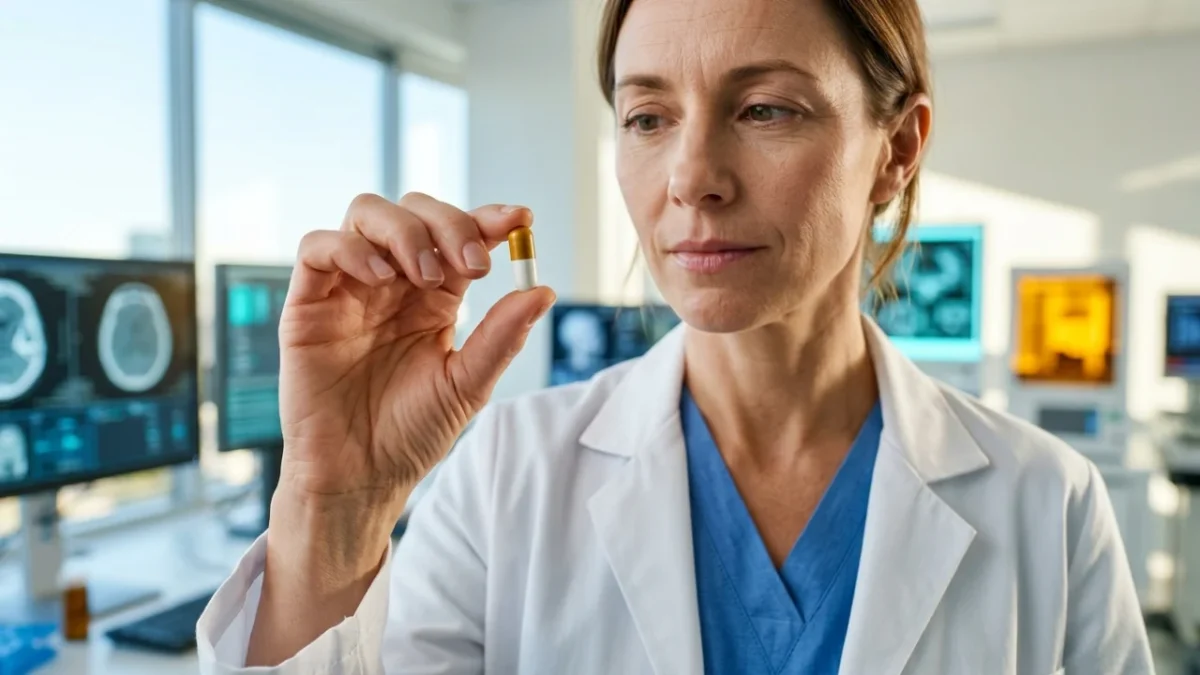
The US Food and Drug Administration has crossed an unprecedented threshold, authorising 1,524 artificial intelligence medical tools alongside radical new oral therapies, yet regulatory clearance rarely guarantees these technologies improve patient outcomes.
While industry headlines routinely celebrate these decisions as monumental scientific triumphs, the real story unfolding inside hospital wards and clinical research facilities is far more nuanced. Clinicians are discovering that gaining market entry through federal regulators is merely the opening hurdle in a complex journey towards verifiable medical efficacy.
From algorithmic diagnostic suites reading mammograms to artificial intelligence-designed oral tablets aiming to dismantle the injectable obesity market, the regulatory landscape is shifting at breakneck speed.
The Hidden Mechanics Behind 1,500 Authorised Algorithms
A recent review of the federal agency’s running tally revealed that 1,524 artificial intelligence-enabled medical devices have received official commercial authorization. Approximately three out of every four authorised tools sit within radiology, assisting specialists with scan interpretation, triage, and lesion identification.
However, securing an official green light does not automatically mean a National Health Service trust or an American medical centre will incorporate the tool into daily practice. Clearances confirm that a product can legally be marketed, not that it delivers superior survival rates or tangible cost reductions across large populations.
Medical software often enters commercial distribution through specific evaluation channels that bypass extensive randomised controlled trials entirely.
The Three Pathways to Market
Manufacturers seeking clearance from the FDA typically navigate one of three distinct regulatory classifications:
- The 510(k) Clearance Pathway: The most prevalent route, requiring a business to demonstrate its device is “substantially equivalent” to an existing tool already on the market, usually evaluated through technical performance checks rather than human trials.
- De Novo Classification: Designed for novel devices presenting low-to-moderate risks that lack a direct commercial comparison, establishing a new category for future products to benchmark against.
- Premarket Approval (PMA): The most demanding standard, reserved exclusively for high-risk equipment and novel life-sustaining machinery, mandating rigorous clinical trial evidence before patient exposure.
Because the overwhelming majority of machine-learning models secure entry via the 510(k) route, the common perception that cleared software is universally superior to human judgement remains unproven in frontline environments.
Pills Replacing Injections: The Next Metabolic Frontier
Beyond hospital computer systems, algorithmic innovation is aggressively reshaping pharmaceutical research pipelines. Ascletis Pharma recently submitted an Investigational New Drug application to the agency for ASC39, a proprietary oral tablet engineered to treat obesity without needles.
Developed using artificial intelligence-assisted structure-based drug discovery, ASC39 operates as a selective small molecule amylin receptor agonist. Preclinical laboratory assays demonstrated 40-fold selectivity for the human amylin 1 receptor over the calcitonin receptor, mimicking the pharmacological profile of peptide analogues like eloralintide.
In animal models, once-daily oral administration of ASC39 triggered a 6.6 per cent placebo-adjusted reduction in body weight across just six days of treatment.
Unlike injectable GLP-1 therapies currently straining national supply chains, this non-incretin candidate presents a shelf-stable oral alternative. The developer plans to initiate human Phase I clinical trials before the end of the year, testing ASC39 both as a standalone pill and as part of fixed-dose combinations.
High-Stakes Oncology and Preventative Accelerators
The regulatory agenda continues to move on multiple urgent clinical fronts simultaneously. The agency granted full approval to Jemperli for specific adult patients suffering from locally advanced rectal cancer, offering targeted immunotherapy to eliminate tumour burdens without invasive surgery.
In parallel, federal regulators launched a dedicated accelerator initiative aimed at expediting early diagnostics and intervention strategies for Alzheimer’s disease prevention. This coordinated move intends to identify cognitive deterioration years before irreversible brain tissue atrophy sets in.
Yet vigilance remains mandatory across consumer health. The agency recently recalled dangerous over-the-counter male enhancement supplements after laboratory tests detected undeclared, hazardous active pharmaceutical ingredients hidden inside ordinary packaging.
💡 The rapid expansion of cleared medical software and computational drug candidates proves that digital biology has arrived, but hospital procurement teams are demanding real-world performance data before signing long-term contracts.
🔍 As novel oral metabolic pills enter formal human trials, regulators face growing pressure to ensure algorithmic discovery delivers genuine safety alongside headline-grabbing efficiency.
📌 The coming months will determine whether these cleared tools truly revolutionise bedside care or simply flood hospital servers with unverified digital noise.
👇 Would you trust an artificial intelligence system to interpret your hospital scans, or do you insist on human-only analysis? Share your thoughts below.
 1
 2
 3
 4