
The High-Orbit Paradox: As Superpowers Eye Lunar Conquest, Astronauts Aboard the International Space Station Face an Unforgiving Survival Test

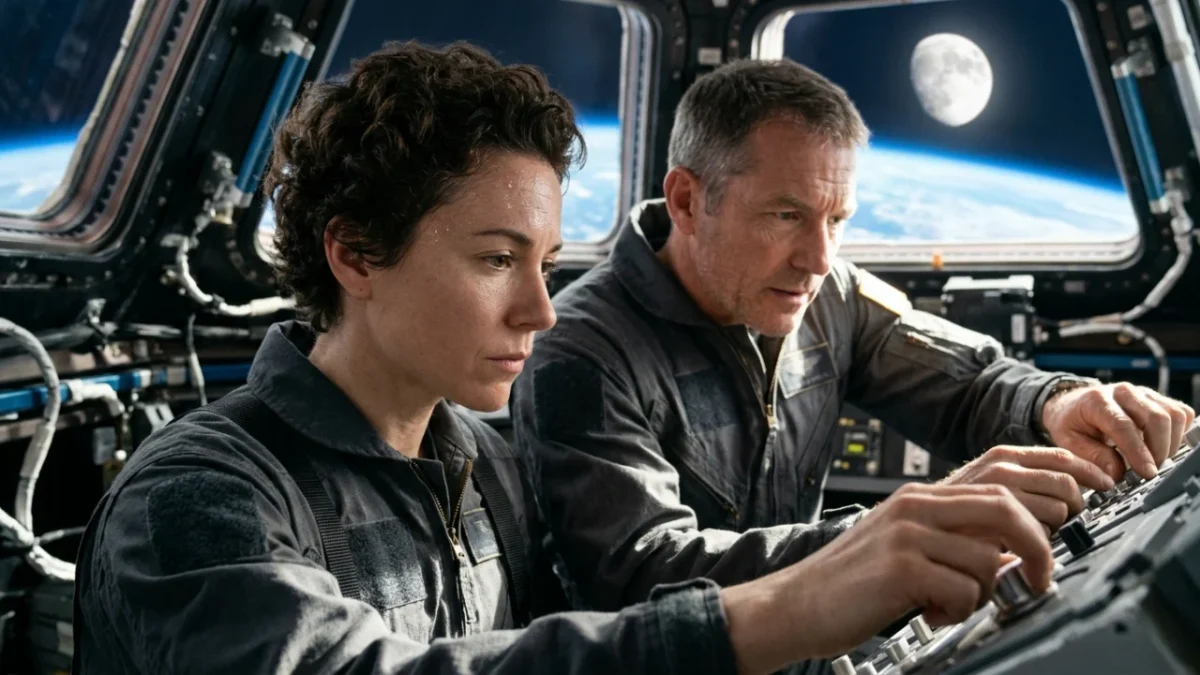
The greatest threat to human expansion across international space is not rocket failure, but the ancient territorial instinct humans carry into orbit. While terrestrial superpowers clash over resource claims on the Moon and execute strategic manoeuvres on the high frontier, the crews maintaining human life beyond the atmosphere operate under an entirely opposite reality: absolute, non-negotiable mutual dependence.
In orbit, ideological hostility is a fatal liability.
Life aboard the International Space Station demonstrates that biological survival in the vacuum does not distinguish between national borders. When technical alerts trigger in low Earth orbit, American, Japanese, European, Canadian, and Russian specialists must protect each other to survive.
The Fragile Equilibrium of Low Earth Orbit
The physics of orbital habitat architecture enforces immediate cooperation. When air recycling loops degrade, solar arrays slip alignment, or orbital debris threatens hull integrity, survival requires instantaneous synchronisation across international partner modules.
This dynamic was sharply displayed during joint station expeditions featuring NASA astronauts alongside Roscosmos cosmonauts and JAXA specialists. Figures such as Zena Cardman, Mike Fincke, Nichole Ayers, Anne McClain, and Jonny Kim have shared critical station operations with Russian counterparts including Sergey Ryzhikov, Oleg Platonov, Kirill Peskov, and Alexey Zubritsky, alongside Japanese astronauts Kimiya Yui and Takuya Onishi.
Each crew member depends entirely on the collective discipline of the others.
Beyond daily operations, mission complexity continues to expand as allied agencies take on vital exterior assembly roles. In recent mission planning, Canadian Space Agency astronaut Joshua Kutryk has stepped into a major operational profile for complex spacewalk tasks, demonstrating how multinational integration remains essential for maintaining exterior hardware.
- Closed-loop survival: A malfunction in water reclamation or atmospheric scrubbing in one module rapidly endangers the entire station.
- Shared orbital defence: Station-keeping manoeuvres and thruster burns require seamless communication between flight controllers in Houston and Moscow.
- Operational interdependence: Spacewalk execution demands external robotic operations coordinated across international mission control teams.
The High Frontier Versus Ancient Instincts
Human intelligence evolved through competition for scarce resources, where vigilance, tribal territoriality, and immediate defense against outside groups ensured species survival. As aerospace technology accelerates, humanity is preparing to transport those deep evolutionary reflexes to the Moon and Mars.
The paradox is stark: engineering has outpaced human social development.
Lunar exploration initiatives now face contested landing sites, strategic access corridors at the lunar south pole, and proprietary claims over volatile water-ice deposits. The potential militarisation of orbital space creates growing friction as ground stations track sophisticated orbital manoeuvres by rival powers seeking space superiority.
Resource Scarcity in Deep Space
Settlements established beyond low Earth orbit will lack the safety net of rapid terrestrial evacuation. On planetary bodies where radiation shielding, oxygen generation, and thermal regulation are perpetually fragile, competitive terrestrial governance frameworks quickly break down.
If future lunar bases reproduce terrestrial divisions, individual outposts will compound their vulnerability. Survival on an airless surface demands total systemic resilience, where technical failure cannot be managed within political silos.
Space history continues to honour those who bridge the technical domain. Aviator and test pilot Doug Matthews, newly recognised for induction into the International Air & Space Hall of Fame, exemplifies the long line of operational pioneers who pushed performance envelopes through disciplined engineering rather than diplomatic confrontation.
Technological brilliance without moral maturity simply exports old conflicts into deeper orbits.
Whether future crews establish sustainable settlements or replicate historical expansion struggles depends on whether humanity recognises space as an unforgiving shared territory. The laws of orbital mechanics enforce a clear rule: collaborate completely, or fail together.
💡 The real challenge of interplanetary settlement will not be rocket propulsion, but our ability to leave territorial friction behind on the launchpad.
🔍 As commercial consortia and national space programmes press forward, the delicate cooperation on the space station remains our most valuable blueprint.
👇 Can humanity build lasting settlements on the Moon and Mars without exporting terrestrial rivalries? Share your perspective in the comments below.
 1
 2
 3
 4