
The Stolen Hog, the Star-Crossed Lovers, and the Midnight Ambush: What Really Ignited America’s Deadliest Appalachian Blood Feud

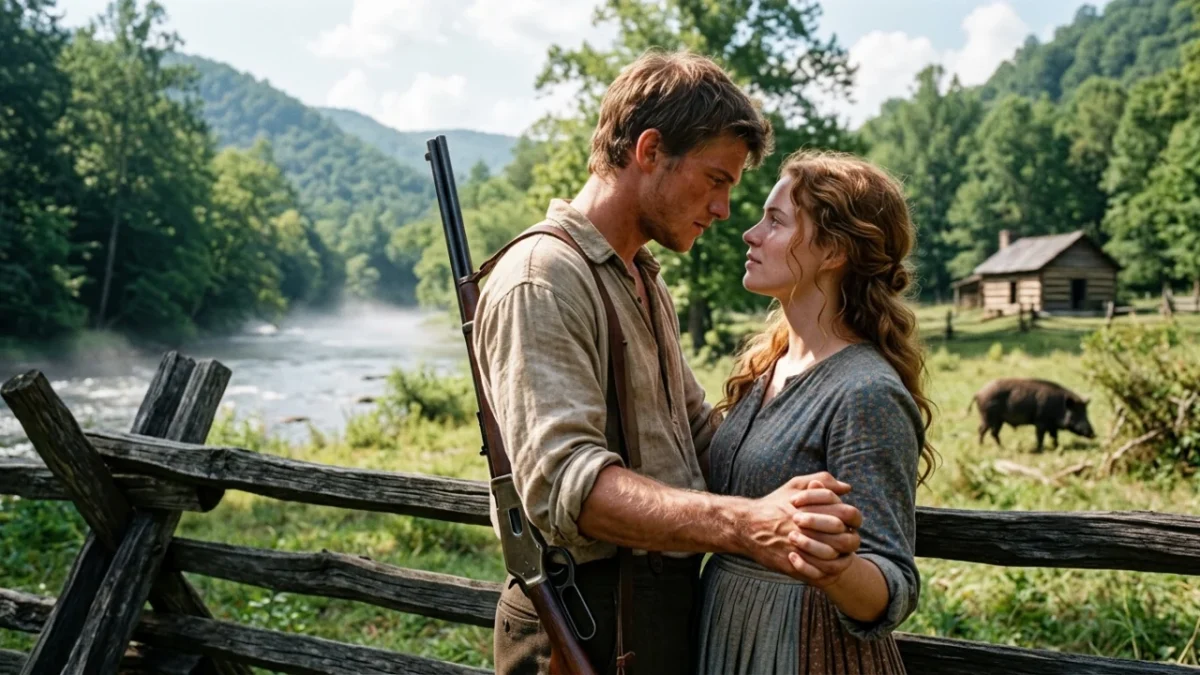
The legendary Hatfield McCoy feud was never just an eccentric backwoods squabble over a stray razorback pig; it was a brutal, decade-long cycle of post-Civil War vengeance, industrial encroachment, and legal warfare that claimed at least a dozen lives across the rugged borderlands of Kentucky and West Virginia. What began as simmering resentment between two frontier families escalated into full-scale guerrilla warfare that ultimately forced state governors to mobilise their militias and drew the United States Supreme Court into an unprecedented Appalachian showdown.
At the epicentre stood two unyielding patriarchs: William Anderson “Devil Anse” Hatfield, a savvy West Virginia timber merchant and Confederate veteran, and Randolph “Old Ran’l” McCoy, a bitter Kentucky farmer harbouring profound wartime grievances. Their clash came to define mountain justice in American history.
To understand how neighbouring homesteads descended into armed skirmishes, one must strip away the folklore and examine the verified flashpoints that turned kin against kin along the Tug Fork river.
A Disputed Razorback and a Post-War Grudge
Tensions initially took root in the ashes of the American Civil War. The Hatfields had largely fought for the Confederacy, whilst several McCoys served the Union, planting a baseline of political suspicion that split the Tug Valley along factional lines.
The first bloodshed occurred in 1865 when Randolph McCoy’s brother, Harmon McCoy, was assassinated after returning home from Union service. Suspicion immediately fell upon a local Confederate guerrilla unit known as the Logan Wildcats, organised by Devil Anse Hatfield, though no formal charges ever stuck.
Thirteen years later, an absurd domestic dispute reignited that dormant hostility. In 1878, Randolph McCoy accused Floyd Hatfield of retaining a stolen hog bearing the McCoy ear-notch notch mark.
The matter went before a local justice of the peace, Anderson Hatfield, who assembled a jury of six Hatfields and six McCoys to settle the civil claim. When Starling McCoy, a cousin allied by marriage to the Hatfields, cast the deciding vote in favour of Floyd Hatfield, the McCoy clan was incandescent with rage.
Two years after the verdict, two McCoy brothers ambushed and killed key prosecution witness Bill Staton, setting off an unstoppable spiral of retribution.
Forbidden Romance in the Tug Valley: Roseanna and Johnse
The vendetta assumed tragic, Shakespearean proportions in 1880 when Randolph McCoy’s eighteen-year-old daughter, Roseanna McCoy, met Devil Anse’s eldest son, Johnse Hatfield, at an election ground gathering. Within hours, the pair slipped away together across state lines.
Roseanna moved directly into the Hatfield compound, an arrangement that Randolph McCoy viewed as a calculated, public humiliation of his entire household. The liaison was doomed from the outset.
When Roseanna discovered she was pregnant, Johnse’s father firmly refused to sanction a formal marriage between the warring houses. The volatile dynamic ruptured completely when a armed posse of McCoys captured Johnse on the road with the intention of executing him, only for Roseanna to mount a horse in the dead of night, ride directly to Devil Anse, and plead for a rescue party that saved Johnse’s life.
Johnse abandoned the pregnant Roseanna shortly thereafter, later marrying her cousin Nancy McCoy—an act of cold betrayal that cemented absolute hatred between the households.
The Election Day Stabbing That Broke All Restraint
The bloodiest phase of the feud erupted in August 1882 during another local Kentucky election gathering on Blackberry Creek. Alcohol and old grievances combusted when an argument escalated between Devil Anse’s younger brother, Ellison Hatfield, and three of Randolph McCoy’s sons: Tolbert, Phamer, and Randolph Jr.
- The brawl: Ellison was stabbed twenty-six times and mortally wounded by a single pistol bullet fired point-blank into his chest.
- The arrest: Kentucky constables arrested the three McCoy youths, intending to transport them to the county jail in Pikeville for capital trial.
- The interception: Devil Anse Hatfield organised an armed posse, intercepted the lawmen, and held the three McCoy brothers hostage inside an abandoned schoolhouse across the West Virginia border.
Devil Anse issued an ultimatum: if Ellison succumbed to his injuries, the prisoners would pay with their lives. Ellison died two days later.
The Hatfields dragged the McCoy brothers back across the river, bound them to pawpaw bushes, and executed all three in a hail of rifle fire. The double murder shredded any remaining pretence of civil law in the valley.
The New Year’s Massacre and the Supreme Court Showdown
For several years, a tense standoff held because neither Kentucky nor West Virginia authorities could easily extradite suspects across state borders without sparking a jurisdictional war. That fragile equilibrium shattered completely on New Year’s Night in 1888.
A heavily armed raiding party led by Devil Anse’s ruthless uncle, Jim Vance, surrounded Randolph McCoy’s Kentucky cabin in the dark, doused the structure with kerosene, and set it ablaze to flush out the family.
Randolph managed to break through the perimeter and escape into the sub-zero woods, but the raiders shot dead his son Calvin and his daughter Alifair, whilst brutally beating his wife, Sarah McCoy, leaving her with a fractured skull in the snow. The atrocity stripped the feud of any romantic frontier veneer.
Kentucky authorities responded by dispatching special investigator Frank Phillips, who led deputised posses on unauthorised raids deep into West Virginia to hunt down the perpetrators. In January 1888, the factions collided in open warfare at the Battle of Grapevine Creek, resulting in Jim Vance’s death and the capture of multiple Hatfield conspirators.
The legality of these cross-border kidnappings reached the highest bench in the land. In the landmark 1888 ruling Mahon v. Justice, the United States Supreme Court declared that suspects illegally abducted across state boundaries could still be lawfully tried in the jurisdiction where their alleged crimes occurred.
The verdict sealed the Hatfields’ fate. Following a high-profile trial in Pikeville, seven conspirators were sentenced to life imprisonment, and Ellison “Cottontop” Mounts was hanged before a crowd of thousands on 18 February 1890, effectively breaking the feud’s back.
💡 The conflict remains one of the most thoroughly examined episodes in American cultural history, illustrating how isolation, weak local institutions, and unchecked private defence can swallow entire generations.
🔍 In modern times, the descendants of both families established official peace treaties and joint community festivals, permanently retiring the rifles that terrorised the Tug Valley for decades.
📌 Did the legal fallout or the personal betrayals surprise you most about the true history? Share your thoughts below.
 1
 2
 3
 4