
Why People Are Putting Aluminum Foil Balls in the Washing Machine—and What It Actually Does to Your Clothes

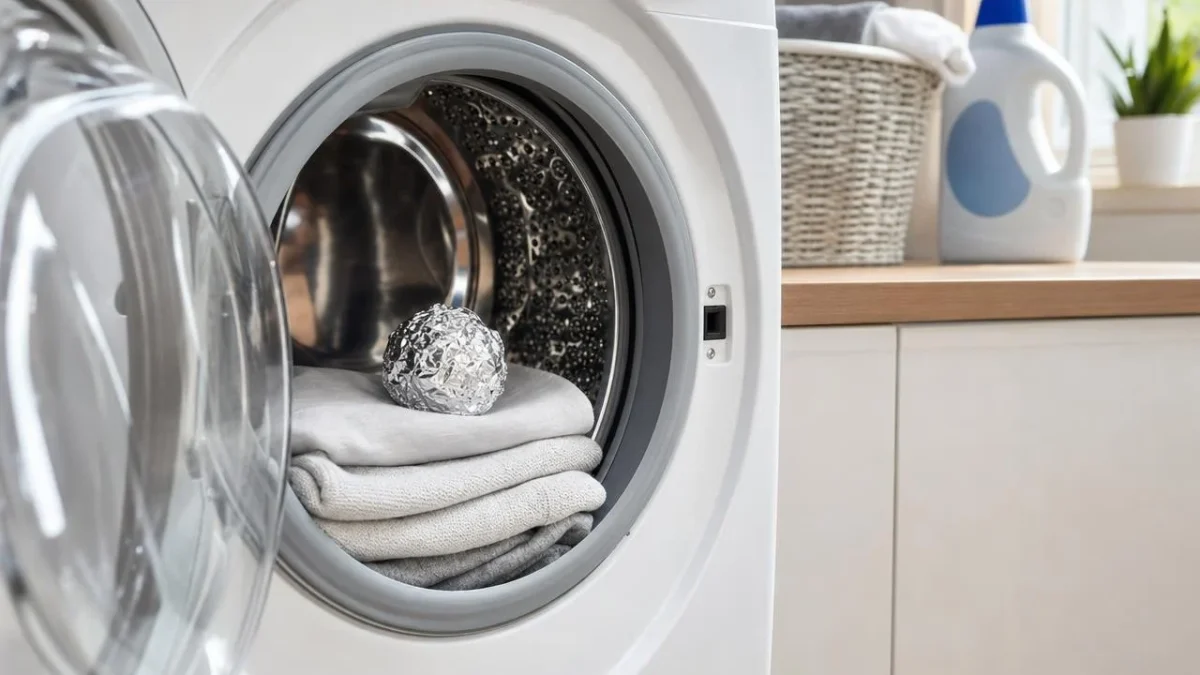
Tossing a crumpled ball of kitchen foil into your washing machine will not magically scrub away stubborn stains, but it can disrupt the electrical charges that make synthetic clothes cling together. The viral aluminum foil laundry hack relies on aluminum’s natural electrical conductivity to equalize friction charges as fabrics spin against each other.
While internet cleaning tips promise everything from cloud-soft towels to slashed drying times, the reality comes down to simple physics—and a few mechanical trade-offs you need to know before raiding your pantry.
How the Aluminum Foil Hack Actually Works
Static electricity develops when contrasting fabrics rub against one another in motion. Synthetic materials like nylon and polyester readily exchange electrical charges, leaving garments magnetized and covered in lint.
Because aluminum is an efficient electrical conductor, the ball acts as a contact point that redistributes those charges as garments brush past it.
Inside a wash cycle, moisture naturally grounds most static charges because water conducts electricity away. The real issue arises during the high-speed final spin cycle and inside the tumble dryer, where hot, dry friction makes synthetic fibers crackle and stick.
The foil ball serves as a subtle conductor to equalize static charges, not a substitute for heavy-duty stain removal or detergent.
While the trick can make laundry feel less clingy right out of the drum, it does not alter fabric fibers or soften textiles the way chemical conditioners do.
Myth vs. Reality: What the Hack Can and Cannot Do
Social media often exaggerates kitchen-foil tricks into miraculous zero-cost cleaning substitutes. Separating fabric science from viral hype protects both your wardrobe and your appliances.
| Claimed Laundry Benefit | Documented Reality |
|---|---|
| Cuts static cling | Helps equalize charges between synthetics during the spin cycle |
| Eliminates detergent needs | Does not remove dirt, grease, or stains from fabrics |
| Softens stiff fibers | Cannot chemically relax fabric weaves like conditioners |
| Reduces drying time | Minor mechanical separation, but standard dryer settings matter far more |
Washing machine efficiency depends on water temperature, detergent chemistry, and mechanical drum rotation. An aluminum foil laundry sphere simply provides an electrical outlet for static buildup.
How to Make and Use Foil Balls in the Wash
If you want to test the method on everyday laundry, proper preparation is critical to avoid damaging your clothes or machine drum.
- Tear off a sheet of standard kitchen aluminum foil measuring roughly 12 by 12 inches.
- Crumple the sheet into a dense, tight sphere roughly two to three inches wide, about the size of a tennis ball.
- Roll the ball firmly between your palms until the outer surface is completely smooth, compressing any sharp or jagged corners.
- Toss one to three balls directly into the empty wash drum before loading your clothes.
- Add your laundry detergent and run your regular wash cycle as normal.
The same foil sphere can be reused across multiple cycles for several weeks. Once the ball begins to unroll, crack, or flatten out, discard it and roll a new one.
Best Fabrics to Target—and Which to Avoid
Stick to heavy-duty, high-friction items like gym clothes, fleece jackets, bed sheets, and denim jeans. These durable fabrics generate significant static and easily withstand mechanical agitation.
Never toss metal foil in with delicates. Lace, silk, thin knits, and sheer garments can easily snag or tear if an edge of the foil loosens during a high-speed spin.
Appliance Risks and Safer Laundry Alternatives
Introducing metal objects into a modern washing machine carries mechanical risks. A foil ball that is not pressed tightly can scratch drum surfaces or snag elastic waistbands.
Over extended use, friction can break small pieces of foil off the sphere. These metal flakes can migrate through the drum perforations, potentially clogging the machine filter or drain pump.
Appliance user manuals explicitly warn against placing hard foreign items inside the drum, meaning foil-related damage could void your manufacturer warranty.
If you want to cut static without putting metal in your machine, consider lower-risk alternatives. Adding wool dryer balls to your tumble cycle separates clothes naturally while absorbing moisture.
Sorting heavy cottons away from synthetic sportswear and lowering your dryer heat settings also prevents the over-drying that creates static clinging in the first place.
💬 Have you tried using aluminum foil in your laundry routine, or do you stick to standard dryer balls? Drop your thoughts in the comments below.
✨ Taking a minute to adjust your load size and heat settings often solves stubborn static faster than any viral cleaning trick.
📱 Share this breakdown with someone trying to streamline their laundry routine at home.
 1
 2
 3
 4
