
Why Your Thanksgiving Cactus Drops Its Buds in November—and the Exact Care Tweaks to Keep It Blooming

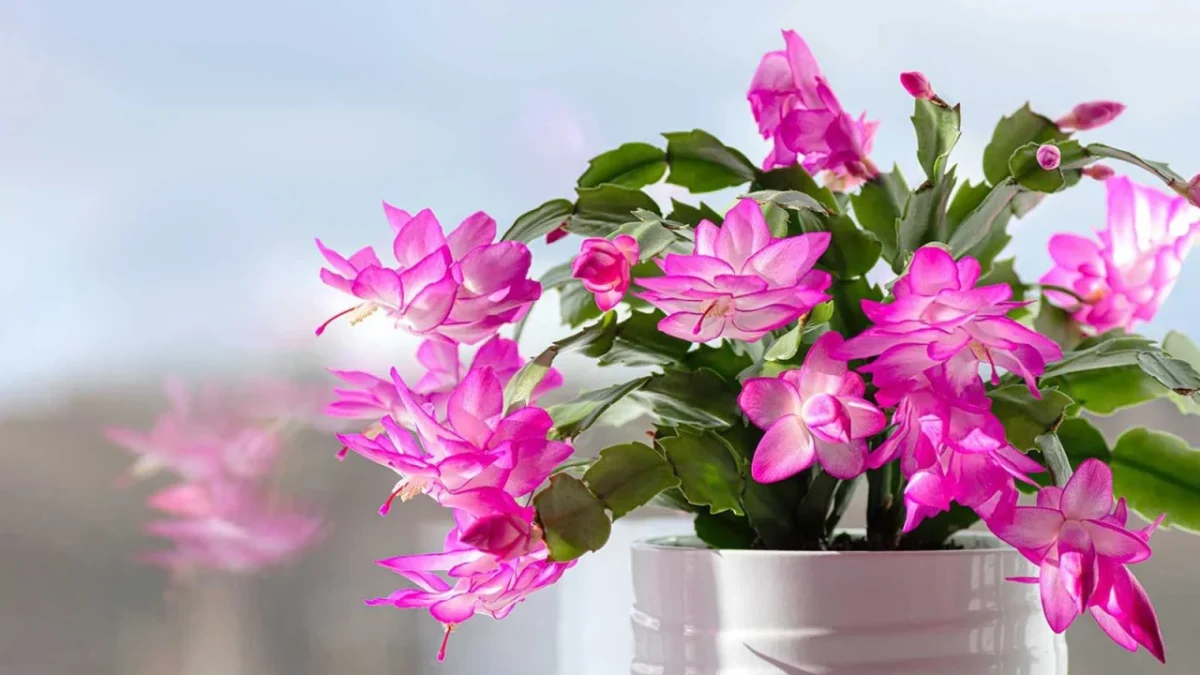
Your Thanksgiving cactus needs immediate adjustments the moment November arrives if you want a full canopy of vibrant holiday blooms. Sudden temperature swings, dry indoor heating, and improper watering are the primary culprits that cause developing flower buds to shrivel and drop overnight.
Getting the balance right means providing bright indirect light, pausing your fertilizer routine, and keeping nighttime temperatures between 55°F and 65°F. With just a few minor shifts in placement and moisture control, you can protect fragile buds and ensure your plant flowers uninterrupted straight through the holidays.
The Desert Myth: Understanding What Your Cactus Actually Needs
One widespread misconception among houseplant owners is treating this festive succulent like a standard desert cactus. Gardeners often leave it in parched, baking conditions, expecting it to thrive without moisture.
In reality, the Thanksgiving cactus originates from tropical Brazilian rainforests rather than arid sand dunes. It demands moderate humidity and consistent moisture around its root zone, making water management critical as home heating systems kick on in late autumn.
Unlike arid desert varieties, tropical holiday cacti cannot tolerate extended periods of bone-dry soil, especially while setting flower buds.
Dialing In Light and Placement Without Scorching the Stems
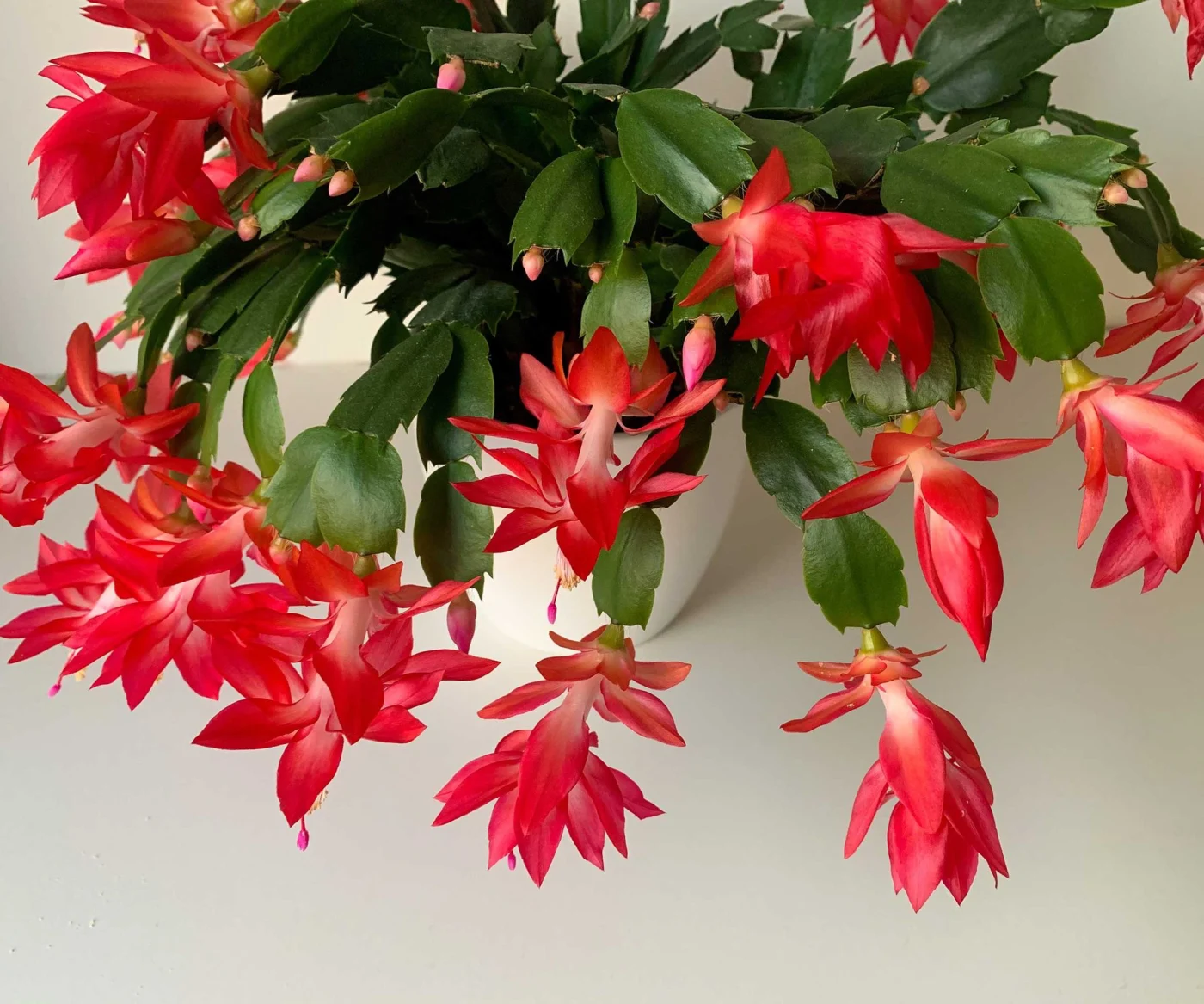
Thanksgiving cactus with red flowers
Even though autumn days are substantially shorter, proper illumination remains vital for opening flower buds. Position your plant where it receives ample bright, indirect light throughout the day.
An east-facing windowsill works exceptionally well because it delivers soft morning light without harsh midday intensity. A well-lit north-facing exposure is another reliable option. If your space only features intense southern or western exposures, diffuse the rays with a sheer curtain panel to prevent scorching the flat, fleshy green stem segments.
Never tuck the pot away in a dim corner simply because flowers have begun to show. If natural sunshine is scarce in your living space, an LED grow light can supply the missing spectrum and keep stems sturdy.
Mastering Moisture: How to Water in November
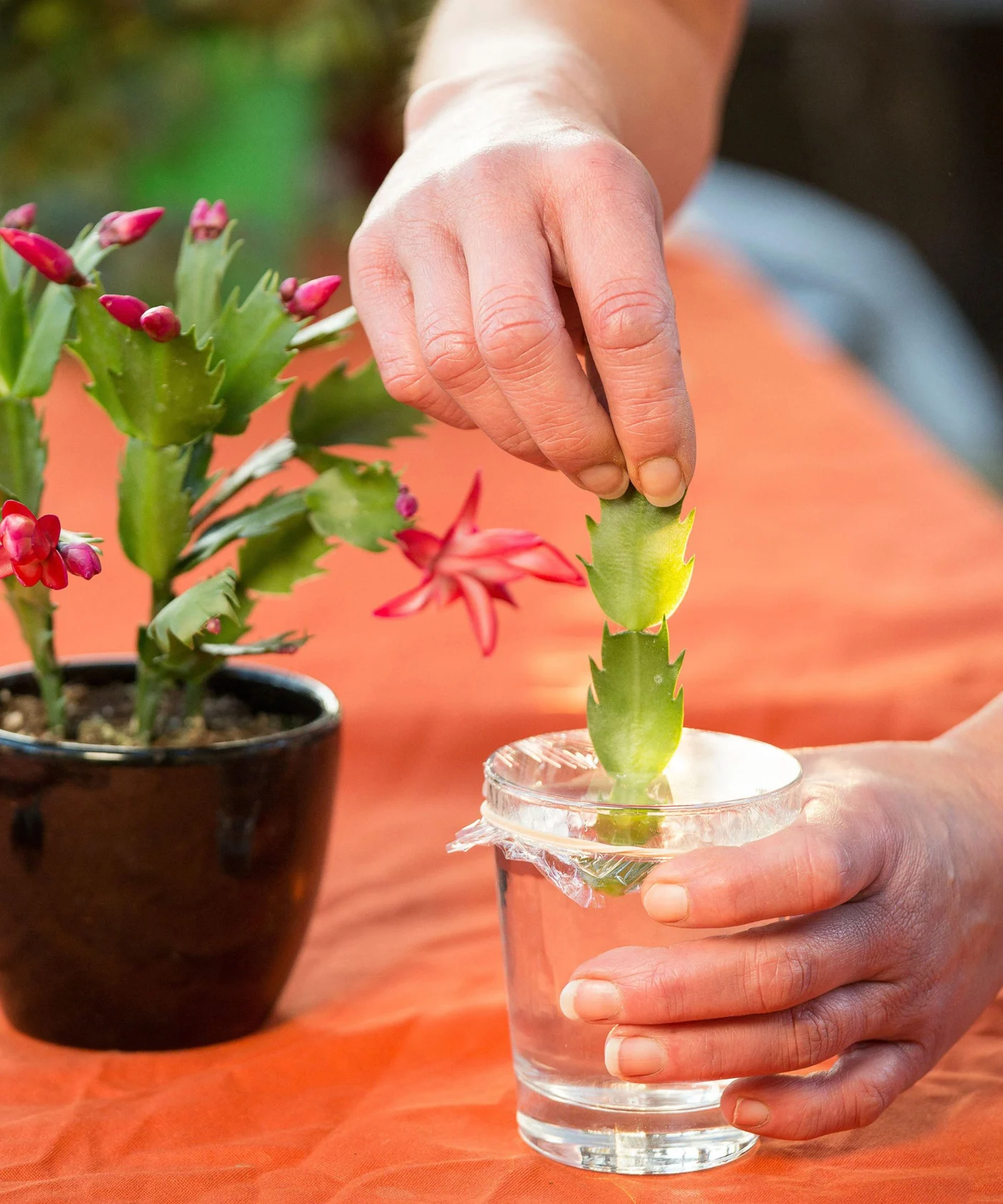
Thanksgiving cactus propagating in water
Improper watering causes more November bud drop than nearly any other environmental factor. Soggy potting soil suffocates roots, while dry root balls trigger immediate flower abortion.
Check the surface of the soil manually before reaching for the watering can. Give the container a deep soak only when the top layer starts to feel dry, allowing excess liquid to freely drain through the bottom holes before emptying the saucer completely.
- Inspect before watering: Test soil moisture with your finger instead of sticking to a rigid calendar schedule.
- Ensure rapid drainage: Use containers with drainage holes and airy potting mix amended with perlite.
- Avoid total dehydration: Never allow the root system to sit completely desiccated for days while buds are forming.
- Postpone repotting: Disturbing root systems in November causes severe transplant shock and bud loss; save repotting for post-bloom spring growth.
Temperature Stability and Flower Initiation
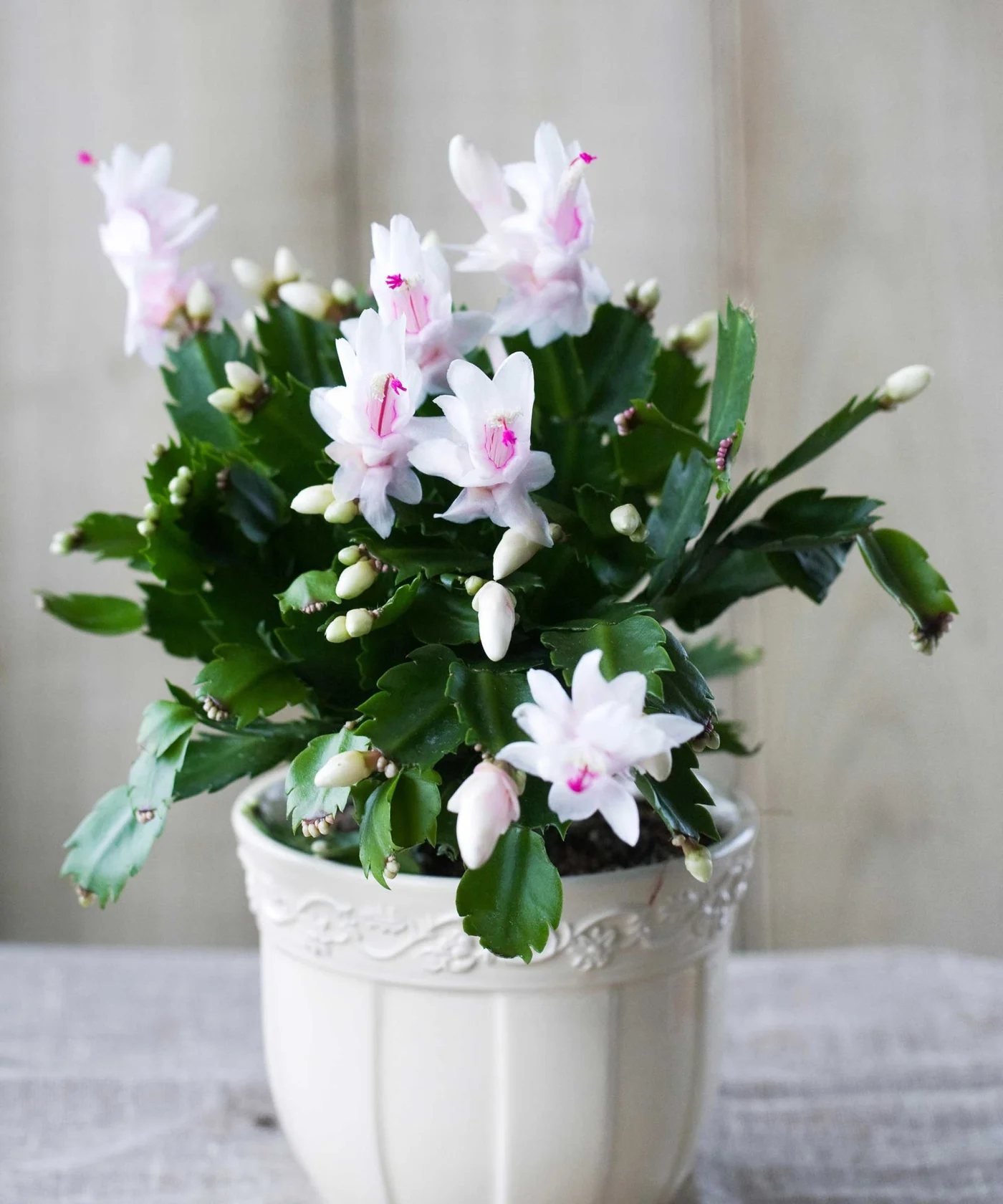
White Thanksgiving cactus in pot
Consistency is everything once buds emerge. While daytime temperatures around 65°F to 70°F are ideal, cooler evening temperatures between 55°F and 65°F encourage buds to set and hold.
Drafty exterior doors, drafty windowpanes, radiators, and forced-air heating vents produce rapid microclimate fluctuations. Even a single night pressed against freezing glass can cause a plant to shed its entire flush of unopened blooms.
How to Trigger Late Blooms
If your Thanksgiving cactus is producing lush green segments without setting a single bud by November, light exposure is usually the missing link. These are short-day plants requiring roughly 12 to 14 hours of continuous, uninterrupted darkness each night alongside cool night air to initiate flowering.
Use a mechanical outlet timer on supplemental lighting to guarantee total evening darkness. At the same time, boost ambient moisture by grouping houseplants together or operating a small room humidifier nearby to counter dry indoor winter heating.
| Environmental Factor | Target Requirement in November |
|---|---|
| Daytime Temperature | 65°F to 70°F |
| Nighttime Temperature | 55°F to 65°F |
| Light Exposure | Bright, indirect light (diffuse harsh sun) |
| Darkness Requirement | 12–14 hours uninterrupted (for bud setting) |
| Fertilizer Routine | Completely paused until active growth resumes |
Why You Must Stop Pruning and Fertilizing Now
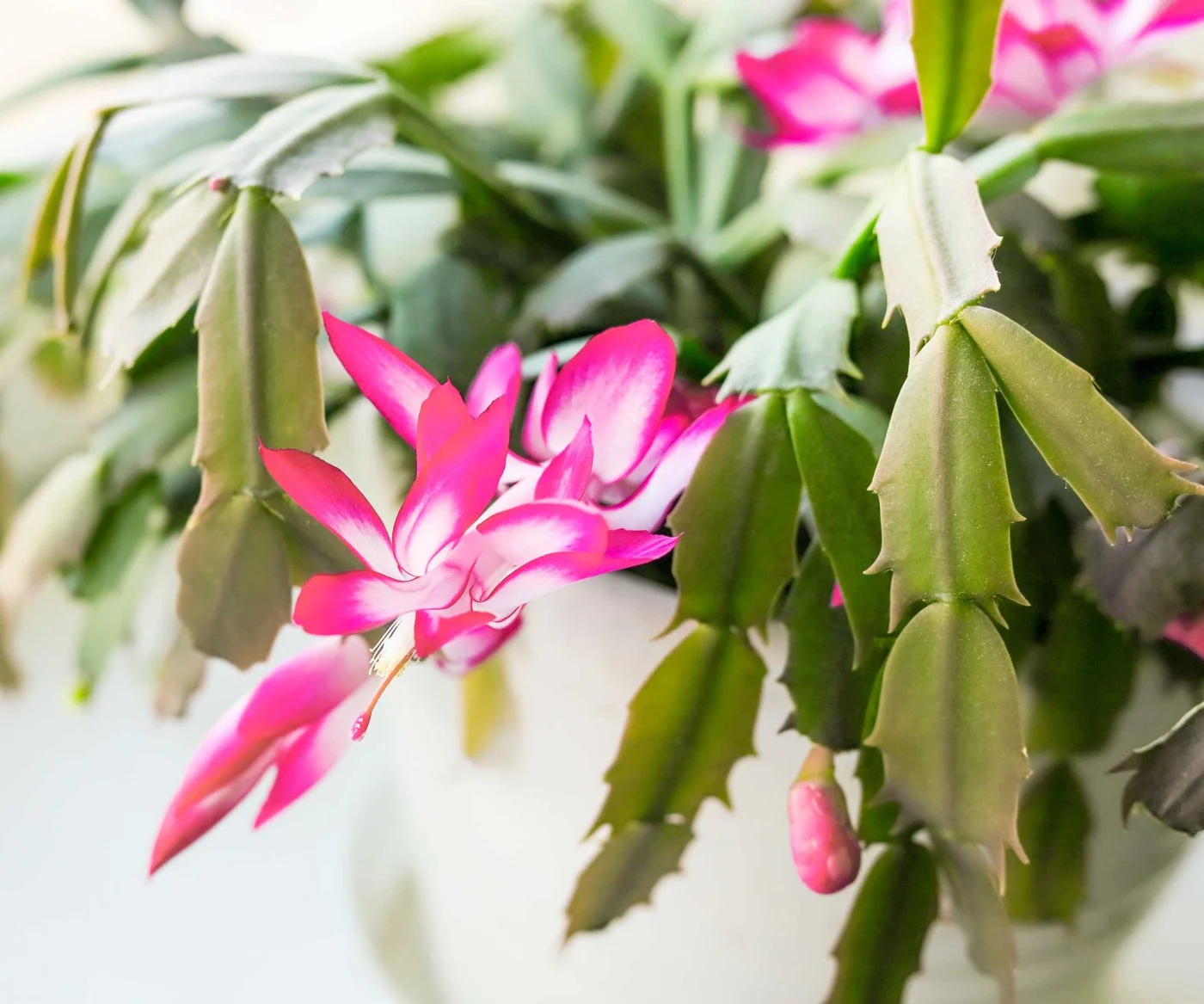
Pink Thanksgiving cactus flowers
November is not the time to force vegetative growth or reshape your plant. Pruning stems right now cuts off vital terminal segments where flower buds naturally develop.
Halt all liquid houseplant fertilizer while the plant readies its blooms and throughout the active flowering window. Feeding during this sensitive period overstimulates foliage and disrupts delicate floral development. Restrict pruning strictly to removing broken, dead, or diseased segments until spring arrives.
✨ Giving your plant consistent temperatures, filtered sun, and steady moisture ensures vibrant color that lasts across the entire season.
📱 Simple tweaks made right now will keep delicate buds firmly attached to their stems.
💬 Have your holiday cactus buds started opening yet? Drop your experiences and setup tips in the comments below!
 1
 2
 3
 4
