
A California Restaurant Catered the Masters Without Quoting a Price, Then Sent a $75,000 Bill: How an Unwritten Deal Sparked a Years-Long Legal War

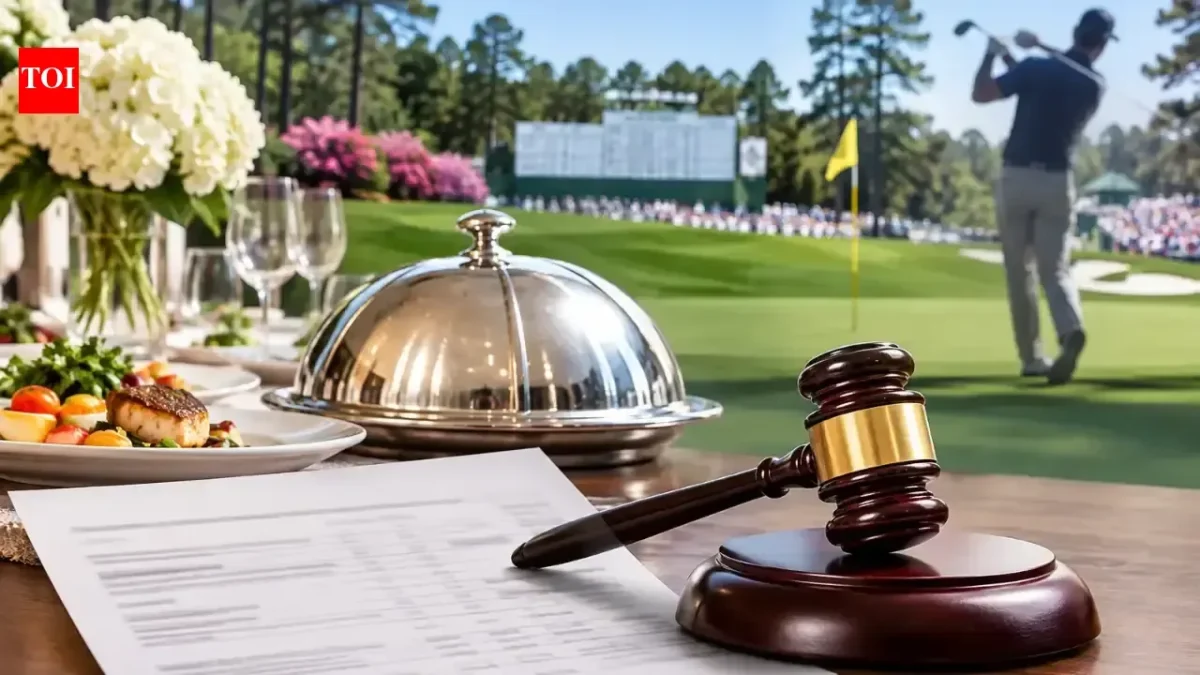
A California restaurant group that catered meals for a golfer’s family at the Masters without ever discussing a price tag walked away with a $60,391 jury award—but its bid to recoup over $107,000 in legal expenses and transcript fees fell completely flat in court.
The California Court of Appeal, Fourth Appellate District, Division Three, affirmed a lower court ruling that granted the hospitality group just $1,950 of the $81,875 it demanded in attorney fees, while entirely rejecting $25,741.20 in court reporter fees.
The bitter fight in Hanna Carroll Restaurant Group LLC v. Hagestad offers an expensive lesson in what happens when luxury hospitality, high-stakes sports, and handshake agreements collide.
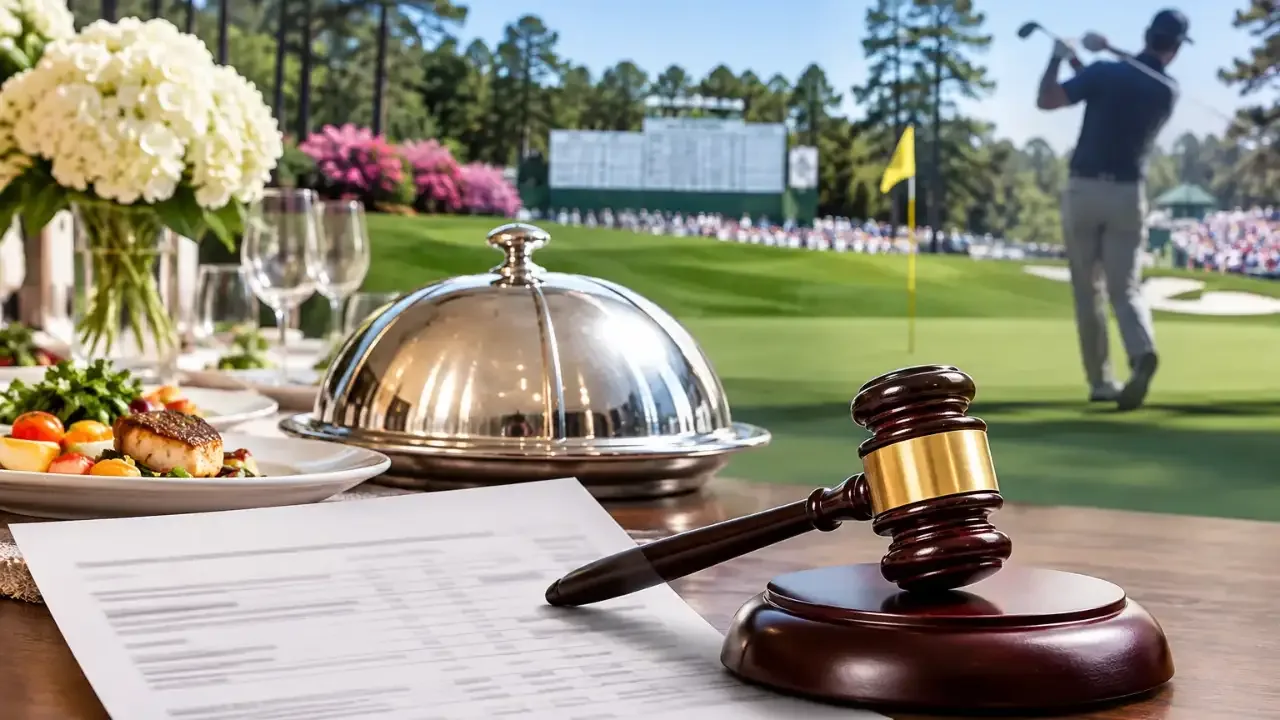
A dispute over luxury tournament catering led to an appellate ruling in California.
How a Tournament Feast Turned Into an $85,000 Shock
The arrangement started casually in March 2022 when Southern California resident John Hagestad and his wife dined at a high-end restaurant run by Hanna Carroll Restaurant Group in Orange County.
Impressed by the meal, they reached out to chief operating officer Dave Hanna to feed 20 to 30 family members and friends during the upcoming Masters golf tournament in Augusta, Georgia, where their son was scheduled to compete.
Hanna emailed a customized seven-day breakfast and dinner menu, which the family reviewed and approved.
Crucially, neither party ever discussed the total cost or signed a formal written contract.
For five days in Augusta, the restaurant staffed the private meals and ran a full bar for an average of 25 guests per sitting, until the family departed two days earlier than planned.
When the festivities concluded, Hagestad opened an invoice for $74,960, which included a courtesy $5,000 discount.
Stunned by the five-figure sum, Hagestad pushed back immediately, maintaining he would have found alternative catering had he known the price tag in advance.
In response, Hanna revoked the $5,000 discount and tacked on an additional $5,000 fee for the time spent attempting to collect payment, driving the final invoice to $84,960.
Hagestad refused to pay, sending the hospitality firm straight to court.
The Trial: Can a Deal Exist Without a Stated Price?
The restaurant filed a breach-of-contract lawsuit, while Hagestad argued that the actual, reasonable market value of the five days of food service was significantly lower than what the group billed.
During pretrial discovery, the restaurant issued a formal Request for Admission, asking Hagestad to admit that he entered into a catering contract covering all seven days of the Masters.
Hagestad issued a blanket denial instead of admitting parts of the request and disputing the rest.
The case proceeded to a jury, which found that an enforceable agreement existed and awarded the restaurant $60,391—substantially less than the $84,960 invoice.
A contract does not fail simply because the parties never agreed on a set dollar amount, so long as the reasonable value of services can be determined objectively.
The Cost Breakdown: From Invoice to Appellate Ruling
| Expense Category | Financial Outcome |
|---|---|
| Adjusted Final Invoice | $84,960 demanded by restaurant |
| Trial Jury Verdict | $60,391 awarded for catering services |
| Cost-of-Proof Legal Fees Claimed | $81,875 requested under civil code |
| Court-Approved Legal Fees | $1,950 awarded by the judge |
| Court Reporter Transcript Costs | $25,741.20 claimed; $0 granted |
The Legal Myth: Unpriced Services Don’t Form a Contract
A widespread assumption in consumer disputes is that if you never agree on a dollar figure, no legal contract exists at all.
California law dismantles that assumption.
Under established contract principles, when parties mutually agree to provide and accept services, the law implies a promise to pay the reasonable value of those services, even if no formal rate was ever settled in writing.
That doctrine allowed the restaurant to win a five-figure verdict at trial despite skipping a signed contract.
However, the restaurant’s aggressive push to make the defendant pay its full legal bills backfired entirely.
Why the Appeals Court Slashed the Legal Fees by 97%
Following the jury verdict, the restaurant sought $81,875 in “cost-of-proof” attorney fees under Section 2033.420 of the California Code of Civil Procedure.
The statute penalizes litigants who unreasonably deny a formal Request for Admission by forcing them to pay the expenses the other side incurs to prove that specific fact at trial.
The appellate court agreed that Hagestad should have conceded that an agreement existed based on the email exchange and approved menu.
Yet the judges refused to hand the restaurant a blank check.
The court pointed out that the restaurant submitted all of its post-denial litigation hours as a single lump sum, failing to separate the minimal time spent proving the contract’s existence from the extensive time spent fighting over what the food was actually worth.
Because establishing that an agreement existed required almost no heavy lifting compared to litigating the catering’s true value, the appellate panel upheld the trial court’s award of just $1,950.
The court also threw out the entire $25,741.20 court reporter expense claim because the restaurant failed to submit actual invoices or prove the transcripts were court-ordered.
Both parties were ultimately ordered to bear their own costs on appeal, bringing the multi-year battle over tournament dining to a definitive close.
💬 Handshake arrangements for high-end events can quickly transform into bruising financial disputes when expectations remain undocumented.
✨ Written estimates and clear rate caps protect both hospitality operators and clients before the first plate leaves the kitchen.
👇 Have you ever faced a shocking bill after a service was already completed? Share your experience in the comments below.
 1
 2
 3
 4
