
A Catastrophic Hardware Freefall? Michael Burry and Citadel’s Ken Griffin Issue a Chilling AI Bubble Warning Over Looming GPU Overcapacity

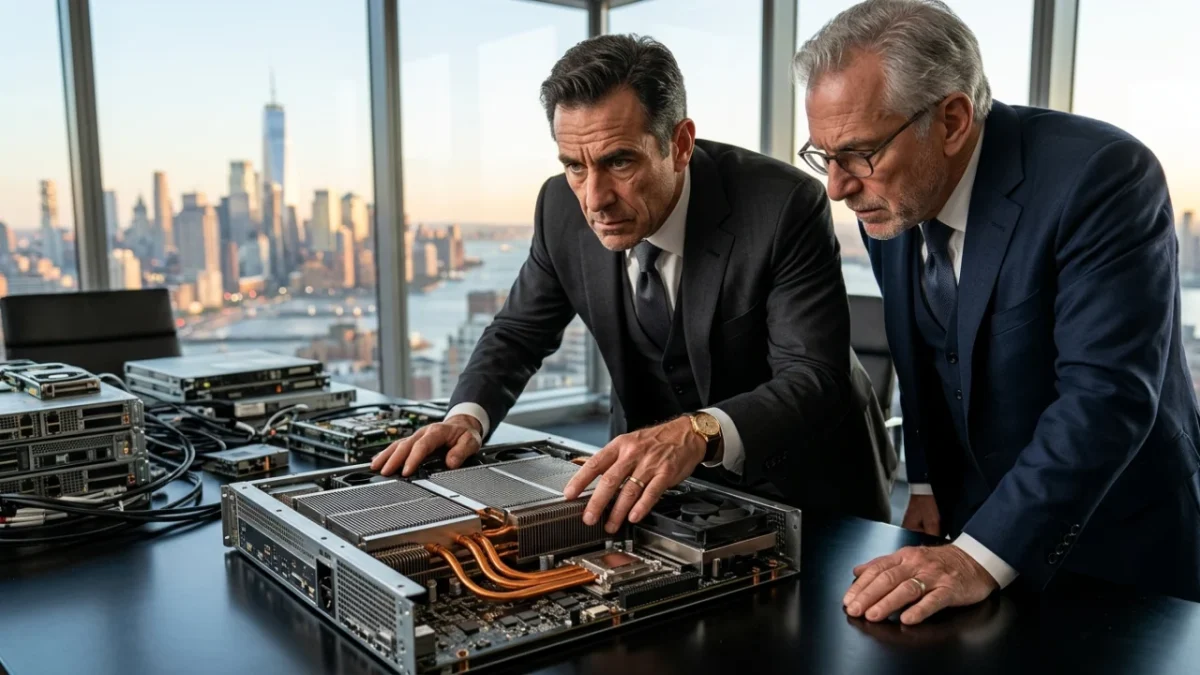
Two of global finance’s most closely watched figures, Citadel founder Ken Griffin and legendary investor Michael Burry, have aligned on an uncompromising verdict: financial markets are almost certainly trapped in an AI bubble, and the hyper-profitable hardware driving it is barrelling towards a pricing freefall.
Addressing the breakneck pace of infrastructure spending, Griffin warned that graphics processing units (GPUs) share a perilous economic reality with budget airlines: once high-fixed-cost capacity exceeds demand, the cost of running them is minimal, sending pricing into an instantaneous tailspin.
Burry, famous for anticipating the subprime mortgage collapse, endorsed Griffin’s stance without hesitation, posting on social platform X that the risk of GPU overcapacity is transparent to anyone with a “working brain cell”.
The Airline Paradox: Why High-End Silicon Faces a Sudden Pricing Drop
Speaking at the Future of Global Markets conference, Griffin laid bare the structural vulnerability underpinning the current silicon spending frenzy.
“GPUs, like airlines, have a very low marginal cost to run,” Griffin explained during the event. “The moment you have overcapacity, pricing goes into freefall.”
The Citadel chief executive noted that corporate boardrooms are no longer writing unchecked digital cheques. Instead, executive suites are scrutinising mounting technology bills and demanding demonstrable returns on their artificial intelligence capital expenditures before committing further reserves.
While acknowledging the long-term potential of transformative computing, Griffin stressed that “any radical transformation of our economy is generally intertwined with a bubble.”
Michael Burry’s Playbook: The Looming Multi-Year Bear Market
Burry’s intervention follows his own detailed market autopsy published via Substack, written in the wake of the S&P 500 touching record territory on 6 October.
The investor dissected equity valuations into three distinct cohorts: market “Leaders”, “Broken” equities that have fallen 20% to 40% from their cycle peaks, and “Busted” stocks down by more than 40%.
Rather than chasing the high-flying semiconductor darlings that carry broad market indices, Burry offered an unexpected alternative for surviving the impending turbulence.
Where Capital Hides When Speculation Breaks
- Seeking safety in beaten-down assets: Burry suggested that “truly busted stocks” could serve as a viable haven throughout an extended bear market, even one that drags on for years.
- A long-term return drought: Burry warned that with speculation comprehensively overrunning sound investing, overstretched indices could subject capital to a 15-to-20-year period of flat or negative real returns.
- Widespread corporate belt-tightening: Enterprise spending faces inevitable deceleration as balance sheets adjust to actual productivity gains rather than speculative promises.
For investors across the United Kingdom, where global tracker funds and workplace pension pots are heavily tied to transatlantic technology benchmarks, this mounting scepticism carries immediate significance.
Regulators like the Financial Conduct Authority (FCA) have long warned retail savers against chasing momentum in volatile, concentrated asset classes.
If capital expenditure pulls back and hardware prices collapse under the weight of excess inventory, the ripple effects will reach far beyond Silicon Valley server rooms.
💡 The narrative of endless hardware scarcity is rapidly colliding with the unforgiving arithmetic of supply and demand.
🔍 As enterprise balance sheets reassert discipline over raw speculative enthusiasm, the gap between productive software adoption and overvalued infrastructure looks set to widen dramatically.
👇 Do you believe enterprise hardware spending is headed for a sharp collapse, or will demand outstrip supply for years to come? Share your thoughts below.
 1
 2
 3
 4