
As BYD Cuts Electric Vehicle Charging Times to Under Nine Minutes, Rivals Answer With 1.44-Megawatt Systems in a Fierce Battle Over Battery Speeds

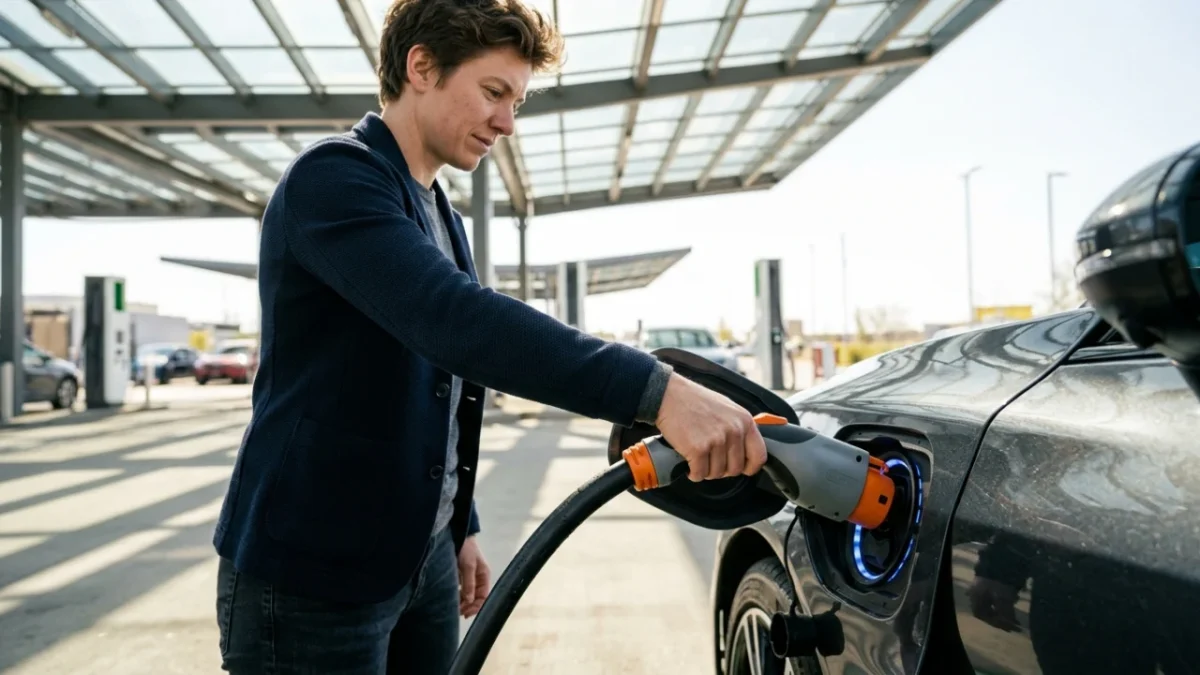
BYD fast electric vehicle charging has hit a critical performance benchmark, with the manufacturer’s Blade 2.0 battery replenishing from 10% to 97% capacity in roughly nine minutes. This single-digit replenishment window effectively mirrors the time spent pulling into a petrol forecourt, buying a coffee, and returning to the driver’s seat.
That nine-minute milestone has eliminated one of the sharpest psychological hurdles facing motorists considering the transition away from fossil fuels. It has also ignited an aggressive technological arms race among competing manufacturers determined to slash charging times even further.
The engineering challenge has shifted from gradual evolution to a high-voltage sprint.
The Nine-Minute Threshold and the Megawatt Counter-Offensive
BYD’s commercial push with its Blade 2.0 battery established a formidable target for the electric vehicle sector. However, rival manufacturers have responded with unprecedented power architectures designed to cut those dwell times down to a fraction of a typical motorway stop.
Chery recently escalated the competition at its Global Innovation Conference by revealing the Volt-dragon ultra-fast charging platform. Delivering a staggering maximum output of 1.44 megawatts (1,440 kW), the hardware is engineered to add 500 kilometres of driving range in just five minutes.
A full charging cycle from 10% to 97% on Chery’s setup is listed at six minutes and 50 seconds. This capability places the system directly behind CATL‘s third-generation Shenxing battery, which currently holds the speed crown by moving from 10% to 98% charge in six minutes and 27 seconds.
The current field of ultra-fast charging platforms demonstrates how rapidly the single-digit charging club is expanding:
- CATL Shenxing Battery (Third-Generation): Completes a 10% to 98% charge in six minutes and 27 seconds.
- Chery Volt-dragon System: Replenishes 10% to 97% in six minutes and 50 seconds, adding 500km in five minutes.
- Hongqi Fast Charging Architecture: Requires approximately eight minutes and three seconds for a near-complete cycle.
- Geely Energee Golden Brick: Recovers from 10% to 97% capacity in eight minutes and 42 seconds.
- BYD Blade 2.0 Battery: Powers from 10% to 97% in approximately nine minutes under optimum parameters.
These figures demonstrate that sub-ten-minute replenishment is no longer a theoretical laboratory exercise.
Engineering the Infrastructure: Silicon Carbide and Thermal Physics
Pushing 1.44 megawatts into a passenger vehicle demands an overhaul of power electronics and cooling hardware. Managing the extreme heat generated during megawatt-scale electricity transfer remains the primary hurdle for automotive engineers.
Chery’s Volt-dragon hardware relies on next-generation silicon carbide power semiconductors, reaching a grid-to-output efficiency rating of 96.5%. Integrated liquid cooling channels dissipate thermal buildup inside both the station and the vehicle interface to prevent battery degradation.
User accessibility has also dictated the physical design. High-capacity liquid-cooled cables historically suffered from excessive weight and rigidity, making them difficult to handle in wet or cold weather.
The latest connectors have been streamlined to a total mass of roughly two kilograms. Operating noise has been restricted to 50 dBA—quiet enough to blend into ambient conversational volume—while automated robotic arms are being developed to connect directly to the vehicle port without manual driver handling.
Artificial Intelligence and Predictive Thermal Management
Sustaining peak charging curves without cooking the battery cells requires sophisticated real-time calculation. Automakers are increasingly deploying onboard artificial intelligence models to safeguard pack longevity.
Geely uses its Xingrui PowerMind energy management architecture to predict battery temperature shifts roughly 30 seconds ahead. This continuous foresight allows the vehicle to modulate incoming current before thermal bottlenecks force a safety shutdown.
Chery is implementing CheryMind, an artificial intelligence system structured to bridge physical vehicle dynamics with charging distribution. In parallel, the hardware incorporates vehicle-to-grid (V2G) functionality, allowing connected vehicles to feed surplus stored power back into domestic and commercial grids during demand spikes.
The Network Expansion: Grid Realities and Hardware Constraints
Unlocking 1.44-megawatt charging speeds requires a vehicle engineered to receive such immense energy transfers. Passenger models capable of drawing these rates require high-voltage architectures operating at 800 volts, with next-wave platforms moving past 1,000 volts.
Real-world efficiency will inevitably vary based on ambient temperatures, pack conditioning, and the specific energy consumption profile of individual car models. The deciding factor for drivers will not be isolated peak figures on a specification sheet, but the physical availability of compatible chargers along major transit corridors.
Network rollouts are accelerating to match the hardware breakthrough. BYD fast electric vehicle charging infrastructure crossed the 10,000-station threshold by late August and is pacing toward 20,000 operating hubs before the year finishes.
Chery is deploying an initial batch of 100 Volt-dragon stations across 10 major metropolitan areas as an operational trial. The broader blueprint targets more than 20,000 V2G-capable fast-charging hubs worldwide by 2029.
💡 As charge times compress below ten minutes, the boundary separating battery-electric usability from internal combustion convenience continues to vanish.
🔍 The long-term challenge now rests squarely on utility providers and charging operators to deliver reliable grid connections that can feed megawatt-tier demands simultaneously.
📌 Would a proven nine-minute charging cycle resolve your hesitations about going fully electric? Share your thoughts and join the discussion below.
 1
 2
 3
 4