
As Rural Shoppers Shift Every Pound and Dollar, Tractor Supply’s $3.91 Billion Sales Verdict Uncovers a Dramatic Squeeze on Household Budgets

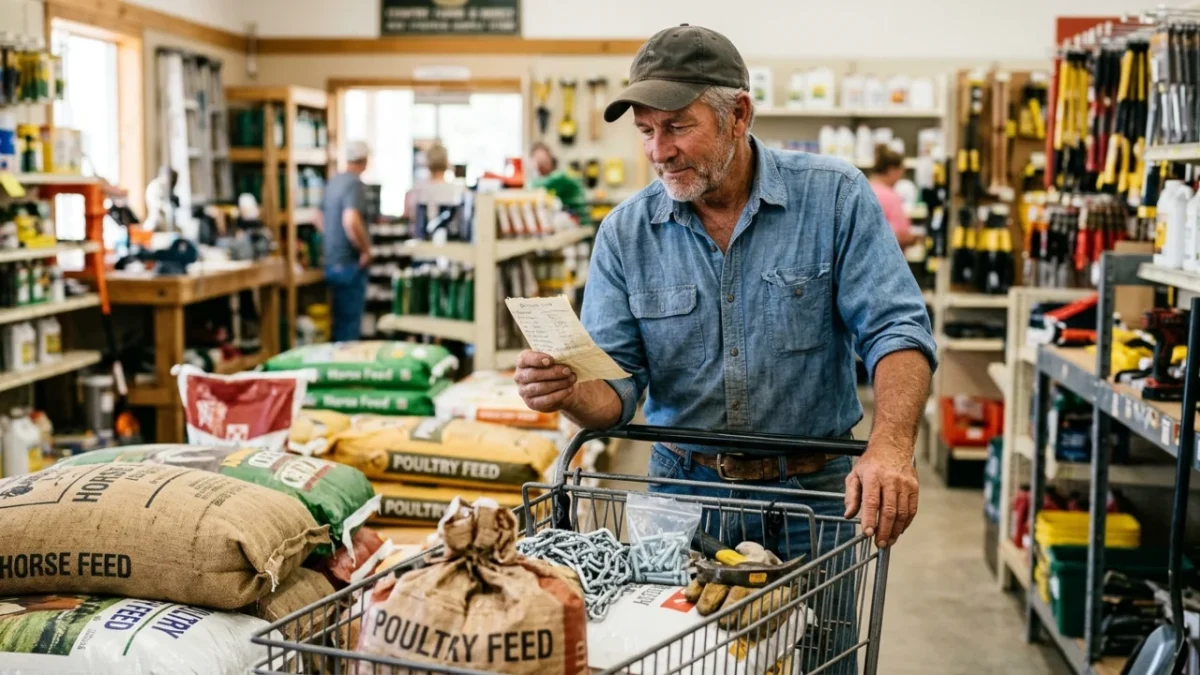
American households are casting their decisive economic ballot at the till, propelling Tractor Supply Company to $3.91 billion in net sales even as soaring transport overheads erode bottom-line profitability. The 5.1% top-line expansion demonstrates that essential rural commerce remains durable, yet intense margin pressures reveal how sharply retailers must fight for every basket.
Behind that headline revenue figure lies a notable tug-of-war in customer behaviour. While comparable store sales edged up by 0.4%, the underlying mechanics tell a divided story: average ticket sizes climbed 0.7%, whereas transaction counts slipped by 0.3%.
Shoppers are spending marginally more on each visit, but visiting slightly less often.
Trading conditions improved noticeably as the quarter progressed. Executive leadership confirmed that business momentum recovered from a modest contraction of less than 1% in July to robust, accelerating expansion by September.
The Margin Squeeze Behind the Counter
Generating billions in revenue has come at an unmistakable operational cost. Gross margin contracted by approximately 90 basis points to 36.4%, driven down by elevated transport and fuel tariffs alongside deliberate price cuts designed to protect customer loyalty.
Operating profit settled at $307.7 million, generating an operating margin of roughly 7.9% and diluted earnings per share of $0.43. Selling, general, and administrative (SG&A) expenses rose to $1.12 billion, representing 28.6% of net sales compared to 28.1% twelve months prior.
A significant portion of that overhead reflects long-term infrastructure investment. Roughly 15 basis points of the SG&A increase stemmed directly from initial operational costs at the company’s new distribution centre in Nampa, Idaho.
Average inventory per store rose 4.8%, reflecting 3.5 percentage points of product inflation alongside inventory assigned to support the Nampa supply hub.
Where the Cash Is Flowing: Essentials Versus Discretionary Luxuries
Shoppers are strictly organising their budgets around immediate necessities rather than big-ticket splurges. Consumable, usable, and edible product lines significantly outpaced the rest of the business throughout the quarter.
The company recorded brisk demand across several essential sectors:
- Livestock, equine, and wildlife supplies: Core feed and care items saw sustained, defensive volume.
- Hardware and truck tools: Maintenance equipment remained a priority for working rural properties.
- Seasonal inventory: Timely purchases provided a reliable boost heading into the autumn months.
In stark contrast, expensive discretionary hardware and companion pet merchandise faced noticeable headwinds.
The Pet Category’s Steady Road to Recovery
Despite pressure on non-essential pet accessories, the broader animal health division is staging a disciplined recovery. Total pet sales grew by 5%, bolstered by digital veterinary platforms Allivet and VIP Petcare.
Comparable store sales in companion animal goods showed clear sequential progress across recent quarters:
- First quarter: -4%
- Second quarter: -3%
- Third quarter: -2%
Digital subscription sales achieved triple-digit growth, proving that automated replenishment is becoming a preferred shopping channel. In response, management increased its planned rollout of Freshpet chilled units from over 700 locations to approximately 1,000 stores before the end of the year.
Demographics and Digital Surges Reshape the Till
Digital storefronts emerged as a major growth engine, with online sales climbing approximately 16% on higher browsing traffic and improved conversion rates. Enhanced last-mile distribution networks and localized collection points played an instrumental role in securing those transactions.
Loyalty members anchor the company’s revenue foundation. The Neighbor’s Club programme generated nearly 82% of all quarterly receipts, backed by higher comparative spending and improved retention rates.
Demographic trends revealed an intriguing generational shift. Younger consumers across Generation Z and millennial age brackets delivered the strongest comparative sales increases, challenging the assumption that rural supply retailers cater strictly to older property owners.
To defend against inflationary fatigue, the retailer executed strategic price cuts on approximately 50 staple product lines. The lower shelf pricing stimulated strong unit volumes, higher transaction frequencies, and larger aggregate baskets, while retail price inflation hovered just below 50 basis points.
The Guidance Horizon: Trimming Costs and Protecting Margins
Looking toward the final quarter, management reaffirmed its full-year guidance for 2026. The baseline forecast anticipates positive comparative sales, though executive leadership stressed that the upcoming period remains exceptionally sensitive to winter weather patterns and unpredictable appetite for high-value discretionary goods.
The fourth-quarter margin outlook shows initial signs of stabilization. The business expects gross margin contraction to moderate to between 10 and 30 basis points year-on-year, with the Nampa facility anticipated to deliver a 15 to 20 basis point gross margin efficiency.
Capital deployment plans for 2026 have also been refined:
- Net capital expenditure: Projected between $675 million and $700 million, landing at the conservative low end of original estimates.
- Share repurchases: Pushed toward the upper target, between $425 million and $450 million.
- Sale-leaseback proceeds: Estimated between $325 million and $350 million.
- Cost rationalisation: A multi-year initiative targeting more than $75 million in annualised SG&A savings between 2027 and 2028, aimed at restoring operating margins above 9%.
💡 The spending patterns surfacing across rural America offer a clear window into broader consumer spending resilience, demonstrating how households prioritise day-to-day survival supplies while postponing luxury equipment upgrades.
🔍 As delivery networks expand and automated pet subscriptions gain ground, traditional brick-and-mortar retailers must continuously calibrate discounting against punishing logistics overheads.
📌 The final trading stretch will test whether lower shelf prices on essential goods can generate sufficient volume to offset hesitant discretionary spending.
👇 Have you noticed yourself prioritising everyday essentials while holding back on big-ticket purchases this season? Share your thoughts and shopping habits in the comments below.
 1
 2
 3
 4