
Elon Musk Admits Throttling Starlink Over Ukraine Front Lines as Kyiv Fires Back Over Crippling Drone Restrictions

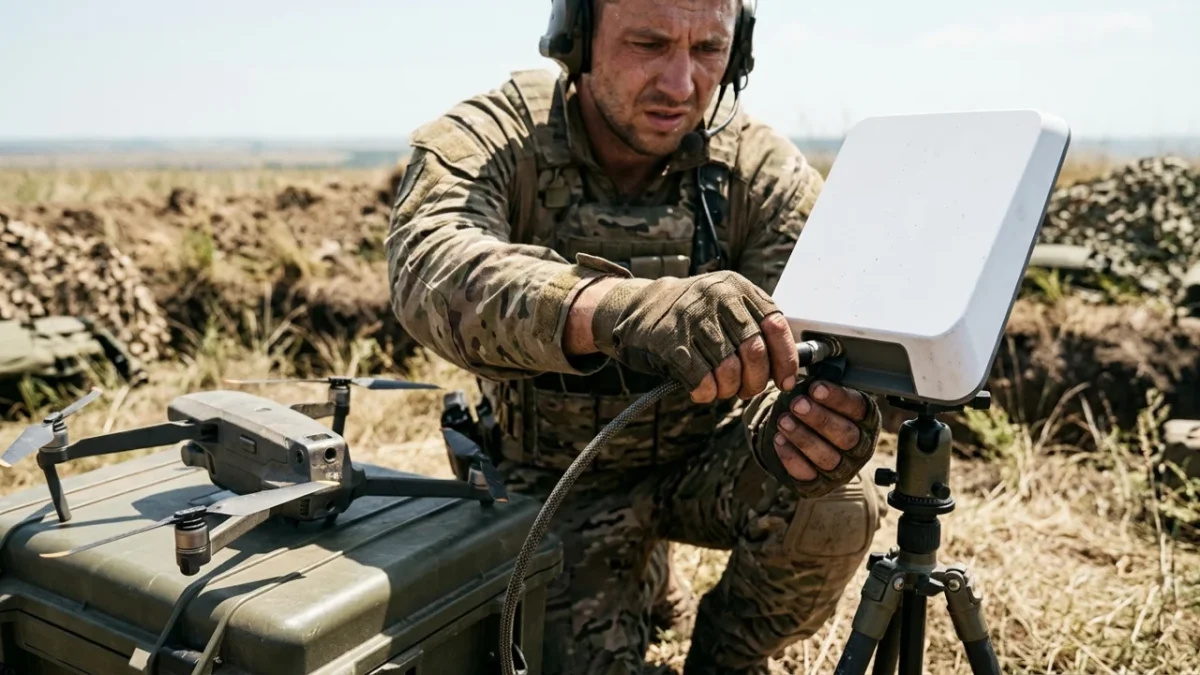
Elon Musk has confirmed he personally ordered speed restrictions on Starlink satellite networks across Ukraine, triggering a week of severe front-line disruptions before normal service was abruptly restored. The admission instantly ignited a fierce defence dispute, as Ukrainian officials swiftly rejected Musk’s accusations that commercial satellite links were being illegally weaponised for long-range drone strikes.
The throttling brought critical operational friction to defensive units relying on uninterrupted satellite broadband across contested sectors. Ukrainian President Volodymyr Zelenskyy confirmed that operations for both Starlink and military-focused Starshield networks have returned to their standard performance thresholds, yet the dispute has laid bare the extraordinary vulnerability of relying on private infrastructure during modern warfare.
The sudden move underscored the precarious balance military commanders face when relying on a commercial vendor whose executive leadership can unilaterally alter connectivity mid-conflict.
Front-Line Strains and the Battlefield Shutdown
For seven consecutive days, frontline operations faced acute communications bottlenecks as bandwidth throttles took effect across regional terminals. Ground units attempting to co-ordinate defensive repositioning and surveillance encountered sudden data latency that hampered tactical response times.
Musk defended the intervention by stating that Ukrainian forces had violated contractual terms of service by deploying commercial satellite hardware directly into offensive unmanned strikes. The confrontation highlights the growing divide between commercial terms of service drawn up in California and the existential realities of a nation repelling an invasion.
Following intense bilateral discussions, Ukraine’s Defence Ministry confirmed network speeds had returned to full capacity, exceeding thresholds of 400 km/h for mobile hardware operating across key corridors.
Kyiv Rejects Drone Strike Allegations
Ukrainian military leadership and technical advisers have moved aggressively to dismantle claims that standard commercial terminals were driving long-range aerial assaults behind enemy lines. Presidential adviser Serhii “Flash” Beskrestnov publicly responded to Musk, arguing that the billionaire’s assessment fundamentally misinterprets existing software and operational safeguards.
According to Beskrestnov, technical countermeasures active within the network make such operations impossible:
- Geographic lockouts: Starlink terminals remain completely deactivated over the internationally recognised territory of Russia, blocking any cross-border command-and-control operations.
- Severe velocity caps: Terminals operating across Ukraine and occupied sectors are subject to strict automated velocity boundaries capped between 70 km/h and 90 km/h.
- Physical limitations: Fast-moving attack aircraft and long-range strike drones exceed these velocity caps, rendering commercial units useless for precision terminal guidance.
Beskrestnov emphasised that because of these operational guardrails, defensive units are physically incapable of employing standard commercial arrays to orchestrate medium or deep strikes.
The Realities of Contractual Control in High-Stakes Warfare
The temporary disruption has once again forced military planners and western allies to confront the risks of critical communications residing in private hands. While dual-use commercial technologies provide unmatched deployment speed and bandwidth, their terms remain subject to individual corporate discretion and unpredictable unilateral restrictions.
With speeds now back to normal and front-line coordination stabilised, military analysts suggest this episode will accelerate efforts by Ukraine and allied defence ministries to build sovereign satellite redundancies that cannot be deactivated by outside parties.
💡 The clash over Starlink network control exposes the delicate reliance modern armed forces place on civilian infrastructure during existential territorial conflicts.
🔍 As satellite velocity caps and regional geofences continue to shape tactical capabilities, sovereign control over emergency networks remains an urgent priority for global defence strategists.
👇 Should commercial tech executives have the power to throttle vital operational infrastructure during active wartime operations? Share your perspective in the comments below.
 1
 2
 3
 4