
The Silent Thirst of Artificial Intelligence: Why Massive AI Data Centres Face Severe Drought Scrutiny and a Rapid Pivot to Fuel Cells

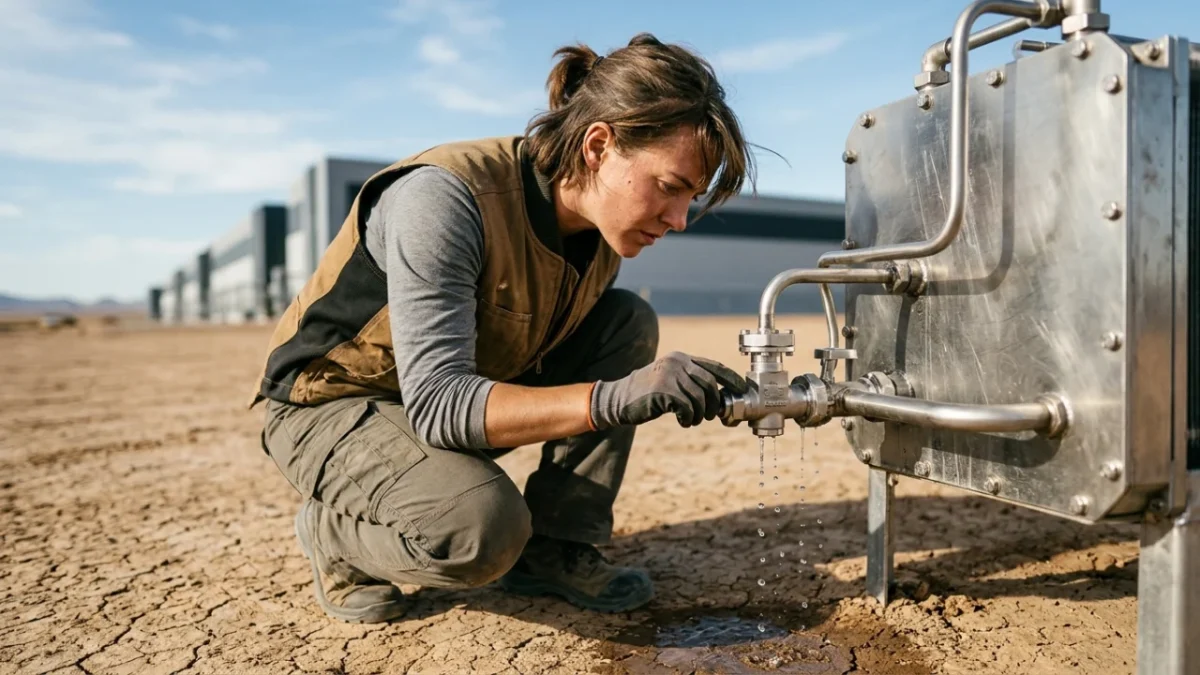
Intensive artificial intelligence workloads require vast amounts of freshwater to keep processors cool, pushing computing facilities into direct competition with local reservoirs during periods of regional drought. This accelerating ecological friction has triggered an urgent search for alternative infrastructure, rapidly fuelling commercial demand for clean, on-site fuel cells.
Every complex query processed by deep neural networks generates intense thermal energy across thousands of clustered chips. Traditional server farms rely heavily on evaporative cooling towers, which dissipate heat by vaporising millions of gallons of water into the atmosphere.
When high temperatures deplete municipal supplies and trigger regional water restrictions, high-density server halls face an existential operating dilemma.
The Hidden Ecological Cost of Computational Power
Modern machine learning operations do not simply run on electricity; they run on uninterrupted thermal management. The transition to generative computing clusters has multiplied heat generation across server racks, creating severe localized strain on regional utility grids and aquifers.
In arid zones and drought-prone basins, community opposition is mounting against continuous industrial water extraction. Evaporative cooling systems consume potable water directly from municipal networks, removing resources that would otherwise support agriculture and residential consumption.
To mitigate this exposure, operators are forced to rethink both their cooling architecture and their baseline grid reliance.
- Evaporative cooling dependence: Large-scale server farms routinely consume hundreds of thousands of litres daily to prevent silicon degradation.
- Aquifer depletion risks: Extended dry spells transform industrial water permits into major regulatory flashpoints.
- Grid congestion: Escalating energy requirements prevent facilities from switching entirely to power-hungry closed-loop chillers without risking blackouts.
Why Industrial Fuel Cells Are Stepping into the Gap
As water constraints tighten, data infrastructure developers are turning toward decentralised power generation to secure their operations. Fuel cells have emerged as a premier response to grid bottlenecks and environmental scrutiny.
Hydrogen and natural gas-compatible fuel cells generate continuous, baseload electricity through an electrochemical reaction rather than combustion. This allows facilities to operate off-grid without releasing particulate emissions or demanding the colossal water footprints associated with conventional thermal power plants.
Decoupling Power from Environmental Vulnerability
By producing clean electricity directly on-site, advanced fuel cell systems eliminate reliance on overburdened municipal transmission lines. Furthermore, specific fuel cell configurations generate pure water as a chemical byproduct, creating opportunities for closed-loop thermal designs that minimise external water intake.
This technological convergence transforms a defensive reaction into a structural advantage. Instead of competing with local communities during severe seasonal droughts, computing campuses can produce dedicated power while radically curtailing external utility demands.
Balancing Unprecedented Growth with Natural Limits
The pace of artificial intelligence deployment continues to outstrip original projections for power distribution and utility capacity. Without resilient alternatives, developers risk prolonged legal challenges, deferred building permits, and mandatory operating curbs during hot summer months.
Fuel cells offer a viable path forward, yet broad deployment requires substantial capital investment and an expanding supply chain for clean hydrogen. As digital demands escalate, the facilities powering modern computation must adapt quickly to an environment of tightening physical resources.
💡 The intersection of advanced computing and natural resource preservation represents one of the defining infrastructure challenges of our era.
🔍 Monitoring how tech operators balance continuous uptime with local environmental stewardship will remain crucial for communities living alongside these massive digital engines.
📌 Should tech operators face strict legal caps on water and power usage during severe regional droughts? Share your perspective in the comments below.
 1
 2
 3
 4