
Inside the $425,000 Federal Penalty on Delta Codeshares: How Low-Altitude Airspace Violations Echo Aviation’s Hardest-Won Safety Lessons

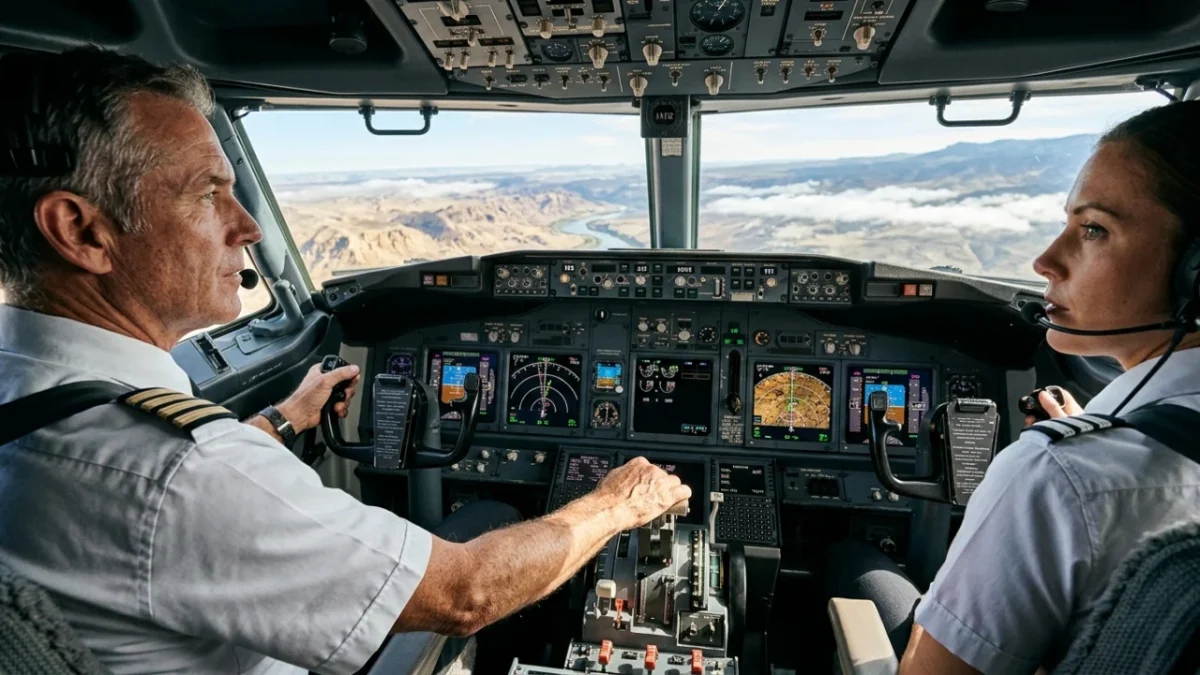
Federal transport authorities have penalised European carriers a combined $425,000 for operating Delta Air Lines codeshares below 32,000 feet in restricted conflict airspace, exposing a ruthless regulatory regime forged through decades of lethal aviation hazards. The enforcement actions against Air France and KLM signal that American safety rules follow US flight numbers across the globe, regardless of who sits at the controls.
The penalties stem from more than 130 commercial flights traversing the Baghdad Flight Information Region below mandated cruising levels between January 2022 and May 2025. While Delta did not physically operate the aircraft, its airline designator code was stamped on every passenger ticket sold through the transatlantic alliance partnership.
For passengers boarding what they believed to be routine services, the flights breached strict security buffers designed to shield civilian airliners from surface-to-air weaponry and volatile regional conflict.
The Baghdad Airspace Breach: Inside the Federal Investigation
An inquiry by the Office of Aviation Consumer Protection revealed that Air France operated over 30 prohibited services carrying the Delta designator code, whilst KLM logged more than 100 flights through the same restricted corridor. Both European carriers routed the flights beneath the mandatory 32,000-foot ceiling established under federal regulation 14 CFR 91.1605.
That long-standing rule bars US operators—and any foreign carrier marketing flights under a US airline code—from entering lower Iraqi airspace where ground combat and militant activity pose catastrophic risks to civil aviation. Extended in 2022, the restriction remains strictly active.
The legal consequences arrived swiftly from Washington:
- Air France received a penalty of $105,000 for its portfolio of unauthorised codeshare operations.
- KLM was assessed a larger fine of $320,000 after clocking triple the number of low-altitude transits.
- The carriers must pay an immediate collective sum of $265,000 within 60 days, with the remaining $160,000 suspended on the condition that neither airline repeats the infraction over the next 12 months.
US Transportation Secretary Sean P. Duffy delivered an uncompromising assessment of the ruling: “Under the Trump Administration, if you fly carrying a US code, following our safety rules is not optional. We will not hesitate to hold accountable any airline for failing to comply with agency regulations. Passenger safety comes first—no exceptions.”
The Cockpit Dilemma: Air Traffic Control Orders Versus Federal Law
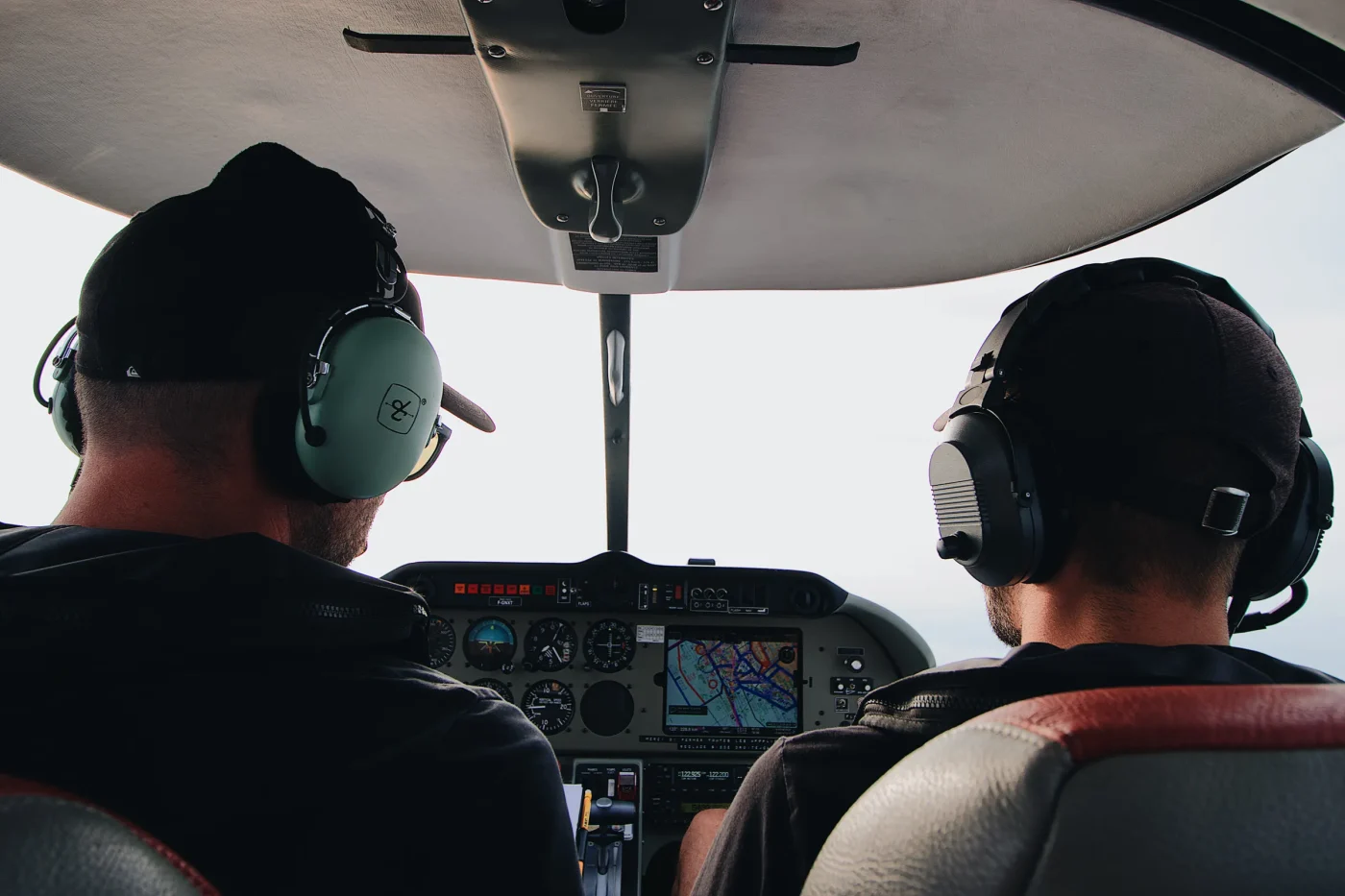
Both European operators challenged the findings, explaining to regulatory authorities that their flight crews never intentionally flouted flight boundaries. Instead, the airlines maintained that local air traffic controllers repeatedly ordered descents or denied scheduled climbs to resolve conflicting traffic movements.
According to the carriers, crews faced a direct operational paradox: disobey local air traffic controllers in active airspace, or descend into federally prohibited altitudes. Both airlines argued their actions should have qualified under emergency exemptions intended to preserve separation between passing jets.
Federal regulators dismissed that defence. Under US aviation oversight, safety mandates impose an absolute standard that airlines cannot compromise for operational convenience or air traffic congestion.
Why Altitude Margins Save Lives: The Shadow of Low-Altitude Flight Hazards
Aviation safety regulations treat altitude not as a flexible suggestion, but as an indispensable firewall against disaster. Whether navigating active warzones or volatile weather phenomena, descending below prescribed safety margins drastically narrows a flight crew’s ability to recover from sudden catastrophe.
Modern transport rules trace their uncompromising strictness to historical tragedies where rapid loss of altitude proved fatal. Among the most transformative chapters in commercial aviation history remains the operational legacy of Delta flight safety protocols.
The Watershed Legacy of Delta Airlines Flight 191
Decades before conflict zones dominated global flight planning, commercial aviation faced an invisible killer in the skies: low-altitude wind shear. The disaster that permanently reshaped modern aviation doctrine occurred when Delta Airlines Flight 191 encountered a violent microburst during its final descent toward Dallas/Fort Worth.
A microburst generates rapid, intense downdrafts that force high-velocity air outwards upon hitting the ground, subjecting an approaching aircraft first to an unexpected headwind and then to an immediate, lift-destroying tailwind. Trapped at low altitude without sufficient airspace to regain flying speed, Flight 191 crashed short of the runway.
The tragedy fundamentally revolutionised global cockpit procedures, yielding vital breakthroughs that protect modern flights today:
- The mandatory installation of airborne forward-looking wind shear radar aboard all commercial airliners.
- The deployment of Terminal Doppler Weather Radar systems across major international airports to detect microburst anomalies.
- Compulsory simulator training teaching flight crews immediate, maximum-thrust escape manoeuvres the instant wind shear alerts sound.
- Uncompromising federal minimum-altitude requirements that strip pilots of discretionary leeway when known atmospheric or terrestrial hazards exist.
The regulatory philosophy forged in the aftermath of Flight 191 proved clear: whenever an airliner operates close to hazardous terrain, hostile fire, or volatile weather, standard margins of error disappear entirely.
What Codeshare Passenger Protections Mean in Practice
The penalties imposed on Air France and KLM highlight the hidden regulatory machinery operating behind airline marketing partnerships. For passengers, booking a flight code involves far more than frequent-flyer points or coordinated baggage transfers.
The arrangement divides airline duties into two separate legal categories:
- The Operating Carrier: The physical airline supplying the aircraft, cockpit crew, and direct mechanical maintenance.
- The Marketing Carrier: The airline issuing the ticket under its own commercial flight number and assuming federal regulatory responsibility for the journey.
Because Delta stamped its designator onto these European services, US authorities held the operations to standard federal benchmarks. While Delta declined to comment publicly on the penalties, the enforcement establishes a clear precedent for alliance members flying across geopolitical hot spots.
💡 Air travel remains the safest transit mode on earth precisely because regulators refuse to negotiate on baseline safety altitudes, whether evading lethal storm microbursts or conflict-zone surface fire.
🔍 As geopolitical friction continues to shift flight paths across the Middle East and Eastern Europe, airline dispatchers face mounting pressure to balance fuel efficiency with stringent airspace restrictions.
📌 For transatlantic travellers, the federal crackdown serves as a powerful reminder that every flight number carries legal obligations that transcend sovereign borders.
👇 Do you pay attention to which partner airline actually operates your international flight when booking a codeshare ticket? Share your views and experiences in the comments below.
 1
 2
 3
 4