
Inside the Fiery Clash Between Italy’s Centre-Left Mayors and Giorgia Meloni as Municipal Coffers Empty Under Soaring Living Costs

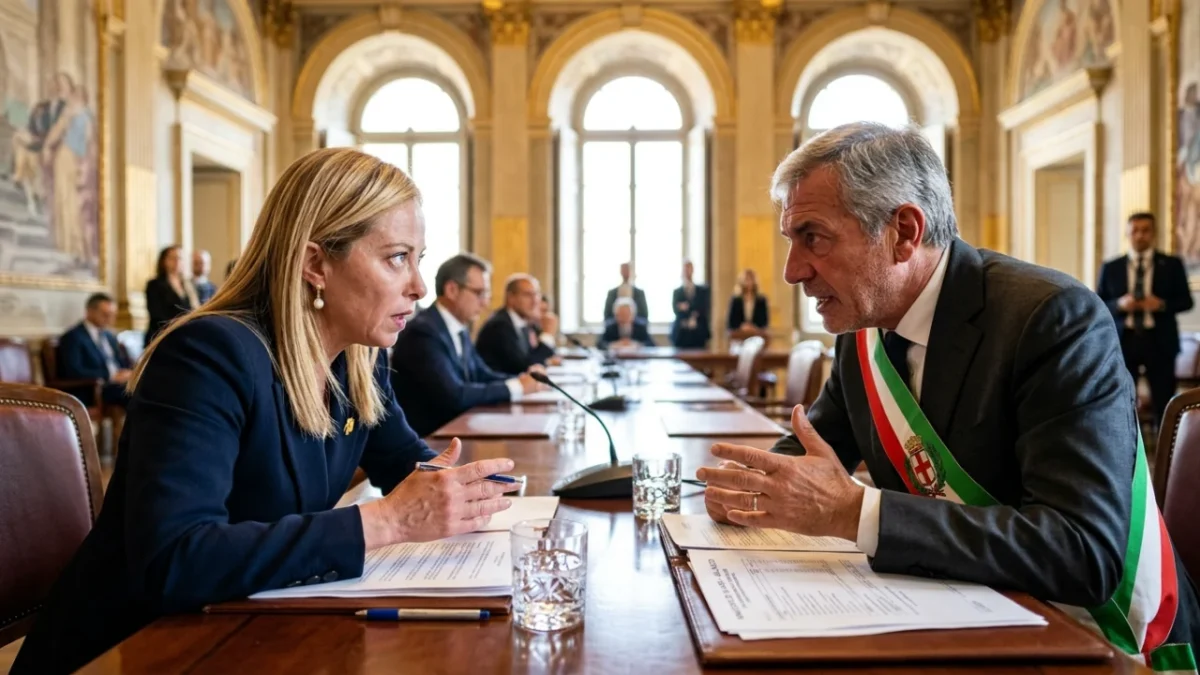
Italy’s prominent centre-left city leaders have brought their battle over the national cost-of-living squeeze straight to Palazzo Chigi, demanding emergency interventions from Prime Minister Giorgia Meloni as local budgets buckle under inflation.
Municipal balance sheets across major hubs such as Milan, Rome, Bologna, and Florence have absorbed relentless price increases across energy tariffs, public transit, and social welfare programmes. Civic leaders warn that without targeted central funding, town halls will have no choice but to slash frontline community support or raise local levies on already struggling households.
This high-stakes face-off captures a growing political friction across Europe: central governments striving to enforce fiscal restraint while municipal authorities absorb the daily impact of household poverty.
The Battle Over Carovita: Why Town Halls Are at Breaking Point
The term carovita—the crushing surge in essential living expenses—dominates public discourse across Italy. While national policymakers highlight headline macroeconomic metrics, municipal leaders see a very different reality on the ground.
Local councils oversee the services that touch everyday life most intimately, from subsidised nursery places and elderly social care to municipal housing maintenance and commuter networks. When prices skyrocket, these non-discretionary statutory obligations place direct strain on city balance sheets.
The political divide sharpens the conflict. While Meloni’s right-wing coalition commands a decisive majority in the national parliament, the country’s largest economic centres remain bastions of the centre-left Democratic Party (PD) and progressive civic coalitions.
That ideological gulf creates a sharp impasse over who holds financial responsibility:
- Universal vs targeted welfare: City leaders argue that national welfare reforms have dismantled critical buffers, forcing local social services departments to bridge the gap with zero extra budget.
- Public procurement pressures: Long-term municipal supply contracts, particularly for schools and public facilities, have experienced double-digit cost increases that exceed original budgetary forecasts.
- Transport network subsidies: Urban transit operators require heavier subsidies to keep ticket prices stable for commuters coping with wage stagnation.
Fiscal Handcuffs and the Struggle for Municipal Solvency
Much like British local authorities grappling with rising statutory pressures, Italian municipalities operate under stringent fiscal rules that limit their borrowing powers strictly to capital investment. Operational deficits are unlawful, leaving mayors with narrow options when expenditure outpaces income.
The National Association of Italian Municipalities (ANCI) has long stressed that local councils cannot shoulder national social security deficits. When families fall through central safety nets, they turn to local social workers, municipal rent-relief funds, and council-run food aid initiatives.
Mayors argue that central government policies have centralised fiscal control while decentralising the practical burden of poverty management.
The Pressure Points in Major Metropolitan Areas
In industrial centres like Milan and university hubs like Bologna, soaring private rents have triggered a severe housing emergency. Students and low-wage key workers find themselves priced out of city centres entirely, piling pressure onto mayors to expand public housing stocks.
Southern metropolitan mayors face an even tougher dilemma. Lower average household incomes mean local tax bases cannot generate enough revenue to compensate for any reduction in national transfers, leaving essential services teetering on the edge.
For British observers accustomed to the financial distress in councils from Birmingham to Nottingham, the Italian scenario offers a strikingly familiar parallel: central fiscal consolidation clashing directly with civic resilience.
The Political Calculation in Rome
Prime Minister Meloni’s administration faces its own delicate balancing act under strict European Union fiscal supervision rules. Rome must demonstrate budgetary discipline to international bond markets, limiting its leeway for wide-ranging municipal bailouts.
Government officials have historically urged local administrations to root out inefficiencies and streamline administrative spending before seeking national cash injections. The national executive maintains that targeted relief must remain strictly managed at the central level to prevent structural borrowing from expanding.
This debate reflects a fundamental constitutional question: should national governments guarantee baseline operational liquidity to local authorities during macroeconomic shocks, or must cities adjust their spending to match the country’s broader fiscal constraints?
Because statutory rules, financial packages, and local tax powers can change with each state budget cycle, anyone tracking Italian civic finance should consult the latest publications from the Italian Ministry of Economy and Finance or ANCI for the newest updates.
💡 The escalating standoff between Italy’s metropolitan mayors and national leadership highlights a wider European struggle: how to safeguard vulnerable households without destabilising public debt.
🔍 As both tiers of government defend their financial priorities, the outcome of these negotiations will determine whether essential local services remain accessible to ordinary working families.
📌 How should central governments balance national debt targets against the urgent funding needs of local councils? Share your thoughts below.
 1
 2
 3
 4