
Inside the Pentagon’s 90-Day Doomsday Directive: How US Military Bases Are Secretly Breaking Free from the Civilian Power Grid

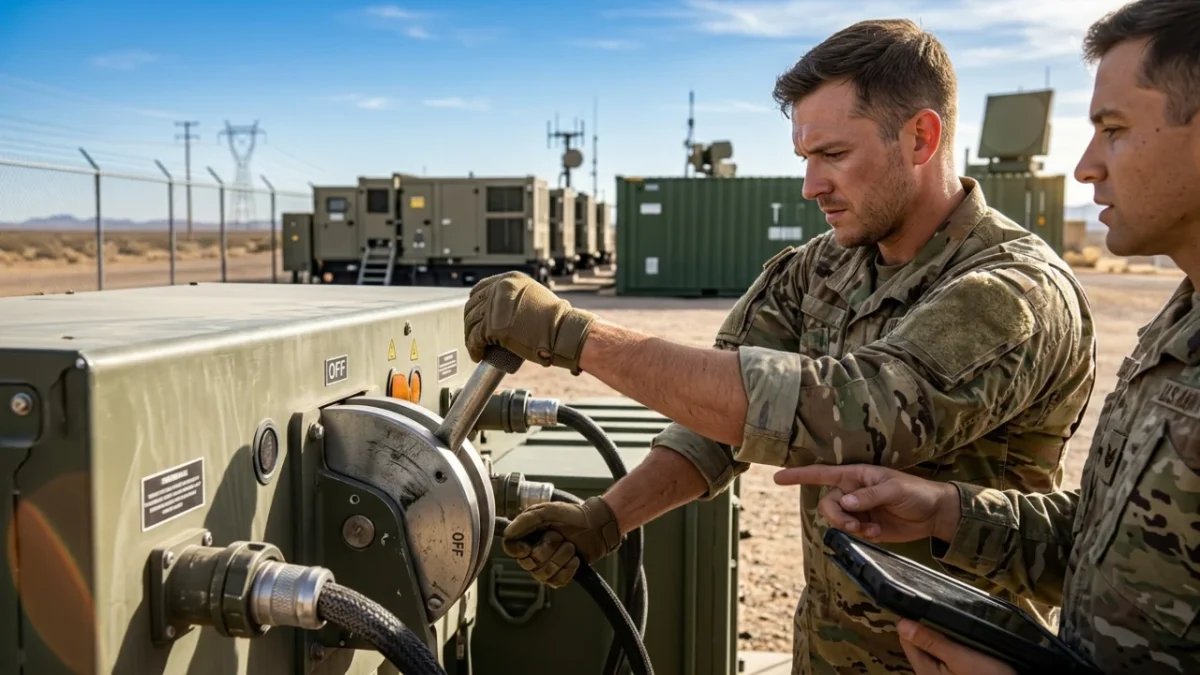
The Pentagon has formally initiated a sweeping national defence directive requiring major domestic military installations to operate completely severed from civilian utilities for a minimum of 90 days during a major conflict. Codenamed FORTRESS, the high-stakes survival architecture is engineered to insulate military operational command from catastrophic domestic grid collapse, foreign cyber strikes, and critical supply-chain ruptures.
For decades, strategic planners treated the American homeland as a geographic sanctuary shielded by two vast oceans. That operational doctrine has now been officially dismantled.
Pentagon chief spokesperson Sean Parnell confirmed that reliance on ordinary municipal infrastructure has become an intolerable hazard for armed forces readiness. Homeland defence installations must now secure absolute self-sufficiency in electricity, potable water, communications, and logistical sustainment if full-scale hostilities break out on multiple international fronts.
The FORTRESS Initiative: Portable Nuclear Power and Microgrids
At the operational heart of the Pentagon FORTRESS plan lies a total overhaul of base utilities. Military planners are eliminating single points of failure across continental installations by deploying microgrids, industrial-scale battery systems, and transportable nuclear reactors.
The strategic calculation treats basic electrical distribution as an active weapon system on modern battlefields. “Power is combat now,” Parnell warned, emphasising that any loss of electrical generation instantly paralyses command structures, automated logistics, assembly lines, and water treatment.
Rather than negotiating emergency utility access during an escalating war, installations will immediately switch to isolated energy nodes capable of sustaining continuous operational readiness entirely off-grid.
- Modular Nuclear Generation: Rapid deployment of transportable reactors designed to deliver resilient base-wide baseload power.
- Autonomous Microgrids: Advanced industrial energy storage engineered to isolate sensitive defence networks from vulnerable regional grids.
- Hardened Communications: Integrated shields to neutralise electronic warfare, widespread GPS jamming, and orbital interference targeting satellite navigation.
Strategic Stockpiling and the Civil Reserve Manufacturing Network
The directive extends well beyond local base generators. Operational mandates compel domestic installations to establish deep strategic reserves of fuel, munitions, critical minerals, sensitive microelectronics, and essential medical supplies to survive a 90-day global shipping freeze.
Every vital military production requirement must maintain a minimum of two independently qualified domestic supply pathways. Planners warn that the immediate fallout of a multi-front global conflict would shatter international maritime transport and civilian cargo networks overnight.
Industrial Mobilisation Under War Conditions
To prevent chronic shortages during extended warfare, the initiative establishes the Civil Reserve Manufacturing Network. This commercial conversion framework prepares designated private factories to pivot their tooling directly toward defence manufacturing at a moment’s notice.
Participating industrial sites will undergo rigorous cyber defence audits, regular mobilisation drills, and conversion stress tests. The Pentagon is establishing pre-arranged procurement contracts so that production lines can transition seamlessly into high-volume defence material fabrication without regulatory delays.
The initiative aligns with broader homeland security repositioning spearheaded under President Donald Trump, including the Golden Dome missile defence programme and heightened strategic vigilance across the Western Hemisphere, Greenland, and the Panama canal transit corridor.
The End of Geographic Isolation
American military doctrine historically relied on the luxury of distance, presuming oceans would insulate factories and domestic bases from frontline violence. That assumption has been retired as precision hypersonics, offensive cyber programmes, and orbital disruption transform domestic territory into contested operational space.
By enforcing an unyielding 90-day isolation threshold across every critical facility, the defence establishment is constructing a nationwide operational shock absorber. The objective is singular: guaranteeing that retaliatory strike power, air defence, and logistical mobilisation remain lethal even if the civilian world outside the gate goes completely dark.
💡 The shift to independent microgrids marks the most significant domestic base restructuring since the start of the Cold War, reflecting an era where continental infrastructure is considered permanently vulnerable.
🔍 As strategic stockpiling intensifies, the true test will be how quickly commercial factories adapt to defence conversion standards and independent power generation.
📌 The era of assuming domestic safety behind distant front lines is over.
👇 Do you believe domestic defence installations should rely entirely on private microgrids and portable nuclear power? Share your perspective below.
 1
 2
 3
 4