
Can an Algorithm Direct a Blockbuster? China Just Released the World’s First Licensed All-AI Feature Film Inspired by the Ancient Sanxingdui Mystery—and Audiences Are Refusing to Watch

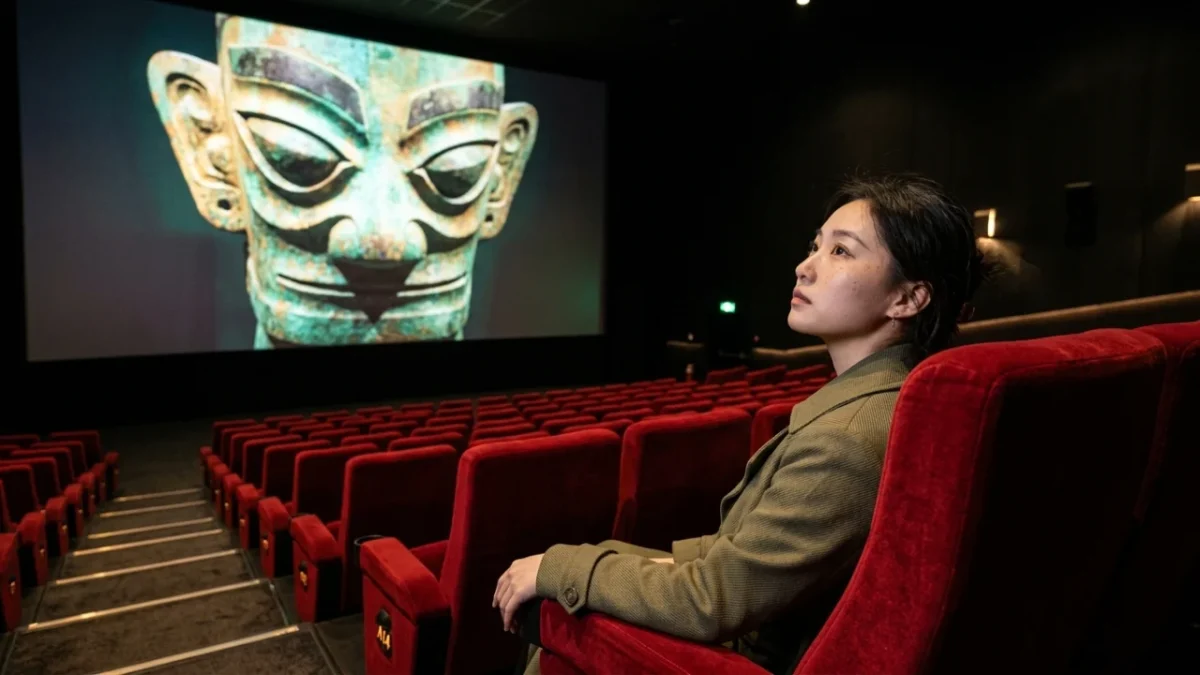
China has officially released cinema’s first licensed feature film produced entirely through an artificial intelligence workflow, but box office receipts reveal audiences are walking away from the experimental spectacle. Backed by Bona Film Group, the 100-minute sci-fi production, titled Sanxingdui: Future Past, secured historic theatrical distribution clearance from China’s National Film Administration, only to generate a modest sum of just over 500,000 yuan across its opening two days.
The ambitious project sought to merge the enigmatic Bronze Age relics of Sanxingdui with modern algorithmic technology, yet the public reception exposes a widening gulf between technical milestones and genuine viewer immersion.
From Ancient Relics to Algorithmic Crisis
The theatrical experiment draws directly from the real-world archaeological mystery of Sanxingdui, an ancient Bronze Age site in Sichuan province known for its colossal bronze masks and unexplained cultural artefacts. Rather than a straightforward period piece, the narrative projects these ancient discoveries centuries into tomorrow.
The story follows a dystopian future where human civilisation collapses after delegating all executive decisions to autonomous software. Salvation hinges on decoding seven ancient symbols unearthed from the historic ruins, establishing a deliberate dichotomy between prehistoric human craftsmanship and futuristic digital control.
To realise this vision without conventional sets or cameras, the studio relied entirely on computational pipelines rather than traditional filming equipment.
- 1.2 million base images: Curated across two continuous years of digital development via the proprietary Boka Film Cloud Studio platform.
- 100 full iterations: The feature underwent more than a hundred complete revisions to harmonise animation style and physical movement.
- Zero human replicas: Every cast member on screen represents an original digital construct, completely free of scans or likenesses of living actors.
The Anatomy of an AI-Driven Film Crew
While artificial intelligence handled pixel synthesis and scene generation, studio executives insist the enterprise remained anchored by human creative judgment. Bona Film Group deployed an internal team named AIGMS, structuring their pipeline around established industry departments rather than automated scripts.
Nearly 100 human creative professionals filled 17 dedicated production specialisms, overseeing screenwriting, directorial pacing, artistic direction, virtual cinematography, lighting design, and sound composition. In practice, artists supplied the core visual prompts and structural edits, leaving the computing engine to render scenes that would traditionally demand massive visual effects teams.
The Technical Hurdles Haunting 100-Minute Runtimes
Despite passing rigorous state censorship and screening checks, the final cut exposes the severe technical boundaries still limiting computational cinema. Industry observers examining early screenings noted that whilst short demonstration clips look immaculate, sustaining narrative cohesion across 100 continuous minutes presents an entirely different technical hurdle.
Viewers and visual effects specialists pointed out multiple recurring flaws:
- Character drifting: Digital figures struggle to maintain exact facial proportions and micro-expressions between consecutive camera angles.
- Physical realism: Simulated lighting and environmental interactions frequently violate natural physics, pulling audiences out of the narrative trance.
- Emotional detachment: Photorealistic synthetic faces fail to communicate nuanced vulnerability, creating an uncanny valley effect that blunts dramatic tension.
Empty Theatres and the Future of Silicon Cinema
The muted commercial opening highlights a blunt reality confronting media conglomerates worldwide: novel technology alone cannot substitute for character connection. Low theatre occupancy levels recorded by financial outlets demonstrate that cinema goers will not pay premium admission simply to witness proof-of-concept software in action.
The industry consensus is clear. The commercial viability of entertainment hinges on writing craft and resonance, maintaining a market governed by compelling storytelling rather than novelty rendering pipelines.
Bona Film Group is not retreating from the frontier, maintaining active development on further algorithmic features, including the sci-fi project Unplanned: Operation Guanghan. Rival major studios such as Huayi Brothers and Huace have similarly committed capital to their own automated pipelines, treating this inaugural release as a foundational benchmark rather than an outright defeat.
💡 For Hollywood and international studios monitoring the space, the muted reception proves that the technology must evolve far beyond synthetic curiosity before it can challenge traditional storytelling.
🔍 As archaeological marvels like Sanxingdui continue to fuel futuristic imagination, the debate over who—or what—should tell human stories will only intensify.
👇 Would you spend money at the cinema to watch a full-length film generated entirely by software, or does great drama require living actors? Share your thoughts below.
 1
 2
 3
 4