
The Ancient Indian Ritual Where Men Become Living Gods: How Kerala’s Hypnotic Theyyam Defies Social Hierarchies in Fire and Crimson

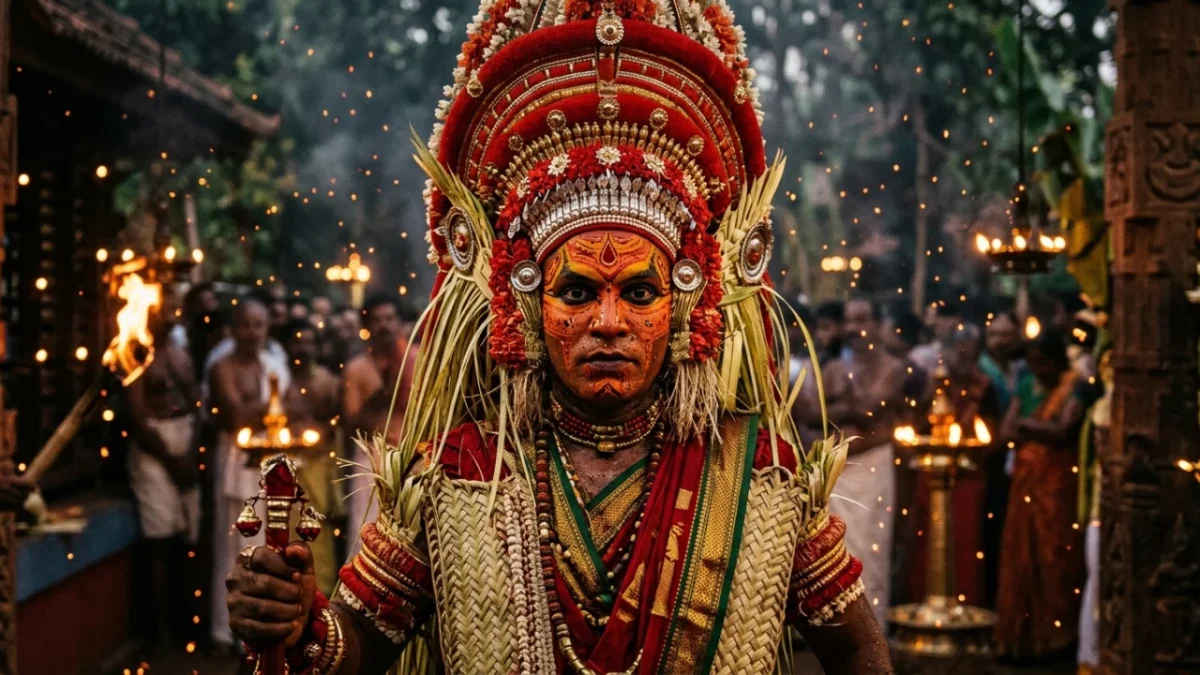
In the sacred groves of northern Kerala, mortal dancers transform into living deities through the Theyyam ritual, an extraordinary centuries-old tradition where rigid caste hierarchies momentarily dissolve beneath towering headdresses, resonant drumbeats, and glowing embers. For centuries, this nocturnal invocation across the Malabar coast has elevated performers from historically marginalised communities into direct channels of divine prophecy, venerated by landowners and aristocrats alike.
The transformation is neither metaphorical nor merely theatrical.
To the gathered villagers standing shoulder-to-shoulder in the humid night air, the performer ceases to be a human artisan the moment the final layer of organic pigment is applied and the mirror is handed to him. He becomes the deity incarnate, possessing absolute authority to offer blessings, settle communal disputes, and pronounce judgment across the ancestral shrines known locally as kavus.
The Sacred Alchemy of Pigment, Fire, and Steel
The staging of a Theyyam ritual demands months of physical preparation and spiritual discipline. Performers adhere to strict dietary regimes and meditative routines before donning costumes that frequently weigh upwards of thirty kilograms and rise several metres into the night sky.
Every element of the attire relies on meticulously prepared natural materials:
- Natural facial cosmetics: Intricate patterns painted by hand using ground rice paste, turmeric, and vermilion, producing symmetrical geometries that conceal human emotion.
- Architectural headdresses (Mudi): Towering structures crafted from bamboo frames, areca nut palm splints, and scarlet cloth, requiring extraordinary neck strength to balance during rapid rotations.
- Armour and waistbands: Woven coconut fronds, beaten brass plates, and polished mirrors designed to reflect the torchlight and disorient the senses.
- Fiery accoutrements: Girdles fashioned from dried palm leaves that are ignited during specific warrior manifestations, enveloping the performer in crackling flames.
The sensory shock is immediate. Accompanied by the thunderous cadence of the chenda drum and the piercing whine of the kuzhal pipe, the performer enters a profound, altered state of consciousness. In climactic invocations such as the Thee Chamundi, the dancer throws himself repeatedly onto burning mounds of charcoal, rising unharmed to the gasps of the surrounding crowd.
A Subversive Inversion of Power
Beneath the vivid spectacle lies one of South Asia’s most radical social contracts. Historically, feudal Kerala imposed severe caste stratification, yet Theyyam ritual ceremonies completely invert this power dynamic through inherited spiritual legitimacy.
The performers descend exclusively from specific indigenous and lower-caste communities, including the Vannan and Malayan lineages. Throughout the year, their forebears endured entrenched social exclusion across agrarian society.
Yet inside the temple courtyard, the social order flips entirely.
Feudal patrons and high-caste village leaders bow before the manifested deity, seeking counsel and absolution. The god speaks through the performer with untamed candour, openly chastising historical injustices and reminding the powerful of their moral obligations to the vulnerable.
The Living Pantheon of the Kavus
With roughly four hundred distinct forms of Theyyam documented across Kannur, Kasaragod, and surrounding districts, the pantheon accommodates ancestral heroes, guardian spirits, and fierce serpent gods.
Some, like Muthappan, embody folk heroes who stood with ordinary hunters and shared food with outcasts. Others, such as the formidable Rakta Chamundi, channel primal cosmic fury against oppression. Unlike classical temple rituals confined within stone sanctuaries and conducted in formal Sanskrit, Theyyam speaks the vernacular Malayalam of the working countryside, rooted deeply in regional folklore and collective memory.
Navigating the Ritual: Etiquette for Travellers
For visitors from the United Kingdom seeking to witness this ancient tradition firsthand, the experience requires cultural awareness and quiet reverence. These ceremonies are active places of worship, not staged tourist performances.
- Verify seasonal cycles: Ceremonies run predominantly between late autumn and early spring, with local village temple committees determining dates according to the regional Malayalam calendar.
- Respect the sacred boundary: Avoid crossing designated barriers or obstructing ritual runs, especially when performers wield live torches or open swords.
- Dress with modesty: Traditional modest clothing covering shoulders and knees is mandatory; shoes must be removed well before entering the shrine precinct.
- Seek photography permission: While non-intrusive photography is generally permitted, flash photography during trance sequences can disorient the dancer and is strictly prohibited in most shrines.
💡 The Malabar coast remains one of the world’s few regions where pre-modern ritual performance continues without dilution, maintained not by state grants, but by living community faith.
🔍 As younger generations navigate modern employment across global economies, lineage families continue returning home each winter to step into the sacred headdress, ensuring the lineage endures intact.
👇 Have you ever witnessed an ancient sacred ceremony that turned everyday social hierarchies completely upside down? Share your thoughts and reflections below.
 1
 2
 3
 4