
Ilija Srdanović Speaks Out as Student-Led Movement Ousts Aleksandar Vučić After 14 Years: Inside the Historic Belgrade Uprising That Stunned Europe

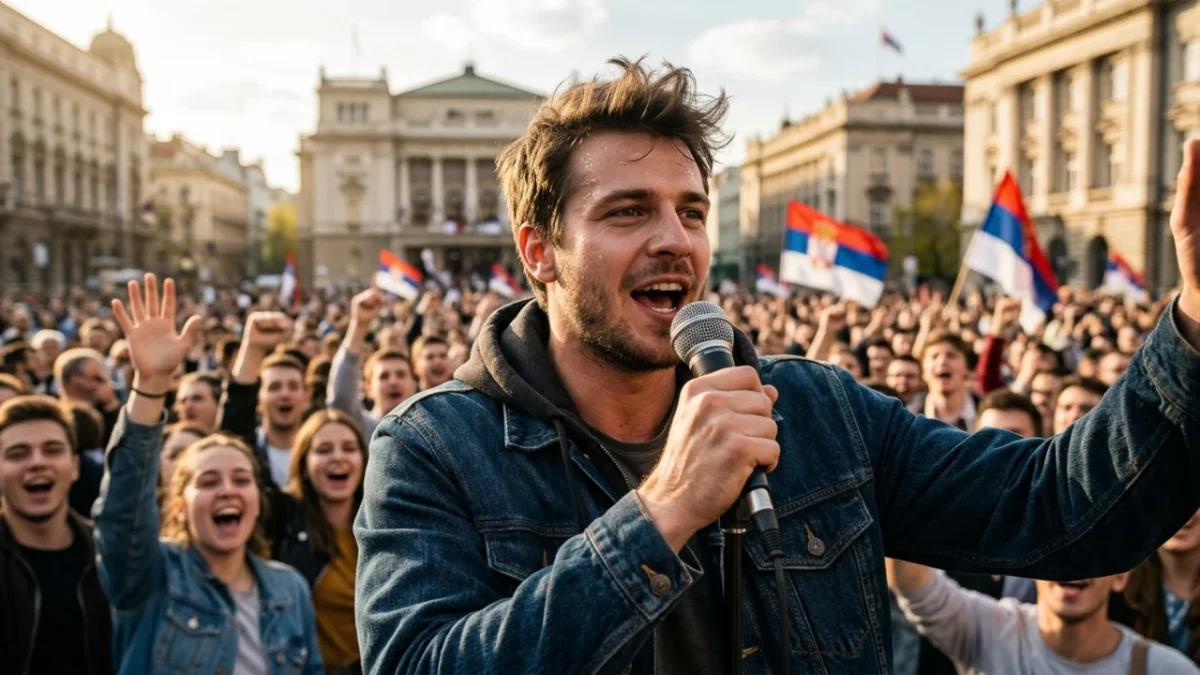
A stunning youth-led revolt has shattered Serbia’s long-standing political establishment, as Ilija Srdanović and the Students Win coalition officially unseated veteran ruler Aleksandar Vučić after 14 unbroken years in power. In an extraordinary political upset that caught European capitals entirely by surprise, Vučić conceded defeat as street celebrations erupted across Belgrade.
The triumph marks one of the most radical democratic shifts in modern Balkan history.
For UK observers and foreign policy monitors across Westminster, this defining ilija srdanovic news update represents a complete dismantling of the status quo that has dictated Serbian governance for well over a decade. Srdanović, who stood at the front of the student slate, appeared before supporters late last night to outline precisely how an underdog movement of young organisers routed the entrenched Serbian Progressive Party (SNS).
The Belgrade Breakthrough: Inside Srdanović’s Triumphant Address
Speaking directly to television cameras during euphoric celebrations at the student coalition headquarters, Ilija Srdanović revealed that the team never doubted their trajectory, despite facing a deeply entrenched political apparatus. He noted that the initial public recognition of their momentum came from outside Serbian borders, crediting Montenegrin broadcaster RTV Vijesti with early coverage of the unrest.
According to Srdanović, their path to power relied entirely on unrelenting, grassroots engagement across every district rather than backroom deals.
“We have been testing the pulse of our nation all along, during the pre-election process, through direct contact, eye to eye, approaching our citizens,” Srdanović stated. “They got to know us as people, and we received information from them about what they were missing. That was translated into the student programme. And they believed in what we were telling them.”
The strategy paid off with unprecedented turnout and an outright parliamentary triumph.
Srdanović pulled no punches when addressing the departure of Vučić from high office, declaring that the former leader had wrapped the country “in the black veil of history for a decade and a half and more.” Yet, rather than lingering on retribution, he insisted the priority now shifts toward structural national renewal.
From Protest Lines to Public Administration
The scale of the student coalition’s mandate means moving rapidly from campus demonstrations to the complex mechanics of state governance. As negotiations get under way to assemble a functional cabinet, the focus turns to the core pillars the student movement presented to voters:
- Direct Citizen Accountability: Implementing policies directly gathered from community feedback sessions rather than party patronage networks.
- Repaired Regional Diplomacy: Rebuilding fractured interstate relationships with immediate Balkan neighbours to stabilise long-standing territorial friction.
- Constructive International Engagement: Opening fresh diplomatic dialogues with Western partners, including the UK Foreign Office and European institutions, while charting an autonomous foreign policy.
- Institutional Depoliticisation: Reforming state apparatuses that have remained tethered to party control for the past 14 years.
A Dramatic Turn for Balkan Stability
The swift concession by Vučić averted feared clashes on the streets of the capital, opening an orderly transition process that few analysts anticipated. With senior figures—including prominent cardiologists and academics associated with the anti-corruption movement—now entering the frame for ministerial portfolios, the tone of governance in Belgrade faces an immediate reset.
Srdanović emphasised that his administration will deliberately pursue stable interstate relations, seeking to turn the page on regional friction that has frequently tested relations between the Western Balkans and Whitehall.
The task ahead remains immense as these novice legislators inherit state institutions shaped by years of single-party dominance.
📌 The coming days will reveal whether Ilija Srdanović and his fellow student leaders can transition their grassroots energy into coherent legislative discipline.
🔍 For Britons tracking developments across European democracy, this election serves as an extraordinary case study in youth mobilization toppling an entrenched power structure through the ballot box.
💡 Could student movements elsewhere replicate this grassroots strategy, or was Serbia a unique political flashpoint? Share your thoughts in the comments below.
 1
 2
 3
 4