
The Skytrax Best Premium Economy Airlines Revealed: Why Paying Double for an Upgraded Long-Haul Seat Might Be an Expensive Mistake on Certain Routes

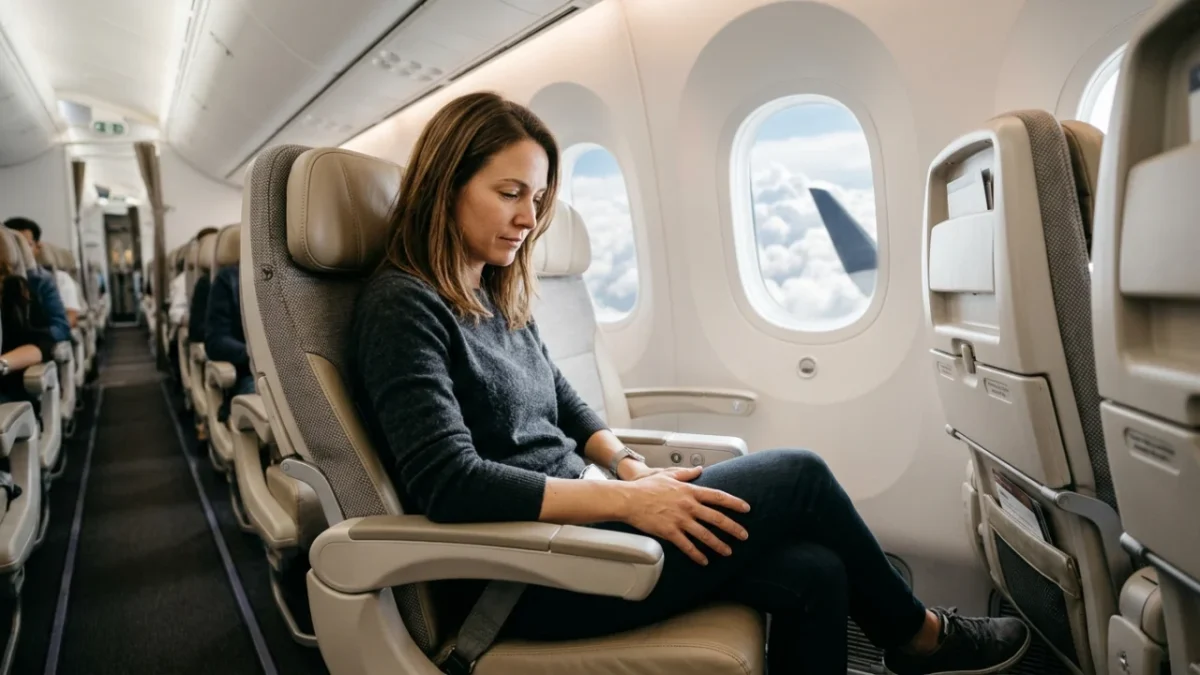
Taiwanese carrier EVA Air has secured the top global position in the Skytrax World Airline Awards for the world’s best premium economy cabin, fending off fierce competition from Emirates, Singapore Airlines, Cathay Pacific, and British favourite Virgin Atlantic. Yet behind the celebratory announcements lies an awkward commercial dilemma for travellers: while premium economy promises an escape from cramped conditions without the eye-watering expense of business class, paying double the standard fare often buys surprisingly little extra comfort on certain aircraft.
Passenger feedback collected across the industry highlights that cabin quality is no longer uniform across single airline fleets.
With seat pitch, dining standards, and privacy provisions shifting dramatically between aircraft models, knowing precisely what your money buys has become essential before reaching checkout.
EVA Air: The Original Cabin Pioneer Setting Legroom Benchmarks
EVA Air holds undisputed heritage in this space, having introduced the world’s very first dedicated premium economy product back in 1992. Beyond claiming the overall category crown in the 2026 Skytrax rankings, the carrier also took top honours for the best premium economy amenities.
The decisive factor for passengers is sheer physical room. On the carrier’s Boeing 777-300ER fleet, travellers receive 38 inches (96.5cm) of seat pitch, compared with 31 to 33 inches (78.7 to 83.8cm) in standard economy.
Selected Boeing 787-9 Dreamliners expand that gap even further, boasting an enormous 42 inches (106.7cm) of pitch in an intimate 28-seat cabin arranged in a 2-3-2 layout.
That 42-inch allowance is effectively equivalent to having the entire length of an acoustic guitar between your knees and the seat in front, according to Katy Nastro, travel specialist at flight-tracking platform Flighty. Crucially, the aircraft uses a cradle-style recline mechanism engineered specifically to prevent the passenger ahead from intruding into your personal space.
However, EVA Air already provides one of long-haul aviation’s most tolerable economy cabins. Gary Leff, founder of frequent flyer portal View from the Wing, observes that several of the carrier’s Boeing 777s maintain a nine-abreast layout in economy rather than the claustrophobic ten-across seating favoured by global competitors.
Nevertheless, Leff maintains that the wider seats, dedicated leg rests, and footrests make the premium cabin superior on marathon flights, particularly as fare jumps on EVA Air remain substantially lower than the near-$800 per segment upgrade fees frequently commanded by Middle Eastern and Asian rivals.
Emirates and the Game-Changing Airbus A350 Privacy Shield
Taking second place overall, Dubai-based Emirates collected the top global awards for both seat comfort and catering quality. The standard Emirates premium cabin features cream-coloured leather upholstery, elevated dining presentation, and calf rests, but its value proposition is complicated by its economy standard.
Because Emirates operates an economy cabin that regularly outperforms the wider market, shelling out twice the baseline ticket price can be a difficult financial pill to swallow.
That calculation shifted with the rollout of the airline’s latest Airbus A350 premium economy cabin.
- Electronic Adjustments: Full fingertip power controls for custom recline and leg support.
- Integrated Power: Dedicated wireless mobile charging pads built directly into the console.
- Visual Tech: A razor-sharp 13.3-inch (33.8cm) 4K inflight entertainment display.
- Unmatched Seating Architecture: An industry-first full-height privacy divider between passenger seats in a 28-seat, 2-3-2 configuration.
The Dilemma of the Older Fleet
The arrival of the Airbus A350—already flying key long-haul stages such as Dubai to Kuala Lumpur—represents what Leff describes as potentially the finest premium economy seat anywhere in the sky. Yet caution is warranted for passengers booking tickets purely on aircraft type alone.
Because the new privacy-shield seats are being phased in alongside progressive factory deliveries, Emirates passengers flying older widebody jets will experience the previous-generation seat. That older configuration provides modest comfort gains, making an expensive fare hike much harder to justify.
Singapore Airlines: The Paradox of Winning World’s Best Economy
Ranking third on the global podium, Singapore Airlines presents the ultimate upgrade conundrum: the airline also collected the Skytrax award for the world’s finest standard economy class.
Stepping up into Singapore Airlines premium economy secures roughly 38 inches (96.5cm) of pitch against 32 inches (81.3cm) in standard rows, eight inches (20.3cm) of deep recline, and built-in calf supports. On the carrier’s double-decker Airbus A380 superjumbos, the 2-4-2 layout eliminates several middle seats compared to the ten-abreast 3-4-3 economy arrangement below.
The carrier also pairs the physical seat with distinct lifestyle touches, including Champagne on boarding, priority baggage handling, and the ability to pre-order restaurant-style dishes via its Book the Cook service.
Nastro points out that the real test is itinerary duration. When a journey stretches past eight hours or involves an overnight sector, having fewer middle seats and guaranteed leg support becomes critical to arriving without acute fatigue, regardless of how competent the standard economy cabin happens to be.
Calculating the Real Value: When Should You Spend the Extra Cash?
Cathay Pacific and British flagship Virgin Atlantic round out the top five global operators, proving that long-haul carriers are prioritising this lucrative middle tier above economy margins. For travellers evaluating these options, the decision rests on simple ergonomics and timetable maths.
A daytime six-hour flight in a modern nine-abreast economy cabin will rarely warrant spending several hundred pounds more. But when navigating 12-hour hauls across multiple time zones, securing the extra five to ten inches of pitch found on carriers like EVA Air and Emirates transforms rest quality entirely.
💡 Check aircraft configurations before booking. Never assume a carrier’s award-winning seat is fitted across every route; look up the exact aircraft deployment to avoid paying premium rates for older interiors.
🔍 Audit the overnight schedule. An upgrade delivers maximum physical value on red-eye flights exceeding eight hours, where dedicated calf rests and deeper recline angles directly impact sleep.
📌 Compare the price differential carefully. If the premium economy seat commands more than double the price of an already-generous economy ticket, the return on your investment drops dramatically.
👇 Have you flown any of these top-rated cabins recently? Share your thoughts and tell us whether the upgrade was worth your money in the comments below.
 1
 2
 3
 4