
The Southern Food Myth Untangled: How Vivian Howard’s Groundbreaking Series Somewhere South Exposed the Surprising Global Roots Behind America’s Most Guarded Recipes

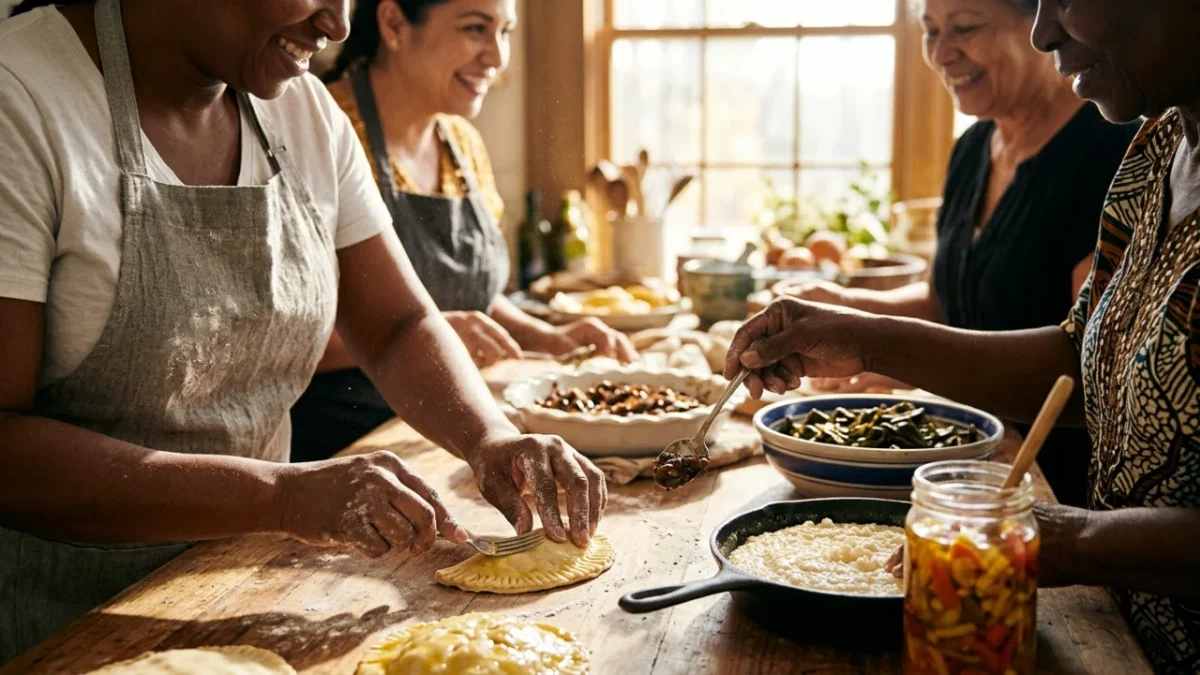
The myth that American Southern cuisine belongs exclusively to a single, monolithic culture falls apart the moment you examine who actually built its hearths. In the landmark documentary series Somewhere South, award-winning chef and broadcaster Vivian Howard demonstrates that the region’s signature comfort staples are fundamentally the living legacy of Indigenous, African, and international migrant communities.
Rather than treating biscuits and barbecue as static relics of an insular past, the programme approaches Southern cooking as an evolving global conversation. The result is a striking reassessment of regional identity that resonates just as strongly with British food enthusiasts accustomed to modern intercultural dining.
Food acts as a mirror, but only when cooks are willing to confront uncomfortable historical truths.
Dismantling the Monolith: Why the American South Defies Easy Stereotypes
For decades, television programming packaged Southern cooking into a tidy caricature: cast-iron cornbread, sweet tea, and front-porch nostalgia. That simplistic narrative routinely scrubbed away the vital contributions of West African enslaved cooks, Indigenous nations, and successive waves of overseas settlers.
Howard, who previously won acclaim for her Peabody-winning series A Chef’s Life, pivoted sharply away from personal biography to produce Somewhere South. Across six thematic episodes, she travels through North Carolina, West Virginia, and neighbouring states to track how diverse communities adapt heritage dishes to local ingredients.
She does not arrive as an omniscient authority, but as an inquisitive student at the dining tables of neighbours she had long overlooked.
This humility allows the programme to bridge cultural divides through universal culinary formats, proving that human beings across every continent solve hunger through nearly identical kitchen techniques.
Shared Vessels: How Dumplings, Porridge, and Hand Pies Bind Continents
The structural brilliance of the series lies in its framing. Each episode examines a foundational food format rather than a single geographical region, revealing surprising kinship between communities separated by thousands of miles.
- Hand Pies and Pasties: From the Cornish pasty brought to West Virginia coal mines by British workers to Latin American empanadas and Lumbee Indian collard sandwiches, folded pastry remains the ultimate working-class portable lunch.
- Porridge and Grits: Southern stone-ground hominy grits share direct spiritual and textural DNA with West African fufu, Chinese congee, and Italian polenta.
- Dumplings Across Borders: Whether dropped into chicken broth by rural Southern grandmothers, folded into dim sum, or pinched into Jewish kreplach, wrapped dough serves as universal comfort.
- Fermentation and Pickling: From Appalachian chow-chow and German sauerkraut to traditional Korean kimchi, souring acts as humanity’s shared survival strategy against bitter winters.
By contrasting these traditions side by side, Howard highlights how necessity and resourcefulness transcend political borders.
The Complex Heritage of Barbecue and Pit Cooking
Few culinary traditions carry as much territorial pride as barbecue, yet few are as deeply misunderstood. In examining smoke craft, the series documents how barbecue originated through the collision of Native American smoking racks and West African spice blends and roasting techniques.
Modern pitmasters featured in the series demonstrate that barbecue is never static. New arrivals from Southeast Asia and Central America continue to layer their own chilli pastes and citrus marinades onto hickory-smoked pork, invigorating an ancient practice.
Culinary purism, Howard argues, is often an illusion that ignores how people actually cook when survival and community are on the line.
What British Diners and Food Historians Can Take Away
For audiences across the United Kingdom, where national dishes like chicken tikka masala and fish and chips carry their own deep immigrant heritage, the central premise of Somewhere South feels intensely familiar. The British food landscape has been defined by trade routes, post-war migration, and cultural adaptation for centuries.
Authoritative British culinary bodies, including the Guild of Food Writers, have long emphasised that regional gastronomy thrives through exchange rather than isolation. Exploring how another continent navigates its cultural melting pot provides invaluable perspective on how communities honour heritage without freezing it in time.
The series offers a compelling reminder that the food on our plates always carries the signatures of multiple ancestors.
💡 Looking at the dishes you cook most often at home can reveal unexpected links to migrations and trade networks you may never have considered.
🔍 Checking food history archives and authentic community cookery books frequently reveals that our most cherished domestic recipes crossed oceans before reaching our kitchens.
📌 True culinary heritage is not a rigid rulebook, but an ongoing exchange between neighbours willing to break bread together.
👇 Have you discovered an unexpected cultural origin behind one of your favourite family recipes? Share your story in the comments below.
 1
 2
 3
 4