
Why Closing Your Fridge Door on a $1 Bill Could Save Your Food and Energy

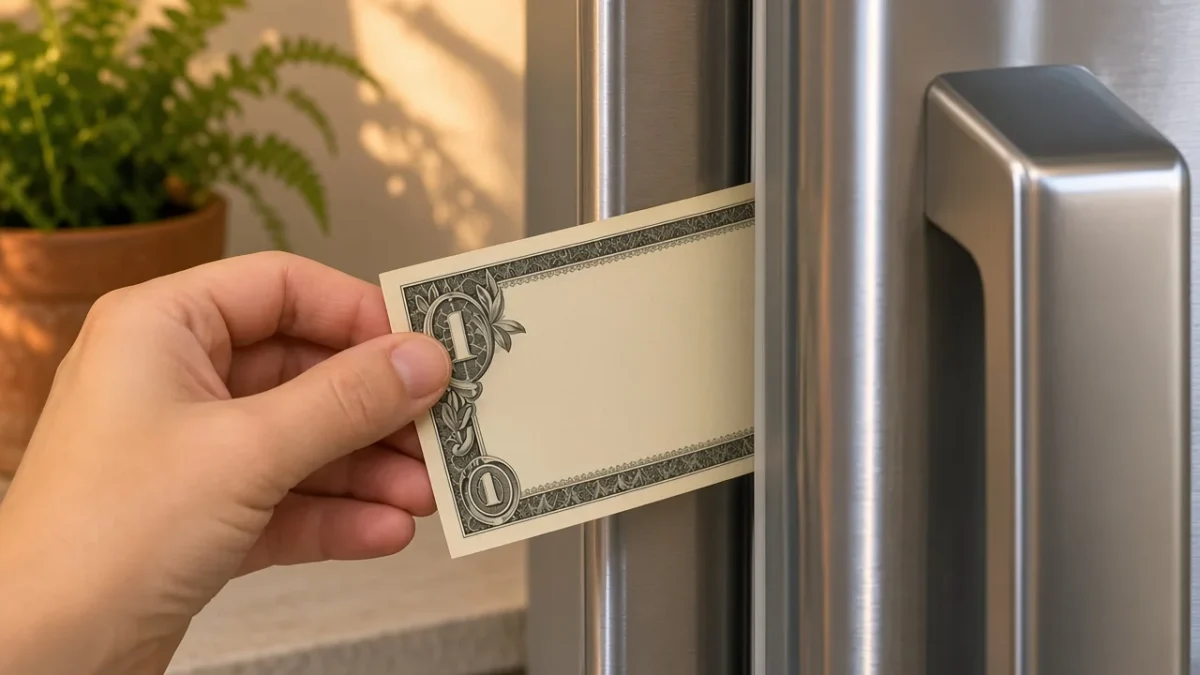
Closing your refrigerator door on a simple $1 bill is one of the easiest ways to find out if your appliance is silently bleeding cold air. Recommended by the University of Georgia, this straightforward check targets the appliance’s rubber gaskets—the flexible perimeter strips responsible for locking chilled air inside and blocking room heat from entering.
When these flexible strips weaken or warp, your kitchen cooling system pays the price immediately. The compressor must cycle longer and work harder just to maintain its safe internal temperature, jeopardizing food preservation and wearing out the appliance faster than expected.
Fortunately, you do not need special tools or technical training to diagnose a failing barrier right now.
How the Dollar Bill Test Reveals Gasket Damage
The entire premise relies on tactile resistance. A properly functioning refrigerator door seal uses magnetic attraction and supple rubber to grip the appliance frame securely when shut.
If the perimeter rubber has flattened, torn, or accumulated grime, the magnetic hold loosens. Testing multiple points around the perimeter exposes weak spots that normally hide in plain sight.
Step-by-Step Testing Process
- Place a crisp bill halfway across the refrigerator frame.
- Close the door firmly so the currency is trapped between the gasket and the frame.
- Gently pull the paper bill outward to gauge the resistance.
- Repeat the process across different locations along the top, bottom, and side edges of the door.
If you feel firm tension while pulling, the seal is holding its ground. If the currency slides out effortlessly with zero drag, your seal has failed to close the gap.
A sliding dollar bill indicates that chilled air is escaping, but it does not automatically mean the rubber strip needs an immediate replacement.
The Cost of Ignoring a Failing Seal
Widespread consumer assumptions often mistake cooling issues for major mechanical failures. When food spoils early or the unit runs loudly, homeowners frequently suspect a dead motor or a faulty thermostat, overlooking the humble rubber border.
A compromised perimeter forces continuous runtime, driving excessive wear on critical components while threatening safe food storage conditions.
| Gasket Condition | Appliance Impact |
|---|---|
| Intact and functioning seal | Locks in cold air, stabilizes internal temperatures, and preserves food safely. |
| Worn, warped, or loose seal | Allows warm air infiltration, forces the compressor to work harder, and degrades efficiency. |
How to Clean and Restore Your Door Gaskets
Before ordering replacement hardware or booking a technician, inspect the rubber channel for debris. Accumulated kitchen residue often prevents the magnetic strip from sitting flush against the metal cabinet.

Baking soda
To safely clean the rubber without deteriorating the material, follow the guidance from the University of Georgia:
- Mix one tablespoon of baking soda into about one liter of warm water.
- Dip an old, soft toothbrush into the solution to gently scrub inside the gasket folds.
- Rinse the area thoroughly with clean water to remove all remaining cleaning residue.
- Wipe the surface dry before testing the closure again.
If the material remains warped, brittle, or cracked after a thorough cleaning, check your appliance’s manufacturer recommendations to find the correct replacement profile for your exact model.
💬 A fast 30-second check can reveal whether your appliance is losing cold air around the edges.
✨ Regular maintenance with simple baking soda and water keeps your rubber barriers flexible and functional.
👇 Have you tried the paper bill trick on your fridge yet? Let us know what you found in the comments below!
 1
 2
 3
 4
