
Why Your Hostas Might Vanish Before Spring: The Hidden Underground Threats Gardeners Need to Stop Before the First Deep Freeze

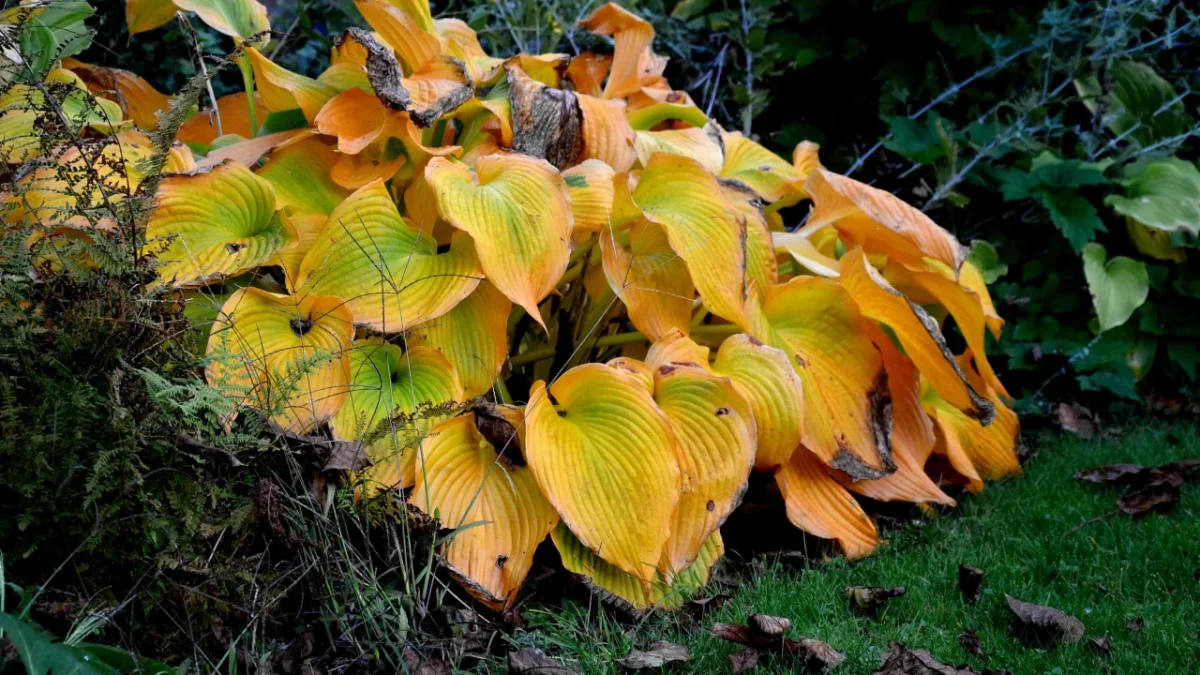
Your dormant hostas may look completely peaceful beneath the chilly surface, but invisible winter damage could keep them from ever emerging when warm weather returns. While these shade garden staples are famously rugged and capable of handling intense freezes, subterranean pests, root desiccation, and uninsulated pots can quietly destroy them before April.
The biggest pitfall for home gardeners is assuming that cold tolerance equates to total invulnerability. If you want lush foliage next season, you must winterize hostas against the hidden threats lurking below the frost line.
Jason Sarine, founder and owner of Humble Hen Farm and Nursery in New Castle, Virginia, warns that dormant plants provide the perfect cover for unchecked winter devastation.
“Voles will create a colony in a bed, make underground tunnels, and eat the plant roots. And it’s easy to miss the damage because the hostas are dormant and have no leaves to show distress, but the plants will just not come up in the spring.”
Deter Subterranean Voles Before They Destroy the Roots
Unlike moles that search for grubs and earthworms, voles are dedicated vegetarians with an appetite for nutrient-packed plant crowns and root systems. Because hostas drop their leaves and go dormant in late autumn, an entire root network can be consumed without showing a single above-ground warning sign.
Check your garden beds for half-dollar-sized entry holes in the soil and fresh, shallow surface runways snaking through the turf. If you spot these burrows, you need to intervene immediately before a colony establishes itself for the cold months.
Sarine notes that while targeted baiting remains the single most effective method to eliminate an active colony, it can be controversial among growers. Mechanical barriers and quick disruption of tunnel entrances are key steps to deterring them naturally.
Push Exposed Crowns Back Down Into the Soil
If you divided or planted specimens late in the autumn season, their root systems likely never established an anchor before the initial freeze. This leaves them vulnerable to frost heaving, a process where repeated freezing and thawing cycles push the center of the plant upward.
Once a hosta crown is thrust above the grade and exposed to freezing air, the plant faces severe cellular damage and desiccation. The fix, however, is straightforward.
Walk your planting beds regularly after hard cold snaps. If you see late-planted crowns popping out of the dirt, firmly step on them to press the root ball securely back beneath the soil line.
Mulch Strategically (Without Suffocating the Crown)
While established plants in the ground are naturally cold-hardy across most regions, a clean blanket of organic matter provides vital moisture retention and suppresses competitive weeds. The timing and placement of that material make all the difference.
Applying a layer of pine needles or chopped leaves becomes critical in late winter or early spring when unexpected late freezes threaten emerging growth. However, careless application can trigger crown rot before the season even begins.
“Make sure not to pile mulch over the crown; leave a slight gap so that the mulch is not sitting directly against the new shoots that come up.”
Clear Out Rotting Stems and Pest Breeding Grounds
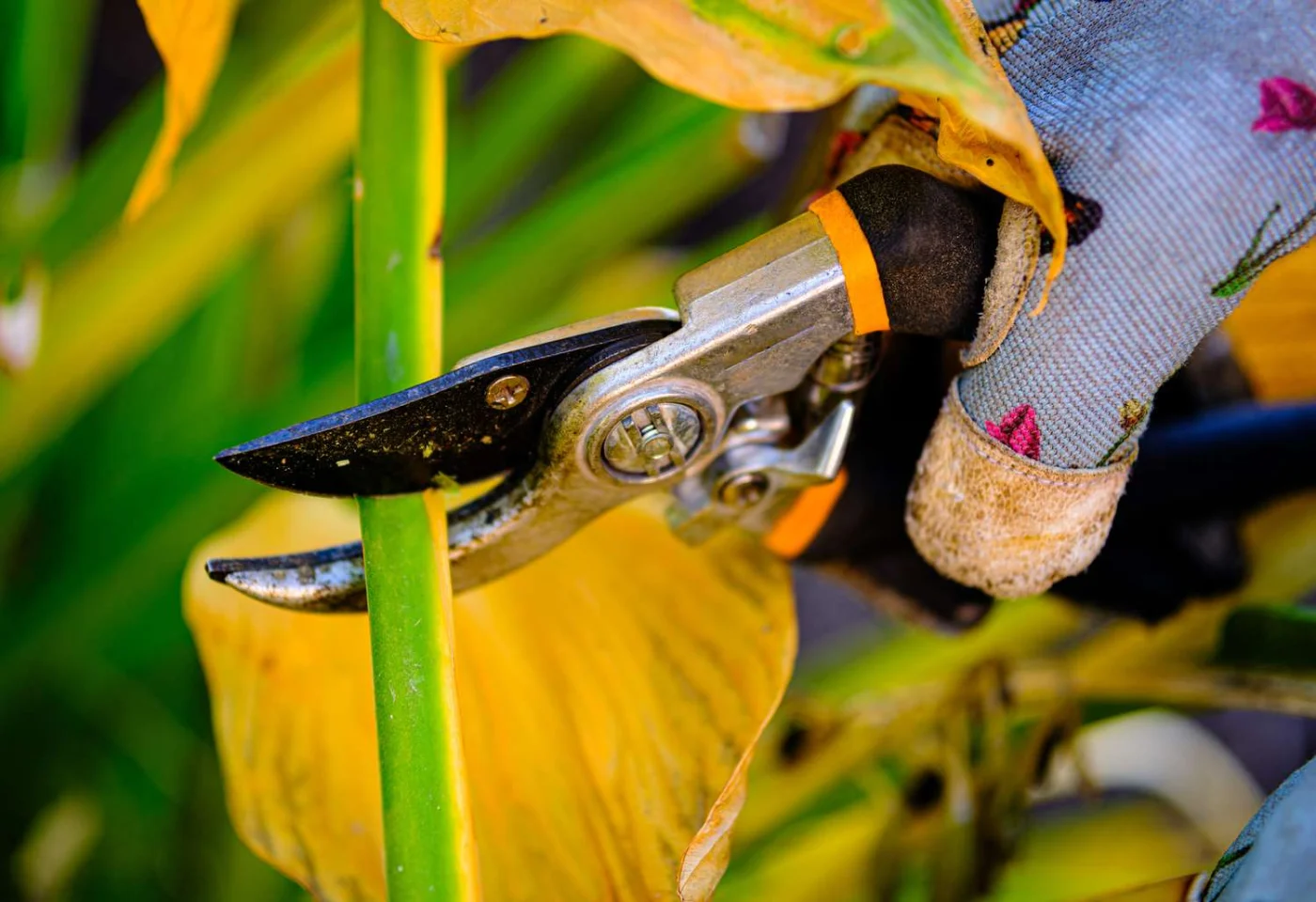
A hand wearing gloves using pruning shears to cut a plant stem
Slugs, snails, and destructive fungal pathogens do not disappear during the cold months; they shelter within damp, decaying vegetation. Leaving collapsed, mushy hosta foliage on the ground creates a sanctuary for pests looking to lay eggs.
Wait until the first hard freeze naturally kills off the foliage, then sanitize your hand pruners to eliminate disease transfer. Cut each stem down cleanly to roughly 2 inches above the soil level.
Scrape Away Debris to Disrupt Overwintering Eggs
Slugs routinely deposit egg clusters under wet leaf litter and within the top layer of earth surrounding hosta crowns. To stop a massive pest population from devouring your fresh spring shoots, take these steps:
- Rake away all decaying leaf litter and fallen tree debris within a two-foot radius of each crown.
- Gently scrape the top inch of soil around the base of the plant to expose and disrupt hidden pest eggs to drying air and birds.
- Discard the removed foliage away from your compost pile if fungal leaf spot was present during the summer.
The Myth: Established Hostas Never Need Winter Attention
A widespread gardening myth suggests that because hostas survive brutal sub-zero temperatures, they require zero seasonal care once frost hits. While their genetic cold tolerance is undeniable, cold weather is rarely what kills them.
The true killers are winter moisture imbalances, pest colonies feeding on dormant root tissue, and physical crown exposure caused by soil shifts. Addressing these biological factors ensures vigorous spring growth.
| Winter Risk | Targeted Solution |
|---|---|
| Vole feeding colonies | Scout for half-dollar entry holes; bait or disrupt runs promptly. |
| Frost-heaved crowns | Press exposed plant bases firmly back down into the soil bed. |
| Slugs & fungal spores | Cut dead stems to 2 inches; clear mulch and leaf debris away from crowns. |
| Container root freeze | Move to an unheated garage, sink into ground, or insulate with wood chips. |
Give Container Hostas Heavy Winter Insulation
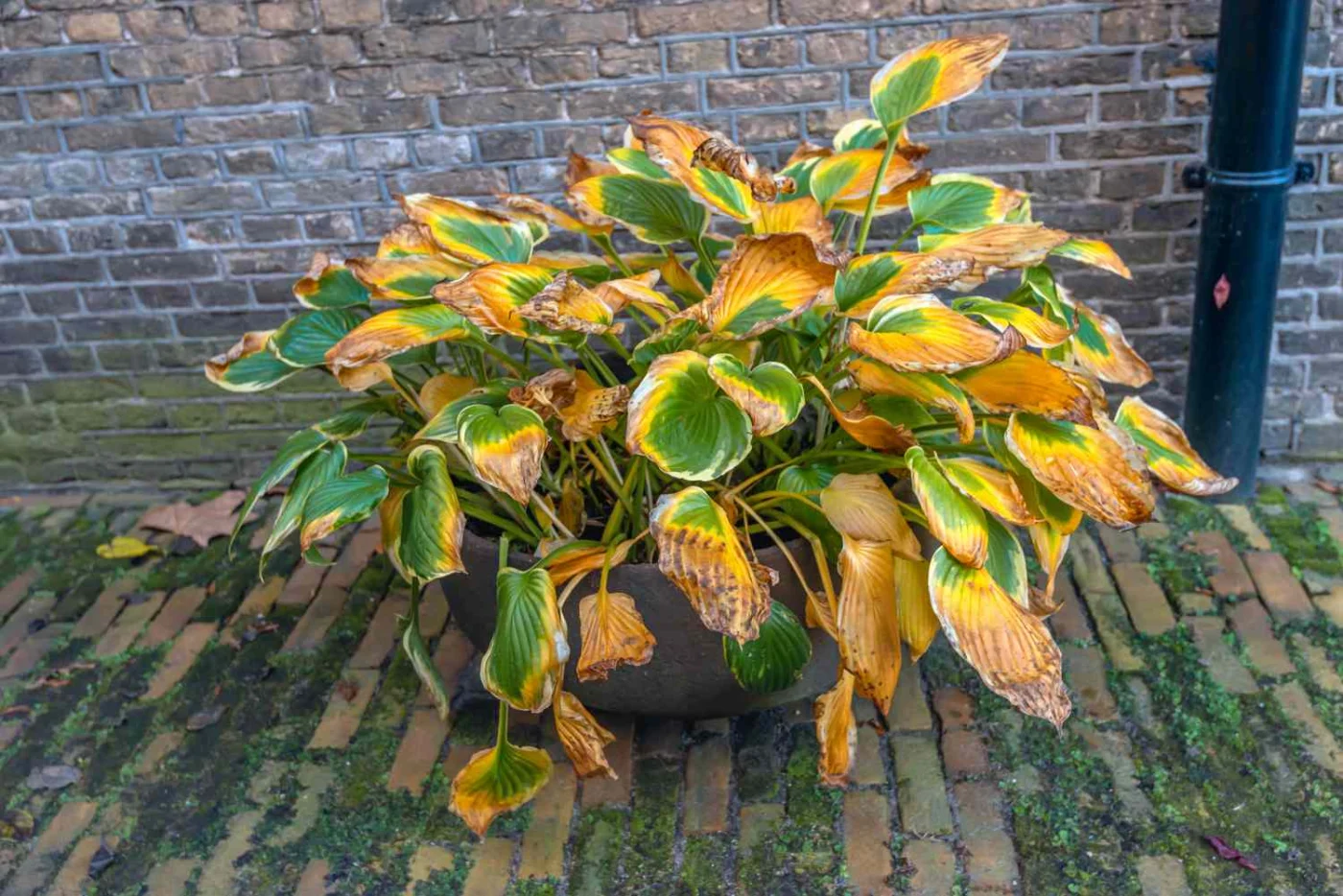
A potted plant with broad leaves placed on brick paving near a brick wall and a black drainpipe
Potted hostas lack the surrounding mass of garden soil that naturally insulates root systems from sub-freezing temperatures. In a planter, ambient freezing air penetrates the pot walls from all directions, subjecting root balls to lethal cold shocks.
To safely carry container plants through deep cold snaps, implement one of these proven overwintering strategies:
- Shelter indoors: Relocate decorative pots into an unheated garage, shed, or basement where temperatures remain cold but stable.
- Trench in the ground: Dig a temporary trench in an empty vegetable bed and sink smaller pots directly into the earth up to their rims.
- Group and pack: Cluster multiple containers against an exterior building wall and bury them under a heavy mound of wood chips or coarse mulch.
✨ Taking a few strategic steps before hard freezes lock the soil protects your shade perennials from unseen winter damage.
📱 A fast inspection of your crowns and leaf debris now saves you from costly spring replacements.
💬 Have you checked your garden beds for winter vole tunnels yet? Drop your thoughts and experiences in the comments below!
 1
 2
 3
 4
