
Bill Murray Reveals the Dark Side of 50 Years in Hollywood: Why Fame Doesn’t Bring Happiness and What Really Saved Him

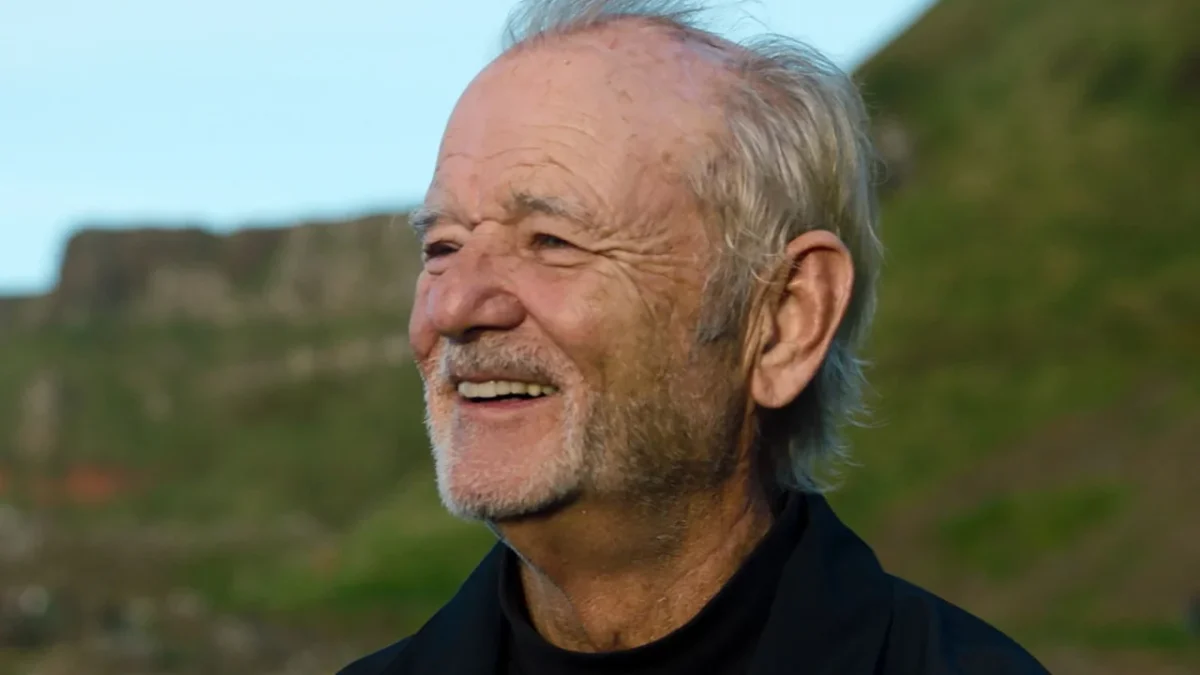
Bill Murray does not believe five decades of stardom have brought him happiness. In the six-part docuseries A Course Called Ireland, the 76-year-old comedy icon delivers a blunt assessment of lifelong celebrity when asked point-blank if fame makes him happy: “In a word, no.”
Streaming now on Paramount+, the project follows Murray and author Tom Coyne as they traverse the Irish links alongside guests like Chris O’Dowd, Jason Kelce, and Murray’s brothers. What looks like a scenic sports travelogue quickly becomes an unvarnished examination of celebrity burnout, family survival, and the psychological weight of public visibility.
Murray compares living under constant scrutiny to a biological experiment gone wrong, offering rare insight into the toll of universal recognition.
The Physics of Fame: Cell Irritability and Camera Swarms
Murray explains his reaction to public pressure through a concept he once read about called “cell irritability.” The metaphor illustrates what happens when personal boundaries face repeated intrusion over half a century.
“If you poke a one-celled animal with a stick, it will reform into its regular shape, but the ten thousandth time you do it, the cell wall collapses, and everything inside of it explodes. So that’s sort of how I went, ‘Oh, okay, that’s what I’m like.’”
The issue peaks during everyday interruptions. When cornered by swarms of fans demanding smartphone selfies during a simple bathroom stop, Murray admits he longs for the autograph era he once disliked.
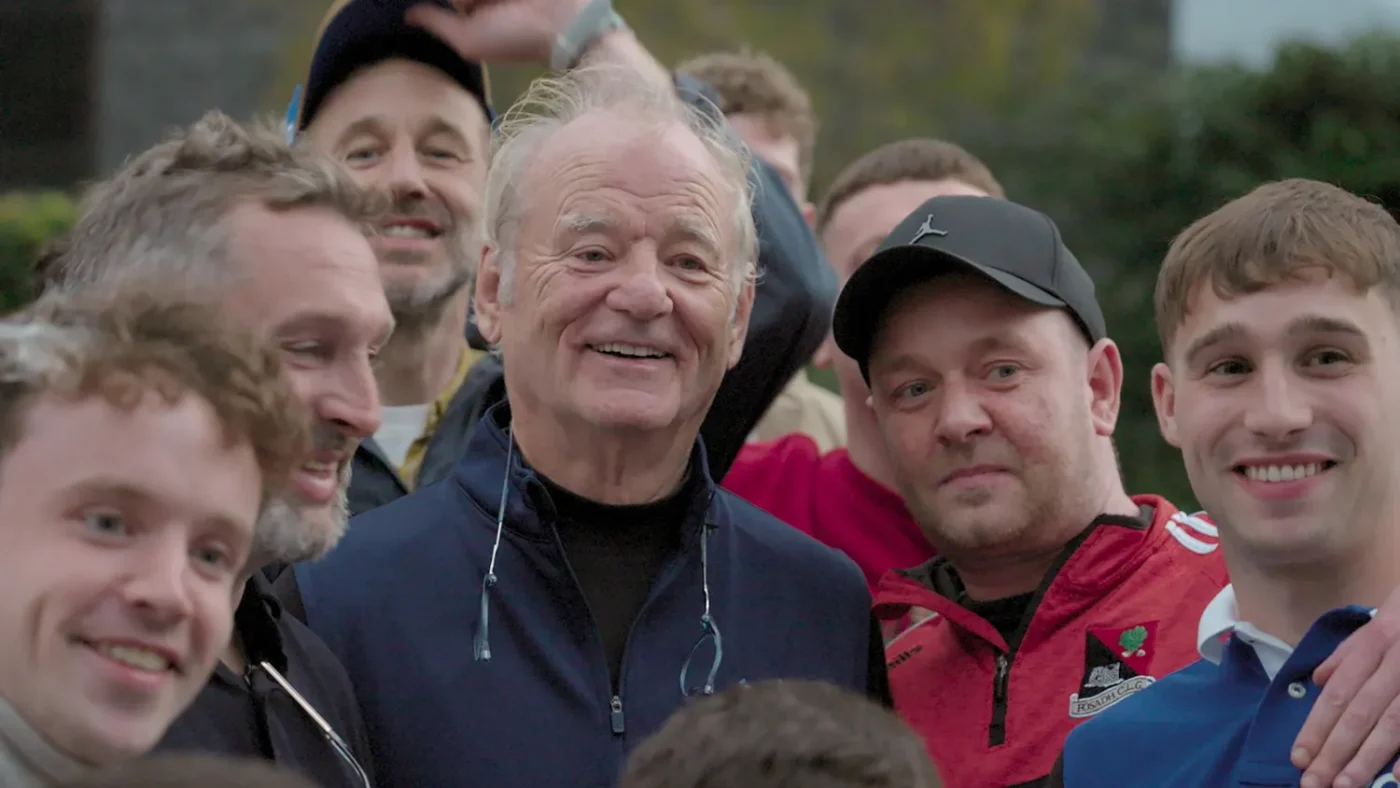
Chris O’Dowd and Bill Murray in A Course Called Ireland.
He told O’Dowd that fighting the selfie craze proved useless. Instead of resisting fan requests, he now takes the phone himself to snap the picture and keep moving.
He rejects the expectation that celebrities must always project cheerful warmth. “I don’t go for nice-nice,” Murray confesses on camera. “If I were like an ordinary citizen acting the way that I do, I’d probably have a lot more cuts and bruises.”

Bill Murray in episode 1 of A Course Called Ireland.
Debunking the Myth: The Reality Behind the Hollywood Smile
Public perception assumes that beloved movie icons experience their celebrity as an uninterrupted privilege. Murray dismantles that notion directly, drawing a sharp line between career validation and actual peace of mind.
| Perceived Celebrity Experience | Bill Murray’s Documented Reality |
|---|---|
| Fame delivers personal fulfillment and contentment. | Fame does not produce happiness; it demands constant boundary management. |
| Fan interactions are effortless and flattering. | Persistent camera requests cause psychological strain comparable to cellular collapse. |
| Celebrity behavior requires constant pleasantness. | Murray rejects “nice-nice” manners to guard his sanity and personal space. |
| Golf is simply an elite celebrity hobby. | Golf represents family survival born from childhood caddying to pay bills. |
Despite the drawbacks, Murray recognizes the singular upside of his career: knowing his films offered comfort to viewers during dark times.
How Childhood Adversity Built a Comedy Deity
Murray’s comic timing originated out of domestic necessity rather than Hollywood ambition. Raised in an Illinois home with eight siblings, he competed fiercely around the kitchen table to draw laughs and attention.
His father died when Murray was just 17, pushing the brothers into caddying to help their mother pay household bills. That financial pressure permanently bound the siblings to the game of golf.

Joel Murray, Jason Kelce, Bill Murray, Tom Coyne, and John Murray in A Course Called Ireland.
His younger brother Joel notes that the characters who later populated Saturday Night Live were created at the dining room table. “Golf is the glue that kind of keeps the family together,” Joel explains, even brandishing gold-coin ball markers stamped with his brother’s likeness.
The Fairway as an Escape Hatch
Beyond family roots, the open golf course serves as Murray’s ultimate sanctuary from the public eye. Coyne points out that few environments offer an escape from constant noise.
“A big field, where you’re only with three other people at any given time, that’s probably a real gift. Out here, no one really cares who you are.”
Yet Murray cannot resist spontaneous connection when he travels. Across Ireland, he crashes bachelor parties, sings at traditional rambling houses, serves drinks behind pub bars, and plays impromptu matchmaker on tour boats.

Tom Coyne and Bill Murray behind the scenes in A Course Called Ireland.
The docuseries shows an entertainer balancing a desire for community with an equal need to disappear across the open green.
💬 Murray’s take on modern celebrity culture and constant phone cameras cuts straight to the point.
✨ Have you watched A Course Called Ireland on Paramount+ yet? Drop your thoughts in the comments below!
📱 Share this story with fellow comedy fans who appreciate an honest look behind Hollywood‘s curtain.
 1
 2
 3
 4
