
WORLD NEWS ENVideo
Why Delayed Election Results Aren’t Evidence of Fraud: Inside the Legal Deadlines, Mail-In Ballots, and High-Stakes Recounts That Keep Vote Counts Going for Days

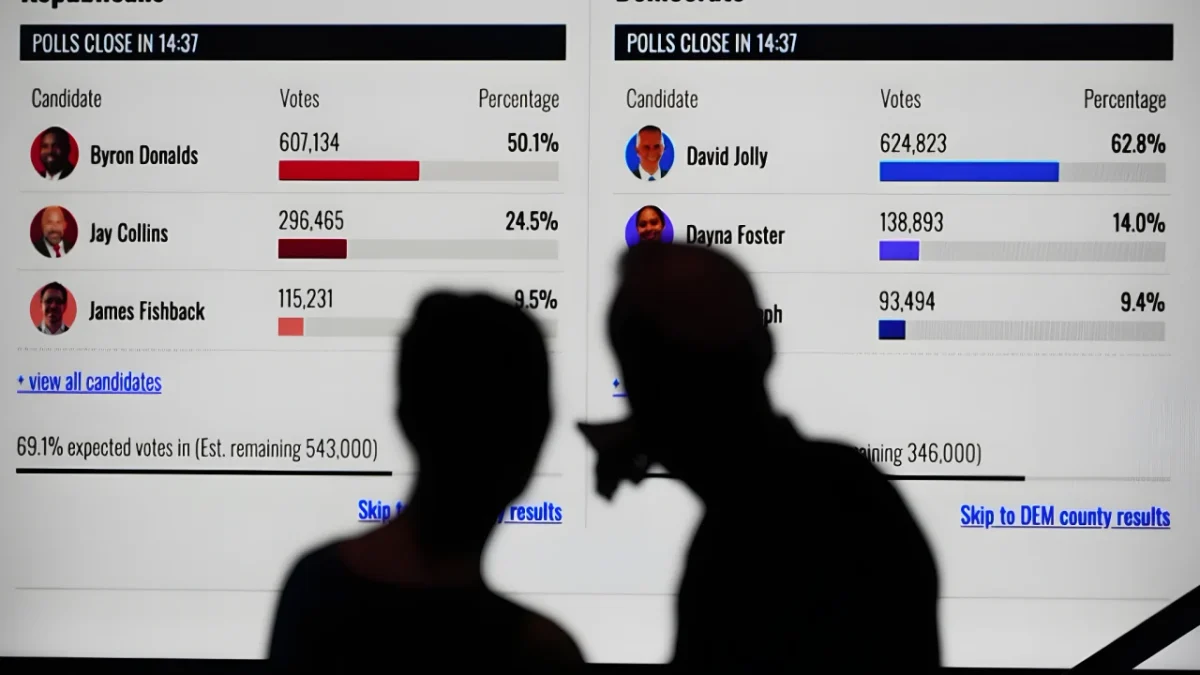
Going to bed without a declared winner on election night—or waking up to find a trailing candidate suddenly surging ahead—is completely normal under American election laws. No state in the country requires an official certification on election night, and shifting margins reflect standard legal processing schedules rather than last-minute ballot tampering.
Despite persistent viral claims that overnight tabulations, late-arriving batches, or multi-day counts in major cities are evidence of fraud, election administrators are simply executing state-mandated statutory rules. Every jurisdiction operates on strict verification procedures that cannot be bypassed for the sake of an early media call.
The speed of projected outcomes depends on the margin of victory, not secret delays. When races run razor-thin across battlegrounds, news networks and statisticians must wait for local clerks to methodically verify and tabulate tens of thousands of paper ballots.
“States are neither fast or slow, they all count and certify the results in accordance with the laws passed by their state legislature. What is fast or slow is how quickly the media can collect sufficient evidence to confidently predict the winner, which is typically based on the margin of victory.”
The Mechanics Behind Shifting Vote Margins
Close margins fundamentally change how quickly media outlets project winners. Competitive races across states like Michigan, Maine, Iowa, Alaska, Kansas, and Texas can keep leads in constant flux as different tranches of in-person, absentee, and provisional ballots enter the official tally.
In 2020, Donald Trump led by over 100,000 votes in Wisconsin early in the evening. That picture changed dramatically after Milwaukee finished tabulating its mail-in ballots around 3:30 a.m., giving Joe Biden a predictable surge because mail-in ballots heavily favored Democratic voters.
When margins fall within fractions of a percent, the outcome often triggers automatic or requested recounts. Florida settled three statewide races through recounts in 2018, and a contested North Carolina Supreme Court race stretched for approximately six months before reaching a final resolution.
Mail-In Ballot Verification and State Deadlines
Processing paper ballots requires meticulous verification. Bipartisan election teams must verify each voter’s identity by comparing signatures on outer envelopes against voter registration files, removing inner privacy sleeves, flattening folded sheets, and feeding batches through optical scanners.
Cutoff dates for returning mail ballots differ widely across state borders:
- Strict Election Day Cutoffs: States such as Florida mandate that ballots arrive at election offices before polls close on Election Day. Ohio eliminated its former four-day grace period by passing a law establishing an Election Day poll-close deadline for absentee returns.
- Postmark Grace Periods: California allows mail-in ballots to be counted if they are postmarked by Election Day and arrive up to seven days later. Counties have 13 days to certify standard ballots and up to 30 days for provisional ballots and signature corrections.
- Federal Recommendations: The U.S. Postal Service recommends that voters deposit their ballots in the mail at least one full week prior to statutory deadlines to prevent transit delays.
“There are always a handful of really close Senate and House races in which the winner will not be determined for several days or, in the cases of Alaska and California, as much as a week or two.”
State-by-State Rules That Impact Count Timing
| Election Factor | Administrative Impact on Timing |
|---|---|
| Early Processing Laws | States permitting pre-canvassing verify envelopes and flatten ballots before Election Day, speeding up unofficial election-night numbers. |
| Election Day Processing Bans | States like New Hampshire prohibit opening or processing mail envelopes before Election Day, creating late-night backlogs. |
| Postmark Grace Periods | States accepting ballots arriving days post-election cannot mathematically finalize counts until transit windows shut. |
| Ranked Choice Voting | Multi-round eliminations in Maine and Alaska require full round-one statewide tallies before redistributing secondary preferences. |
High-Volume Logistics: The Michigan Example
When large numbers of voters return mail ballots right before the deadline, local election hubs must absorb enormous operational bottlenecks. In Detroit, election administrators manage balloting for more than half a million registered voters across 140 square miles.
Detroit election operations chief Daniel A. Baxter noted that while officials aim to report approximately 95% of ballots on election night with processing extending to 4 a.m., an unexpected surge of late absentee submissions changes that timetable. Teams must collect ballots from 38 secure drop boxes across the city after 8 p.m. and transport them to Huntington Place for centralized scanning.
By contrast, smaller jurisdictions like Troy, Michigan—with roughly 66,000 voters and a handful of drop boxes—frequently finalize unofficial tabulations before midnight. A slower count in a larger metropolis is a reflection of raw logistical volume, not systemic irregularity.
The Impact of Ranked Choice Voting
Ranked choice systems introduce additional procedural steps before a winner emerges. In Alaska and Maine, voters rank candidates in order of preference.
If no candidate clears 50% of first-choice votes, the lowest-ranking candidate is eliminated, and their supporters’ second choices are reallocated. This elimination cycle continues sequentially until someone surpasses the 50% threshold.
Alaska accepts overseas and military mail ballots for up to 15 days after Election Day, meaning close races historically take weeks to conclude. In Maine, municipalities report initial round tallies, but final ranked choice tabulation routinely occurs the following week under the direction of Maine Secretary of State Shenna Bellows.
💬 Understanding these state-specific statutory deadlines helps separate routine administrative procedures from speculative election-night rumors.
📱 Official election results have never been instantaneous, and accuracy always takes legal precedence over speed.
👇 Drop your thoughts in the comments below: Did your state change its mail-in ballot deadlines this year?
 1
 2
 3
 4
