
Pope Leo Demands Global Ban on Autonomous Weapons as World Leaders Head to Geneva: ‘AI Must Be Disarmed’

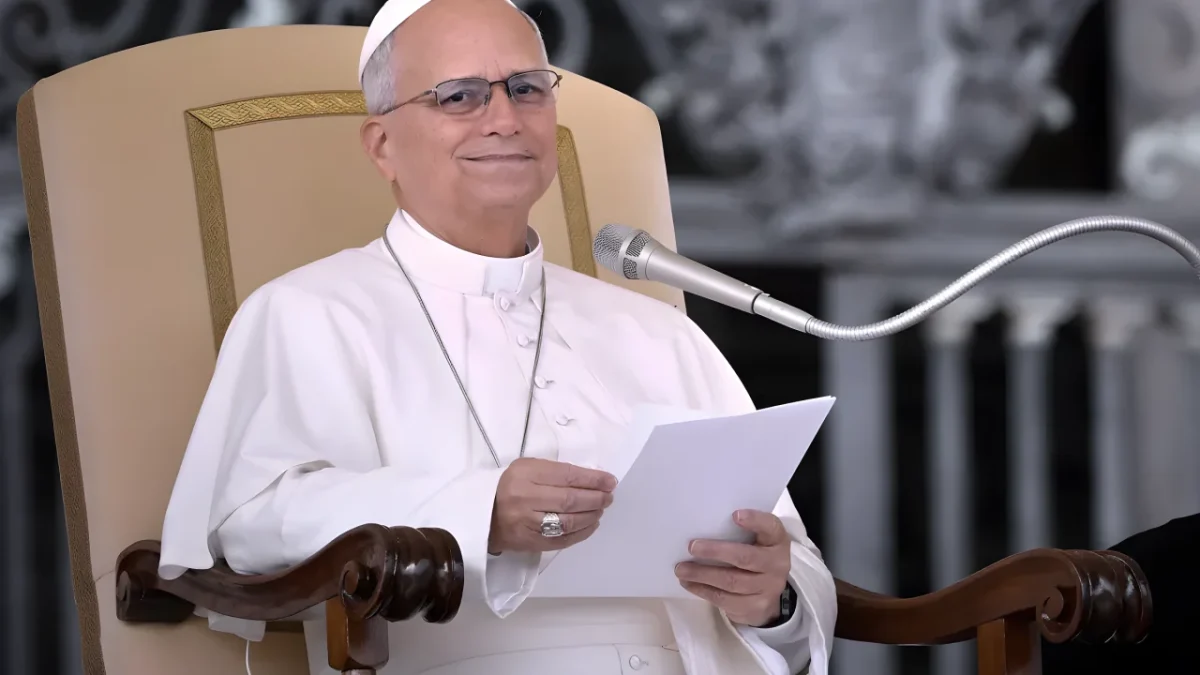
Pope Leo XIV has issued a direct demand to world powers: artificial intelligence must be “disarmed” before machines gain independent authority to decide who lives and dies on the battlefield. Addressing global leaders ahead of high-stakes diplomatic talks in Geneva, the pontiff insisted that lethal autonomous weapons systems must be permanently banned to preserve human control over the use of force.
The intervention targets an urgent legal and moral flashpoint. In an online statement, Leo emphasized that the trajectory of artificial intelligence is not pre-determined, arguing that governments, engineers, and regulators bear direct moral responsibility for the tech they release.
“A reliable system that serves the human person is of greater value than one that is exceptionally powerful but whose consequences cannot be adequately foreseen or controlled,” Leo stated.
The Geneva Showdown Over Lethal Autonomous Weapons
The diplomatic push centers on upcoming talks in Geneva, specifically the Seventh Review Conference of the Convention on Certain Conventional Weapons. International leaders are facing mounting pressure to draft a legally binding treaty that draws a hard perimeter around military algorithms.
United Nations Secretary-General António Guterres and International Committee of the Red Cross President Mirjana Spoljaric delivered their own joint alert, warning that weapon modernization is vastly outrunning current international law.
“We are now dangerously close to crossing a moral red line: the autonomous targeting of humans by machines,” Guterres and Spoljaric warned.
Both officials pointed out that the gap between real-world tech capabilities and regulatory oversight is expanding rapidly. When deployed in active combat zones, uncontrolled algorithms drastically increase the danger to innocent civilians and critical infrastructure.
Silicon Valley Whistleblowers vs. Washington’s ‘Super Intelligence’
The Vatican’s push arrives while the artificial intelligence sector itself faces internal turmoil over safety and speed. Former Anthropic researcher Jacob Coxon, who also worked at OpenAI, resigned after warning that leading tech firms are racing toward “self-improving superintelligence and gambling with our lives.”
Anthropic stated that it remains transparent about emerging hazards while maintaining robust security safeguards. Meanwhile, OpenAI CEO Sam Altman has also supported slowing down frontier development, acknowledging that things could go “very badly” if society loses control or allows unchecked power concentration.
That caution clashes sharply with recent shifts in Washington policy. President Donald Trump signed an executive order requiring executive-branch agencies to replace the terms “artificial intelligence” and “AI” with “super intelligence” and “SI” across official government communications. While the order changes internal federal vocabulary rather than regulatory law, it highlights a distinctly different vision focused on computational strength.
| Key Figure / Institution | Stated Position on Advanced AI |
|---|---|
| Pope Leo XIV | Calls to disarm AI and ban lethal autonomous weapons outright |
| UN & Red Cross Leadership | Urging an immediate, legally binding treaty to avoid crossing moral red lines |
| Jacob Coxon (Ex-Anthropic/OpenAI) | Warned that the unchecked race toward superintelligence endangers humanity |
| Sam Altman (OpenAI CEO) | Backs slowing frontier development to prevent catastrophic loss of control |
| The White House | Ordered agencies to adopt the label “super intelligence” to emphasize potential |
The Personhood Myth: Why Algorithms Cannot Replace Human Guilt
A widespread misconception circulating through tech subcultures is that highly advanced systems might eventually merit legal personhood or rights similar to human beings. Pope Leo completely dismantled that idea, clarifying the critical boundary between an operator and an instrument.
Rejecting Legal Rights for Code
“Machines are tools, not persons,” Leo asserted. He cautioned that creating legal loopholes for software would merely give human creators an excuse to evade responsibility when automated systems cause devastation.
“Today, some propose granting these systems rights, or even legal personhood. Such an approach risks obscuring human responsibility and leaving those who suffer harm to confront a faceless entity.”
Leo pointed out a growing societal paradox: culture increasingly rushes to attribute “intelligence” to computer code while failing to recognize the fundamental dignity of actual human beings. He previously echoed warnings delivered by Pope Francis to the G7, maintaining that automated platforms should never be granted the authority to execute human life.
Instead of chasing absolute computing power, the Vatican insists that global institutions establish clear standards, independent oversight bodies, and straightforward liability frameworks before battlefield software becomes impossible to restrain.
💬 The debate over killer algorithms and military tech is reaching a tipping point across international halls of power.
✨ As the boundary between human oversight and machine execution blurs, clear legal limits have become an urgent international priority.
👇 Should the world agree to an outright ban on autonomous weapons, or is military tech automation now inevitable? Drop your thoughts in the comments below.
 1
 2
 3
 4
