
How a Student-Led Revolt Toppled Aleksandar Vučić: Inside the Historic Election Landslide That Shattered Serbia’s Ruling Regime

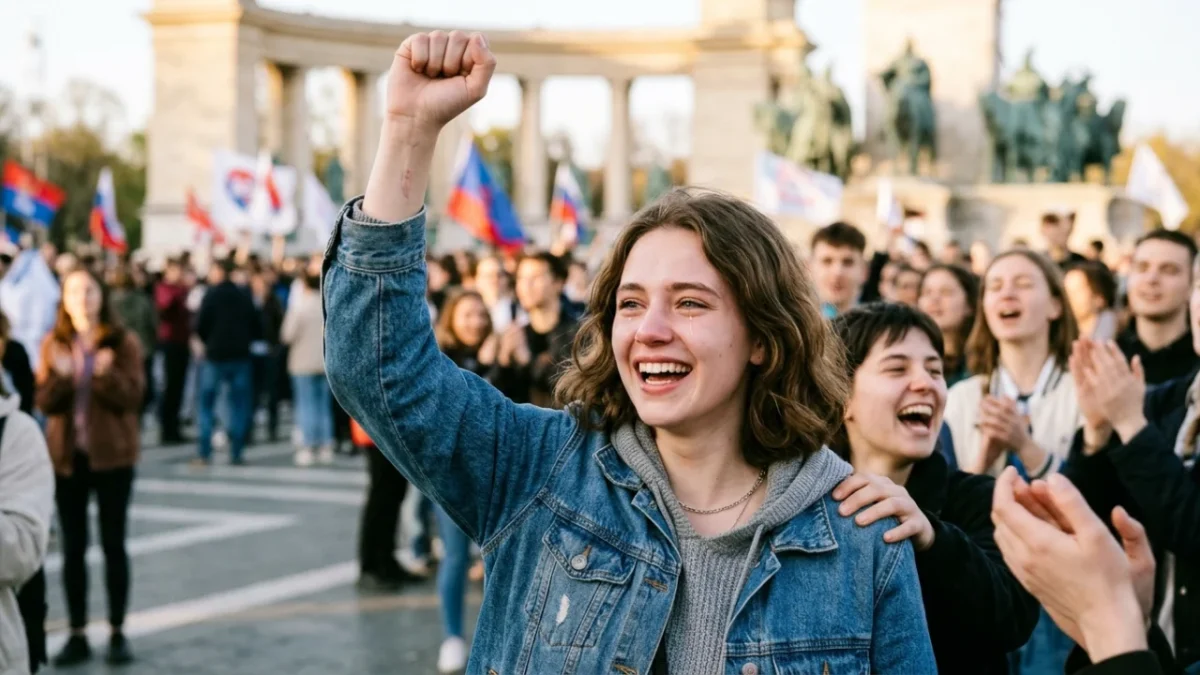
Serbia’s twelve-year political monolith has crumbled overnight after authoritarian leader Aleksandar Vučić conceded defeat to an extraordinary grassroots student alliance that secured a decisive parliamentary majority. The stunning ballot box upset brings an abrupt conclusion to more than a decade of nationalist dominance in the Western Balkans.
Speaking before sombre supporters at his Serbian Progressive Party (SNS) headquarters in Belgrade, a subdued Vučić acknowledged that the opposition slate had swept the snap election. CeSID and Ipsos representative sampling projected the Student List winning approximately 52 per cent of the vote and 138 seats in the 250-seat National Assembly, leaving the ruling SNS behind with 104 seats.
“It is clear that we have lost these elections,” Vučić admitted, conceding the historic outcome to the youth movement before official certifications concluded.
Car horns echoed through the capital, where tens of thousands flooded the streets, exchanging hugs with municipal police officers in scenes reminiscent of major national celebrations. At the campaign base of the Student List, academics, doctors, and volunteer organisers wept openly while chanting slogans of democratic revival.
From a Train Station Tragedy to National Rebellion
The political earthquake reshaping Belgrade began almost two years ago beneath the rubble of a civic disaster. On 1 November 2024, the concrete entrance canopy of the freshly refurbished Novi Sad railway station collapsed without warning, killing 16 civilians and leaving the nation in shock.
Public anger intensified when whistleblowers and civil engineers highlighted systemic corruption, corner-cutting, and opaque procurement procedures behind the state-backed infrastructure project. When masked assailants violently assaulted students staging a silent memorial vigil at Belgrade’s Faculty of Dramatic Arts three weeks later, simmering grief erupted into direct action.
University departments across Belgrade and beyond staged campus blockades, refusing to leave lecture halls until structural accountability was enforced. Rather than adopting typical party apparatuses, the young organizers instituted direct-democracy plenums where daily operational decisions were decided by open vote, rotating designated public representatives to resist state-run smear campaigns.
By March 2025, the spontaneous university movement had transformed into the largest sustained civil protest in modern Serbian history, drawing upwards of 300,000 demonstrators into central Belgrade to challenge government impunity.
The Radical Strategy Behind the Student Slate
Faced with unrelenting public anger, Vučić executed a high-stakes gamble by resigning the state presidency on 27 September to campaign directly as prime minister in snap parliamentary elections. His calculation assumed that institutional control over state broadcasting networks and local patronage machines would crush an informal youth opposition.
The student strategists outmanoeuvred the state machine by establishing an unconventional campaign slate that caught political veterans off guard:
- Strict Candidate Purity: Plenums implemented rigid eligibility criteria, barring active students from standing alongside any career politicians who had previously served in government cabinets or established parliamentary opposition parties.
- Civic Coalition: The 250-seat roster assembled community leaders from across the professional spectrum, including prominent Novi Sad cardiologist Ilija Srdanović, Euroleague Basketball president Dejan Bodiroga, prominent actors, rural farmers, and medical workers.
- Anti-Corruption Blueprint: The platform focused on establishing an independent special prosecutor targeting illicit state enrichment, cancelling controversial projects such as the Jadar lithium concession, and enforcing transparent public procurement audits.
- Broad Boycott Coordination: Several long-standing democratic factions willingly withdrew their own competing slates to back the student banner, preventing vote-splitting in critical districts.
A Gamble That Stripped the Strongman of All Power
The gamble to force an early election proved fatal for the incumbent administration. Vučić had heavily relied on his traditional rural voter base, dismissing the student movement as an orchestrated foreign destabilisation campaign while promising sudden state pension increases.
Instead, civic resistance swept through provincial heartlands where volunteer caravans travelled door-to-door, uniting rural pensioners with young urban professionals under the uncompromising rallying cry: “Serbia or Mafia?”
Voter turnout surged to a staggering 67.6 per cent—the highest national participation rate registered since the dissolution of Yugoslavia in 1992. Long queues wound around polling stations for hours into Sunday evening, decisively overwhelming official turnout models.
Because Vučić had already formally vacated the presidency to run for the prime minister’s office, the scale of the parliamentary rout leaves him without an official institutional post. Parliamentary speaker Ana Brnabić remains acting head of state until scheduled presidential elections conclude before year’s end.
Reverberations Across European Frontiers
The dramatic concession in Belgrade creates an immediate diplomatic realignment across the continent. Vučić had long maintained a delicate foreign balancing act, navigating strategic partnerships between Brussels, Beijing, and Moscow while tightening his domestic grip over state institutions.
The incoming parliamentary majority has reaffirmed national sovereignty, the protection of territorial integrity, and constitutional neutrality while promising to end arbitrary executive decrees. Above all, the movement’s rise sends an unambiguous message to democratic observers worldwide, proving that transparent civic organising can dismantle entrenched, state-backed electoral monopolies.
💡 What happens in Belgrade now carries profound implications for youth resistance movements across international borders.
🔍 As the Student List prepares to form a government, all eyes remain fixed on how independent prosecutors handle pending state corruption inquiries.
👇 Could this historic student-led electoral victory serve as a working blueprint for civic movements across other nations? Share your views below.
 1
 2
 3
 4