
Inside the £5.2m Breakthrough Keeping Organs Alive Outside the Body as a 31-Year-Old Woman Faces Her Fifth Kidney Transplant

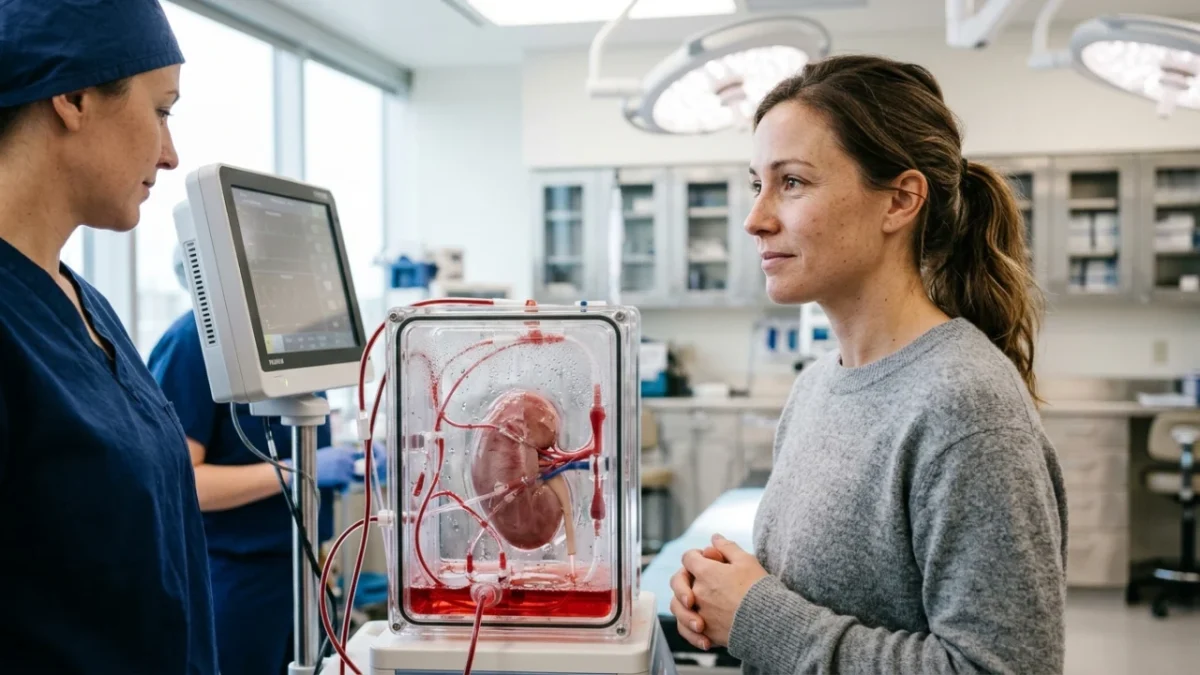
A pioneering £5.2 million research initiative across Britain is now keeping donor kidneys functioning with warm, oxygenated blood outside the human body, providing a crucial lifeline to patients like 31-year-old Ellyn Laws as she awaits her fifth transplant.
The Ingleby Barwick resident, who works in the public sector, has spent nearly three decades in and out of renal failure following a suspected allergic reaction to childhood antibiotics before her second birthday.
Her story highlights a devastating reality within the healthcare system: six people across the United Kingdom die each week waiting for a kidney, even as roughly 300 donated organs are discarded every single year because they deteriorate before reaching the operating theatre.
Now, a specialist consortium is working to permanently change those odds.
The Race Against Time: Why Donated Organs Fail
Traditional preservation relies on cooling organs on ice, which slows metabolism but steadily degrades fragile tissue during long transit journeys between hospitals.
For patients navigating the realities of organ donation NHS waiting lists, cold storage can compromise organ viability. In Ellyn’s experience, transit duration may have played a defining role in past graft complications.
Her journey through renal care illustrates the gruelling physical toll facing thousands of British families:
- First transplant at age four: Diagnosed with acute renal failure after falling critically ill between her second and third birthdays, she received her first organ as a young child.
- A decade of stability: After returning to dialysis at age eight, she received a kidney donated by her father at age ten, which functioned successfully until she turned 23.
- Repeated rejection: A third transplant secured in October 2020 failed prematurely, followed by a fourth transplant from her aunt that also stopped functioning.
- Home dialysis dependency: Now receiving dialysis at home while managed by specialists at The James Cook University Hospital, she is preparing for a rare fifth procedure.
Without ongoing breakthroughs in organ donation NHS programmes, her childhood survival would have been impossible. Yet repeated rejections have compounded the urgency for improved organ quality.
The PERFUSE-UK Network: How Warm Blood Technology Works
Funded by Kidney Research UK alongside the Stoneygate Trust, the PERFUSE-UK initiative unites premier surgical centres across England and Scotland over a five-year progression project.
Led from Cambridge, the multi-centre clinical trial connects specialist teams at the Freeman Hospital on Tyneside and Newcastle University with counterpart research hubs in London, Oxford, and Edinburgh.
The technical foundation centres on normothermic machine perfusion. Instead of allowing a donor kidney to starve of oxygen in an icy cooler, the perfusion device maintains circulation with warmed, oxygen-rich blood, simulating natural bodily conditions.
Three Critical Advantages for British Patients
- Active viability testing: Surgeons can run diagnostic assessments on kidney metabolism and tissue health before transplantation begins, avoiding unexpected graft failure.
- Rehabilitation of borderline organs: Kidneys that would otherwise be deemed unsuitable or too fragile under standard criteria can be safely evaluated and reconditioned.
- Extended preservation windows: Transporting organs across major geographical distances becomes safer, widening the pool of potential recipients nationwide.
For the estimated 25,320 individuals living with chronic kidney disease across the country, expanding the functional donor pool is an urgent clinical imperative.
Dialysis demand continues to rise, with patient figures projected to climb substantially over the coming decade. With each successive transplant, matching antibodies becomes exponentially more complex, turning every viable donor organ into an irreplaceable opportunity.
Restoring Lost Time and Future Independence
For Ellyn, the arrival of advanced machine perfusion represents far more than an engineering milestone; it offers the promise of adulthood uninterrupted by medical machines.
She has candidly expressed the emotional burden of watching peers establish marriages, build careers, and start families while her own life remains tethered to weekly dialysis schedules.
Had continuous warm perfusion been widely deployed during her previous procedures, she believes at least one of her earlier transplanted organs might have sustained function far longer.
The ongoing multi-centre trial aims to establish robust clinical evidence over the next five years, creating a standardized framework for eventual nationwide rollout across the NHS.
💡 Advances in perfusion technology show real promise in rescuing hundreds of viable kidneys that would otherwise be lost each year.
🔍 Medical teams continue working across the UK to ensure clinical trials translate directly into faster, longer-lasting transplants for patients in urgent need.
📌 Have you or a loved one navigated the organ transplant waiting list in the UK? Share your experiences and thoughts in the comments below.
👇 Join the discussion to support greater awareness around organ health and donor registration.
 1
 2
 3
 4