
Inside the Untouched 79 CE Pompeii Wardrobe: Secret Keepsakes, Stashed Coins, and a Woman’s Hidden Life

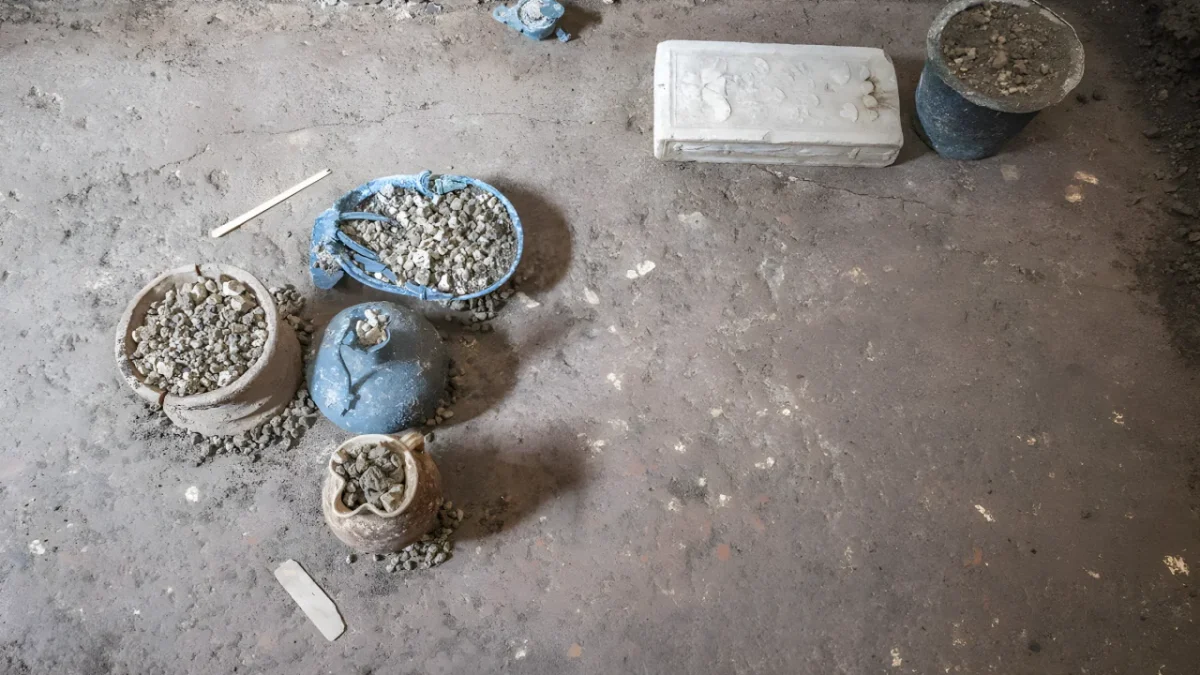
Archaeologists excavating Pompeii have uncovered a sealed Pompeii wardrobe that remained completely untouched since Mount Vesuvius buried the ancient Roman city in 79 CE. Inside the wooden storage unit, researchers discovered grooming tools, a stash of 38 bronze coins, and a deeply personal collection of childhood amulets, offering an unprecedented snapshot of a Roman woman’s private world.
The cabinet stood inside House IX 11, 7—tentatively identified as the House of Cornelius Maximus—fronting Via dell’Abbondanza, one of Pompeii’s most bustling thoroughfares. Thanks to precise excavation measurements, archaeologists reconstructed both the wooden piece of furniture and the arrangement of items stored across its shelves.
The owner left everything behind in a hurry, and nobody ever returned to retrieve it.
What Was Stored Inside the 2,000-Year-Old Cabinet?
The contents provide an intimate look into the daily routine and economic activity of the household. Among the personal grooming items, researchers recovered tweezers, a glass perfume bottle, an incense burner, and a small pestle used to grind and mix cosmetics.
The cabinet also served as a workspace hub. A bronze lamp sat right next to lead trade weights, which were kept in a tiny wooden box that had nearly decomposed over two millennia.
Shelves held bronze, glass, and ceramic cooking pots and pans, as well as a finely crafted small mug decorated with pine cone scales. Beside the household gear sat a small woven basket, known as a cistella, holding 38 bronze coins.
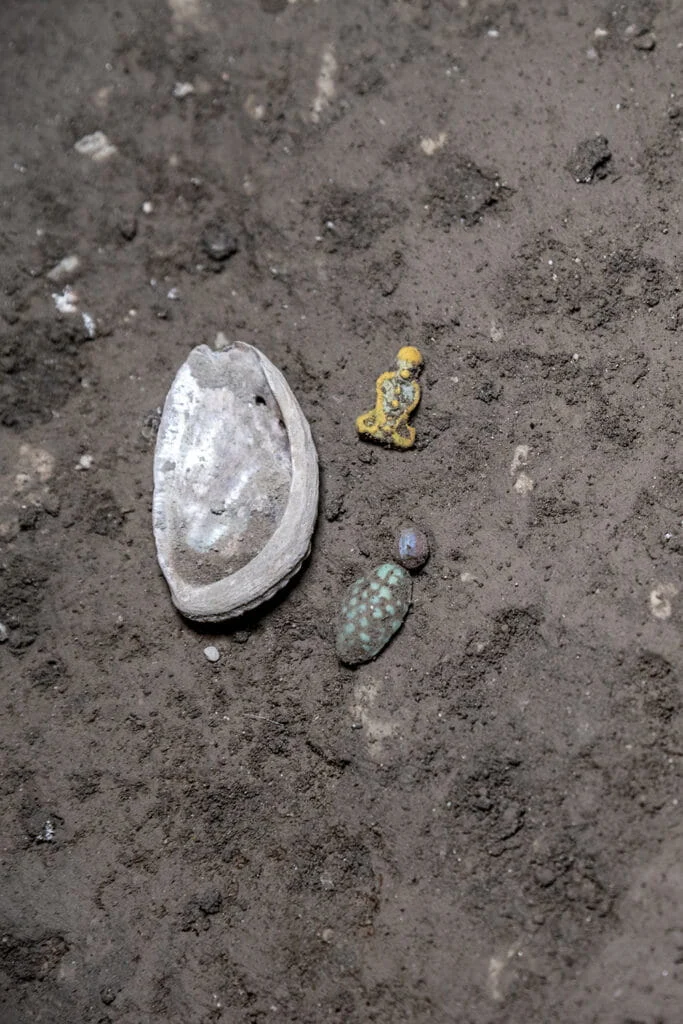
Pompeii wardrobe found untouched since 79 CE holds a woman’s keepsakes, coins, and charms.
“The find lets researchers read a life through its habits, work, and keepsakes, even though the woman’s identity stays unknown,” stated Gabriel Zuchtriegel, director of the Archaeological Park of Pompeii.
The Charms: Childhood Keepsakes, Not Dark Magic
The most striking discovery inside the cabinet was a textile bag containing a necklace strung with at least 24 miniature charms. Crafted from bone, faience, rock crystal, and glass paste, each piece features a suspension hole.
The tiny carvings depict protective deities like Mercury and Bes, alongside hands, feet, pine cones, and grape clusters.
Early antiquarians often misidentified collections like this as occult instruments meant for casting spells or brewing potions. Modern archaeology confirms a very different reality: these objects are crepundia, Latin for protective rattles.
Roman parents placed stringed sets of these charms around young children’s necks. The rattling noise warned parents of where wandering toddlers were, while the symbols were believed to ward off disease and bad fortune.
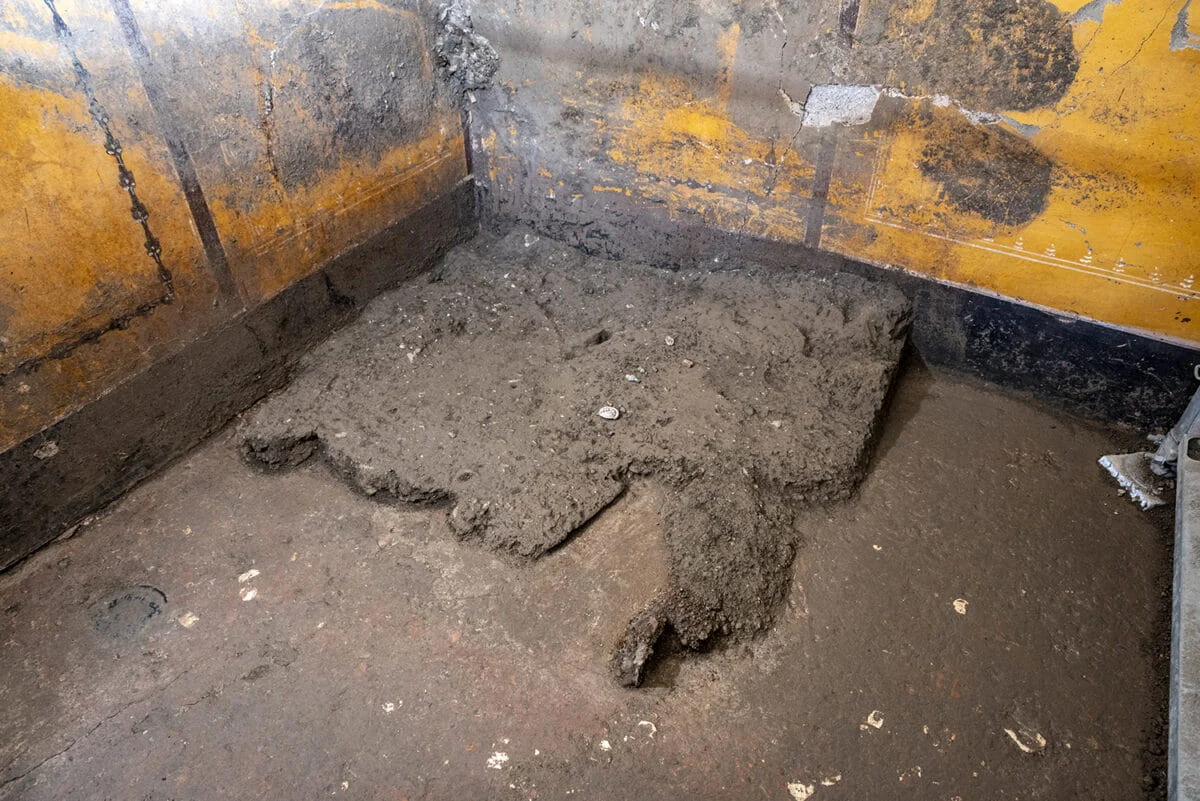
A necklace of crepundia charms recovered from the Roman wardrobe at Pompeii.
Roman citizens and enslaved people alike moved frequently across the empire, often living hundreds of miles from their birthplaces. Adults regularly preserved their childhood crepundia for life inside boxes or pouches, keeping them as one of the few tangible links to home.
Key Artifacts Documented in the Wardrobe
| Recovered Artifact | Archaeological Significance |
|---|---|
| 24-piece crepundia necklace | Protective childhood rattles kept into adulthood as sentimental tokens |
| 38 bronze coins in woven basket | Unrecovered household savings abandoned during the volcanic crisis |
| Lead weights in wooden box | Direct material evidence of commercial transactions or domestic trade |
| Grooming tools & cosmetic pestle | Daily hygiene and cosmetic preparation gear used by a Roman woman |
| Fine pine-cone scale mug | High-end decorative tableware kept alongside utilitarian ceramic pots |
A House Under Renovation and Uninvited Guests
The dig took place during conservation work connected to the adjacent Insula of the Chaste Lovers. Although workers first cleared the facade in 1912, the inner living quarters had never been formally excavated until now.
The room housing the Pompeii wardrobe features sophisticated fourth-style wall frescoes linked to the workshop of Via di Castricio. However, active home renovations were underway when Vesuvius erupted, leaving parts of the property disrupted and difficult to inhabit.
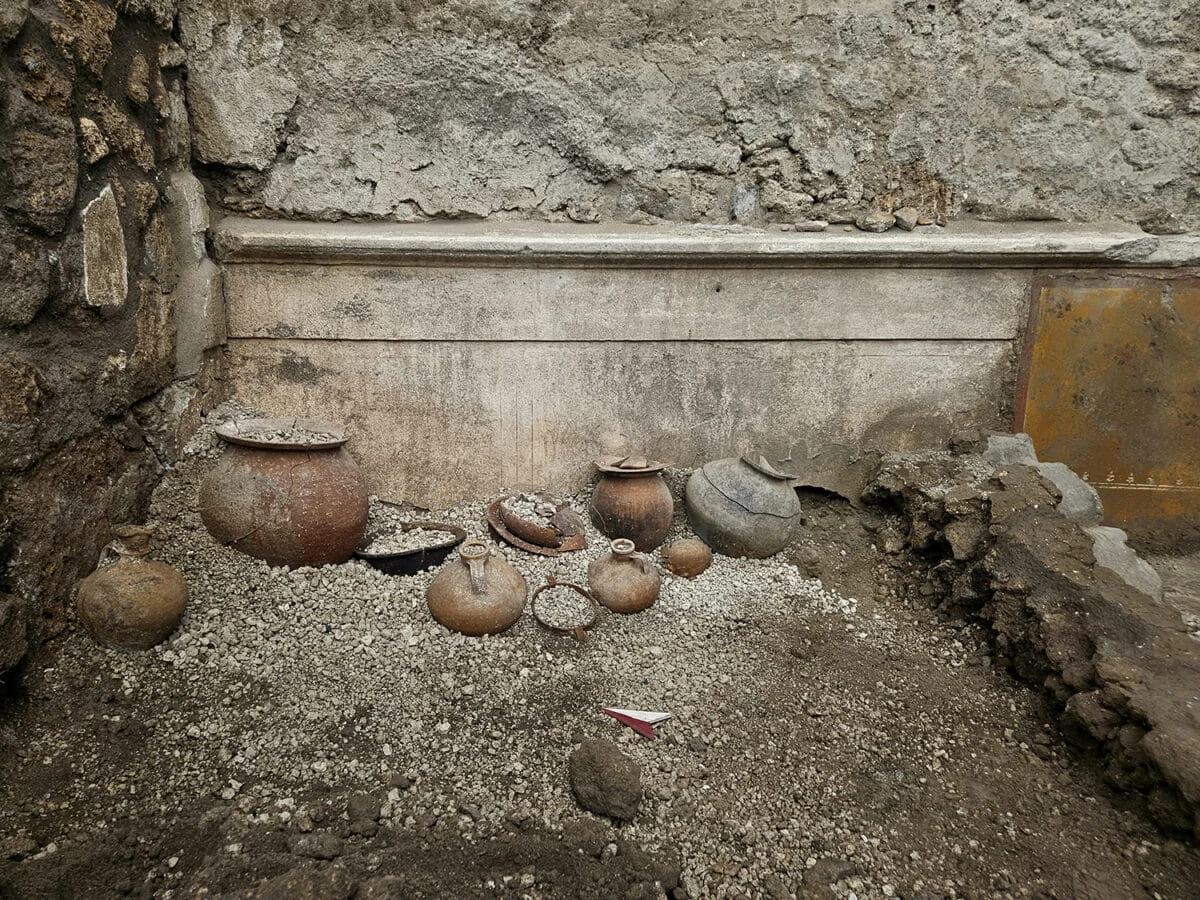
Excavation area inside House IX 11, 7 showing wall paintings and structural features.
The team also made an unexpected biological discovery on a mezzanine level: an amphora containing 117 tiny bone fragments. Laboratory analysis identified them as the remains of at least two juvenile wood mice (Apodemus sylvaticus).
Similar rodent remains have turned up in servant spaces at Civita Giuliana and the sewers of Herculaneum, proving Roman households dealt with common pests just as modern homes do.
Whether the residents died in the eruption or fled empty-handed remains an open question. While other survivors returned after the disaster to tunnel into their homes, no one ever dug down to retrieve this woman’s treasured keepsakes.
✨ Discoveries like this strip away myth and bring real Roman daily lives into sharp focus.
💬 It is chilling to see childhood tokens and loose pocket money left behind in a desperate rush.
📱 What part of this ancient time capsule surprises you the most? Drop your thoughts in the comments below!
 1
 2
 3
 4
