
New York Passes Landmark Privacy Legislation Regulating Private Automatic License Plate Readers—Yet Leaves Expansive Police Surveillance Untouched

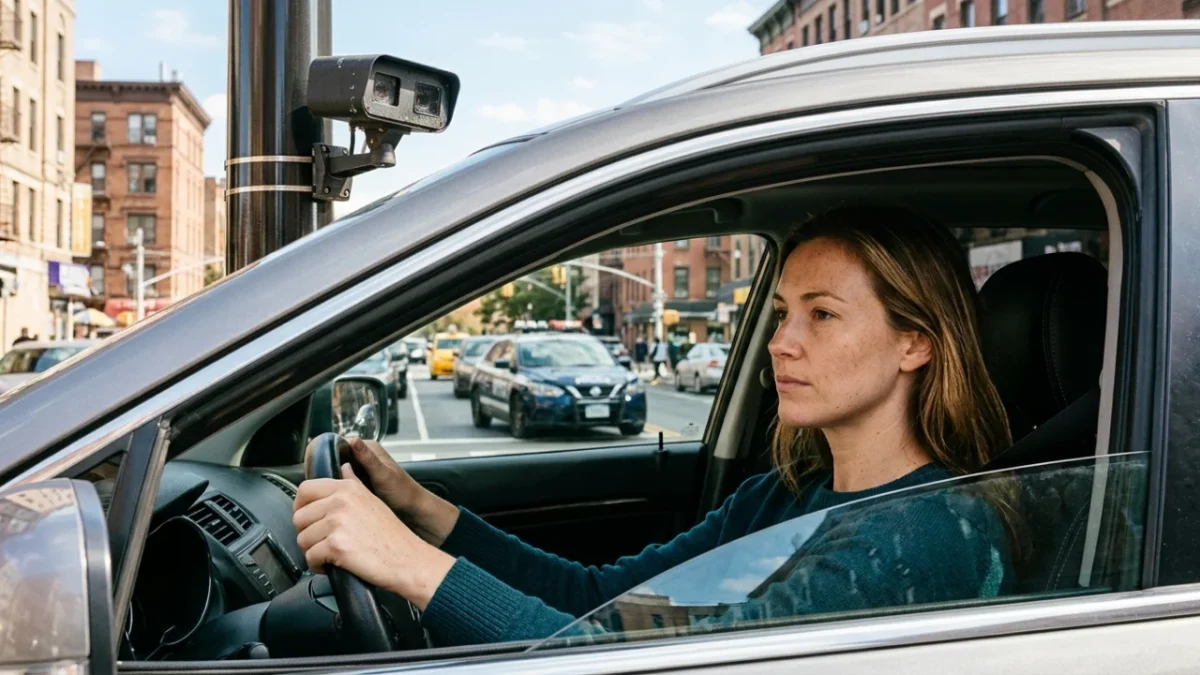
New York lawmakers have achieved rare unanimous consensus to restrict private surveillance, passing legislation to regulate non-governmental license plate readers whilst entirely exempting police tracking networks from the new rules. The paradox cuts straight to the heart of modern vehicular privacy across the Empire State.
Assembly Bill A563A sailed through the State Capitol without a single dissenting vote, clearing the Assembly 144-0 and securing a 60-0 sweep in the Senate. Yet the statute draws a sharp, controversial boundary: it imposes tough restrictions on commercial entities and private operators, while deliberately sidestepping the vast tracking infrastructure operated by law enforcement agencies.
For millions of daily drivers, the reform offers legal protections against corporate data-gathering, even as official monitoring reaches unprecedented scale.
A Private Crackdown with a Public Loophole
Under the newly passed provisions of Assembly Bill A563A, New York’s Division of Consumer Protection must establish mandatory operational standards for commercial organisations deploying automated camera tracking. These devices photograph registration marks in real time, building searchable historical archives that map precisely when and where specific vehicles travel.
The legislation orders regulators to establish binding safeguards across several vital areas of vehicle tracking:
- Strict retention periods: Placing formal caps on how long private companies can store historical vehicle movements.
- Access control protocols: Restricting who can view, query, and share recorded location dossiers.
- Prohibited applications: Banning predatory, commercial, or unauthorised exploitations of tracking datasets.
- Public transparency mandates: Requiring covered enterprises to publish state-approved privacy policies prominently on their premises and websites.
Democratic political strategist Jack O’Donnell observed that privacy anxieties have created unexpected alignment between traditionally opposed factions. “Privacy just continues to grow as an issue here in New York as part of a broader, civil liberties questions,” O’Donnell noted, highlighting that deep concern spans across both the political left and right.
When assessing why lawmakers excluded police departments from the statute, O’Donnell described the measure as an incremental “baby step” driven by the political sensitivities surrounding law enforcement operations.
The 218,000-Scan Surveillance Machine in Western New York
The decision to shield government tracking from the bill stands out against explosive growth in official surveillance across Western New York. An analysis by the Investigative Post discovered that Erie County alone accounts for 291 reported automated cameras—the dense concentration verified through the crowdsourced DeFlock project, exceeding every other county in upstate New York.
The scale of public monitoring is vast.
Between January 2025 and early June 2026, 20 distinct police agencies across Erie and Niagara counties conducted more than 218,000 searches through the third-party Flock Safety network. Under the statutory wording of A563A, not one of those law enforcement queries faces regulation.
The Expanding Reach of Flock Safety Networks
Police authorities maintain that rapid access to automated network records provides indispensable investigative value. Officers depend on instantaneous data alerts to intercept stolen vehicles, trace missing persons, and gather critical evidence following violent offences.
Civil liberties advocates counter that unchecked location databases assemble permanent, detailed patterns of innocent motorists’ daily lives. Because the newly passed bill exempts public agencies, those 218,000 queries remain outside the remit of the Division of Consumer Protection’s oversight rules.
State Senator Jeremy Cooney, a Rochester Democrat who sponsored the Senate companion bill, defended the measure as an essential foundation. Cooney affirmed that the statute is about ensuring baseline operational standards for private operators, while signalling support for separate future proposals designed to bring statutory accountability to law enforcement usage.
The Waiting Game at the Executive Mansion
Despite unanimous passage across both legislative houses, Assembly Bill A563A has not yet reached Governor Kathy Hochul’s desk for executive signature. The governor’s office has not clarified whether she intends to enact the measure, leaving its implementation timeline suspended.
If Governor Hochul signs the bill, its consumer protections will take effect precisely twelve months later, granting businesses one year to overhaul data storage procedures. Senator Cooney continues to urge executive sign-off, characterising the measure as a critical first stride towards responsible data stewardship.
Meanwhile, state authorities continue deploying vehicular enforcement at full capacity, with state and local police executing intensive roadside patrol campaigns targeting reckless driving, speeding, and alcohol impairment.
💡 The legislative shift signals a sharp divergence: private firms face escalating regulatory pressure over vehicular surveillance, while municipal camera networks operate with expansive autonomy.
🔍 As automated tracking systems proliferate across highways, suburban arteries, and retail car parks, the tension between civil liberties and community safety will intensify.
📌 The fight over state data privacy is only just starting, with future legislative sessions facing mounting pressure to confront public surveillance networks.
👇 Should police departments face the same data retention limits as private corporations when using license plate readers? Share your perspective in the comments below.
 1
 2
 3
 4