
The Haunting Dawn Phenomenon at Brighton West Pier: Why Early Risers Brave Bitter Channel Winds to Catch Britain’s Most Dramatic Coastal Silhouette

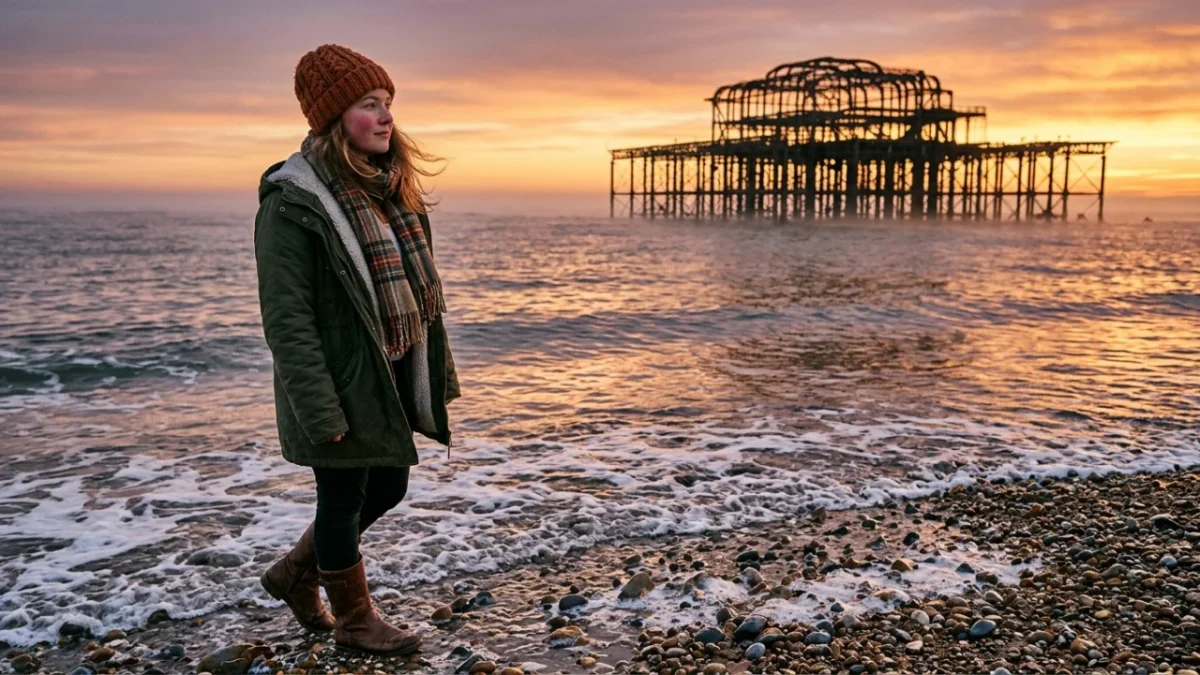
The dawn display behind the skeletal iron frame of the Brighton West Pier delivers one of the South Coast’s most spellbinding spectacles, rewarding early risers with a stark interplay of sea mist, amber horizon light, and Victorian ruins. Long before the bustling promenade wakes, photographers and sea swimmers assemble on the shingle to watch the shifting colours of the English Channel illuminate what remains of Britain’s most famous ruined pleasure pier.
Yet witnessing this morning transformation requires precise timing, an eye on local tides, and respect for volatile coastal conditions.
Those who arrive at high water encounter wild, churned waves lashing against rusted pilings, whilst low tide exposes damp sand flats that act like a giant mirror along the East Sussex shoreline.
The Victorian Masterpiece Stripped Down by Sea and Storm
Designed by renowned civil engineer Eugenius Birch and opened in 1866, the structure was once hailed as an architectural triumph of the seaside resort boom. It served generations of holidaymakers with its concert hall, ornate pavilions, and sprawling promenades stretching into the sea.
Decades of abandonment, relentless marine corrosion, and devastating fires in 2003 reduced the Grade I listed landmark to an isolated cast-iron ribcage. What could have become a municipal eyesore instead evolved into an evocative offshore sculpture that defines the visual character of the city.
At first light, the scorched girders shed their daylight grimness, turning pitch-black against soft gradients of violet, rose, and burnished gold.
The Engineering Marvel of Eugenius Birch
Birch achieved stability on the shifting seabed by using threaded screw-piling techniques, twisting cast-iron shafts deep into the chalk bedrock beneath the water. That underlying Victorian structural ingenuity explains why substantial portions of the central framework still endure, despite decades of relentless winter swell from the Channel.
Watching the sunrise illuminate these surviving uprights provides a vivid demonstration of nineteenth-century metallurgical resilience fighting a slow, inevitable retreat against the sea.
Why Autumn and Winter Light Transforms the Sussex Shingle
While summer dawns bring pale yellows and rapid brightness, late autumn and winter offer an entirely different chromatic experience. The lower solar angle keeps the sun skimming across the water for longer, bathing the corroded girders in deep reds and saturated oranges.
The Met Office frequently records crisp offshore breezes during these cooler months, clearing haze and producing pin-sharp visibility across the bay toward the chalk cliffs in the east.
This crisp seasonal atmosphere also sets the stage for one of nature’s most hypnotic wildlife displays.
- Starling murmurations: During colder months, vast clouds of starlings often wheel and dart around the iron skeleton at daybreak before dispersing inland to feed across the South Downs.
- Tidal pools on low shingle: A retreating spring tide uncovers rare sandy patches between groynes, creating still pools of seawater that double the reflection of the sunrise.
- Dynamic cloud formations: Fast-moving low-pressure systems sweeping across the Channel regularly paint the sky with dramatic layered clouds that catch morning rays well before the sun crests the horizon.
Planning the Morning: Safety, Tides, and Coastal Realities
Experiencing dawn by the water requires sound preparation, as the steep flint shingle along the seafront presents genuine physical hazards, particularly in dim pre-dawn conditions.
Brighton and Hove City Council and coastal safety groups routinely remind visitors to keep well back from the shoreline during periods of heavy swell. The steep gradient of the beach causes powerful backwash, and plunging waves can easily pull an incautious spectator off their feet.
Check the Admiralty tide tables before setting an alarm. A low tide occurring roughly twenty to thirty minutes before official sunrise delivers the best conditions for capturing clear reflections on the wet shoreline.
Dress in substantial thermal layers to counter the relentless marine draught. The exposed beach offers zero shelter from biting Channel gusts, meaning perceived temperatures often sit far below the headline thermometer reading.
💡 What is your favourite spot along the South Coast to watch the day begin?
🔍 Have you ever caught the dawn starlings swirling over the iron ruins of the Brighton West Pier?
👇 Share your morning seaside experiences and photography tips in the comments below.
 1
 2
 3
 4