
US Military Declares Strait of Hormuz Cleared of Mines After Safeguarding 1.5 Billion Barrels of Oil, Yet Fresh Tanker Strikes Expose the Fragile Reality Behind Global Energy Supplies

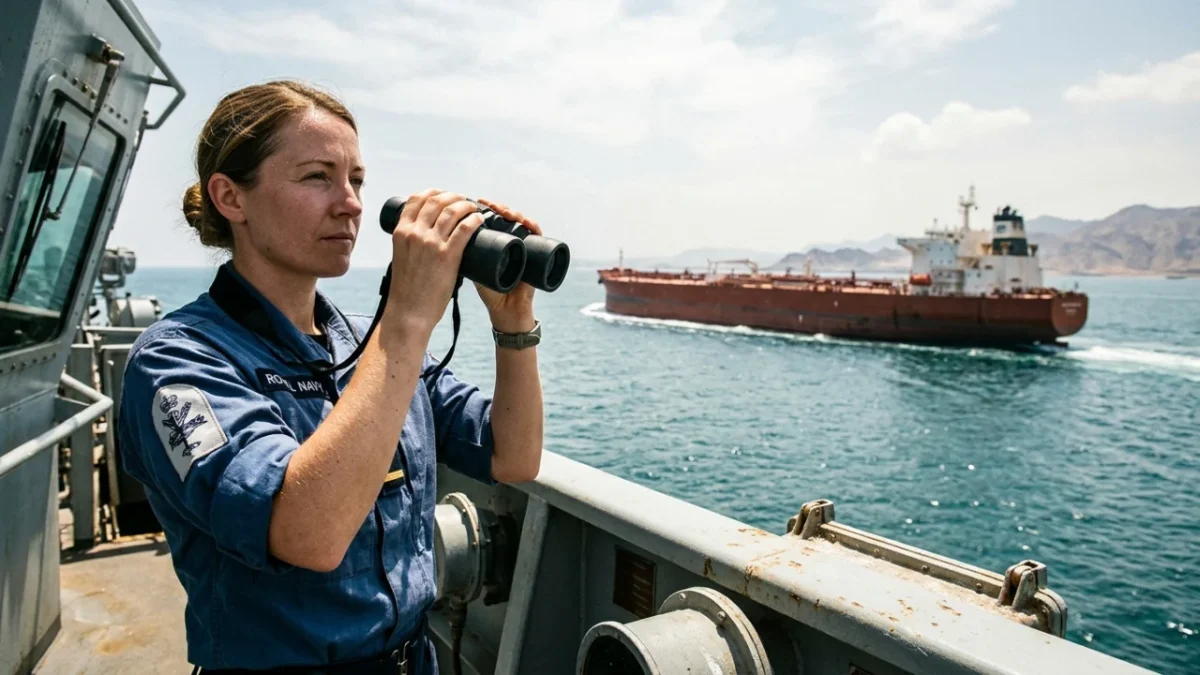
More than 1.5 billion barrels of crude oil have been shepherded through the volatile Strait of Hormuz under active Western naval protection, even as fresh claims emerge of commercial vessels being disabled in the world’s most precarious maritime choke point.
The monumental volume, confirmed by U.S. Central Command, highlights the sheer military force required to keep global fuel flowing amid persistent conflict with Iran. With international crude markets pricing Brent at sustained highs above $115 a barrel, every vessel making the journey carries immense economic weight.
The waterway remains the vital artery for Persian Gulf crude bound for international markets, meaning any sudden closure would immediately hammer British forecourts and household energy costs.
The 1.5-Billion-Barrel Escort Operation
Addressing the maritime sector following a direct flight over the waterway, Admiral Brad Cooper confirmed that American and partner naval forces have sustained an unprecedented logistical shield. Over the past six months, CENTCOM has actively supported more than 3,000 commercial vessels attempting the crossing.
Crucially, military officials declared that the international shipping channels are now cleared of naval mines laid by Iran’s Islamic Revolutionary Guard Corps (IRGC). The operations have established a 95 per cent incident-free transit rate for commercial shipping navigating the passage.
Admiral Cooper affirmed that American forces intend to stand alongside international shipping firms and regional partners to ensure open sea lanes, asserting that commercial flows through the corridor have recovered significantly over the past two months.
Tanker tracking data confirms that non-Iranian volumes moving through the passage have now rebounded above pre-war baselines. Yet beneath the veneer of operational control, the corridor remains an active combat theatre.
Shadow Warfare Beneath the Flight Path
The projection of strength has not gone unchallenged. Almost simultaneously with Admiral Cooper’s high-profile reconnaissance flight, Iranian sources claimed to have disabled another commercial tanker attempting the transit, while IRGC spokesmen publicly mocked the American inspection operation.
The conflicting claims expose the hazardous lag between tactical incidents at sea and verified public disclosures. While naval coalitions insist they control the shipping lanes, rogue drone strikes, fast-boat harassment, and asymmetric electronic warfare continue to threaten merchant sailors.
- 1.5 Billion Barrels: The total volume of oil safely guided through the corridor during the active conflict phase.
- 3,000 Commercial Ships: Merchant vessels escorted through the strait with coalition backing over the last six months.
- 95% Success Rate: The proportion of commercial passages executed without hostile disruption.
- Mine Clearance Operations: Full sweep and neutralisation of explosive ordnance deployed across international lanes.
The Market Pressure Facing the UK
For Britain, the stakes could hardly be higher. The UK remains acutely vulnerable to swings in global crude prices, which dictate the landed cost of refined fuels and heavily influence broader domestic inflation figures.
Brent crude remains entrenched above $115 per barrel, with West Texas Intermediate hovering past $100. Energy analysts warn that any single strike capable of halting commercial maritime insurance would trigger an immediate supply squeeze across Europe.
Escalating regional friction involving Saudi-Houthi tensions further complicates the security architecture. Even with naval escorts holding the line, shipping syndicates are pricing significant war-risk premiums into every single voyage.
A Razor-Thin Margin of Safety
Naval commanders maintain that the route is functioning at full commercial scale rather than on an intermittent basis. But merchant shipping companies operate on confidence, not just statistical assurances.
When insurance underwriters face persistent reports of vessel damage, transit fees soar. The extra financial burden ripples downstream, eventually hitting British consumers through elevated transport, logistics, and retail overheads.
The reality along the waterline is clear: the energy corridor is open, but only because an armada of allied naval power is physically keeping the gates unlocked against relentless pressure.
🔍 As Western task forces work round the clock to maintain crude supplies, the margin between energy stability and a crippling price spike remains paper-thin.
💡 Navigating these volatile waters demands permanent surveillance, with regional actors constantly testing the coalition’s deterrence limits.
📌 How should the UK and its international allies respond if further commercial tankers are disabled in strategic international corridors? Share your thoughts below.
 1
 2
 3
 4