
Why a Renowned Jeweler Mailed the Priceless Hope Diamond to the Smithsonian in a Plain Brown Paper Package for Just $145


In November 1958, American jeweler Harry Winston delivered the world-famous, 45.52-carat Hope Diamond to the Smithsonian Institution by wrapping it in ordinary brown paper and handing it to the United States postal service. The registered mail delivery cost exactly $145.29, with the bulk of that fee paying for insurance against the stone’s then-estimated $1 million valuation.
Instead of hiring private armed escorts or orchestrating a secret transport convoy, Winston simply sent the priceless gem on a routine journey from New York City to Washington, DC. The parcel arrived safely without incident, marking one of the most audacious logistical decisions in museum history.
Today, the original brown-paper wrapping sits preserved inside the Smithsonian’s National Postal Museum as physical proof of the unconventional crossing.
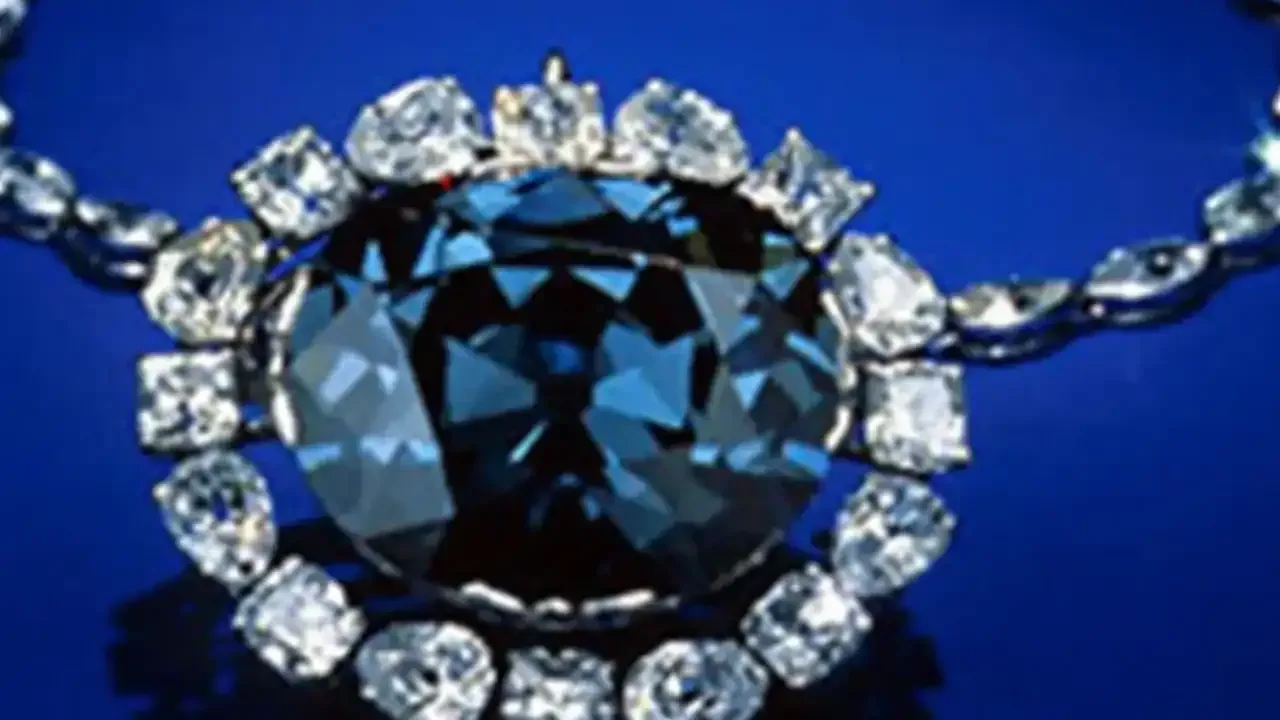
The Hope Diamond.
From Indian Mines to European Royalty
The documented history of the stone stretches back across centuries and continents long before its postal adventure. Discovered in India before 1668, it originally weighed approximately 112 carats and entered the French royal treasury after King Louis XIV acquired it, earning the name “the French Blue.”
The gem vanished during the chaos of the French Revolution when thieves looted royal assets. Decades later, a recut version resurfaced in London during the early 19th century.
By 1830, British banker and avid gem collector Henry Philip Hope purchased the stone, permanently linking his family name to the jewel.
The gem later crossed the Atlantic into American hands when Washington socialite Evalyn Walsh McLean bought it in 1912. Following McLean’s death, Winston purchased her entire jewelry collection in 1949, setting the stage for its permanent transfer into the public trust nearly a decade later.
The Curse Myth vs. Historical Reality
Widespread popular lore claims the Hope Diamond carries a deadly curse that inflicts financial ruin and tragedy upon anyone who owns it. Sensational stories frequently circulated in newspapers during McLean’s ownership, portraying the stone as an omen of persistent bad luck.
Historical records confirm that the supposed curse has no basis in factual evidence, having functioned primarily as a sensational publicity driver created by dealers and media outlets to heighten intrigue.
Winston rejected the superstition entirely. By donating the stone to establish a national gem collection, he transformed an object associated with elite private wealth into an educational resource open to the American public.
What Makes the Gemstone Scientifically Unique?
Beyond its dramatic history, gemologists regard the stone as a natural marvel due to several distinct physical characteristics:
- Record Carat Weight: At 45.52 carats, it remains the largest known fancy deep-blue diamond in existence.
- Chemical Composition: Its vivid coloration stems from trace amounts of boron integrated directly into the crystal structure.
- Rare Classification: The jewel belongs to the uncommon Type IIb category, meaning it exhibits semiconductor properties.
- Cartier Mounting: The stone sits in a historic setting designed by Pierre Cartier, framed by 16 alternating pear-shaped and cushion-cut white diamonds and anchored to a chain bearing 45 additional diamonds.
The Red Glow Phenomenon
One of the stone’s most striking attributes occurs completely in the dark. When exposed to short-wave ultraviolet light, the diamond exhibits vivid phosphorescence.
Instead of fading immediately when the light turns off, the gem glows with an intense fiery red luminescence that persists for several seconds. This rare optical reaction continues to make the stone a subject of serious geological study.
The Hope Diamond at a Glance
| Attribute | Historical & Physical Specification |
|---|---|
| Current Weight | 45.52 carats |
| Original Rough Weight | Approximately 112 carats (French Blue) |
| Color Cause | Trace boron inside crystal lattice |
| UV Light Reaction | Intense red phosphorescence |
| 1958 Transit Cost | $145.29 via registered US mail |
| Current Location | National Museum of Natural History (Washington, DC) |
A Permanent Fixture on the National Mall
The diamond resides in the Janet Annenberg Hooker Hall of Geology, Gems, and Minerals inside the Smithsonian’s National Museum of Natural History. Millions of visitors view the Cartier setting each year, catching a glimpse of a treasure that once belonged to French kings.
Yet among all its travels across oceans, palaces, and auction houses, the gem’s most famous single leg remains that simple mail run in 1958.
✨ A brown-paper parcel, standard postage, and a registered tracking stamp were all it took to transfer a priceless national icon to its permanent home.
💬 It stands as a reminder of an era when simple registered mail handled the most valuable parcel in American history without a single armed guard.
📱 Would you trust standard registered mail with an irreplaceable family heirloom today? Drop your thoughts in the comments below!
 1
 2
 3
 4
