
Fighter Jet Scrambles After Mid-Air Bomb Threat Diverts Passenger Plane: Inside the Wave of European Aviation Alerts

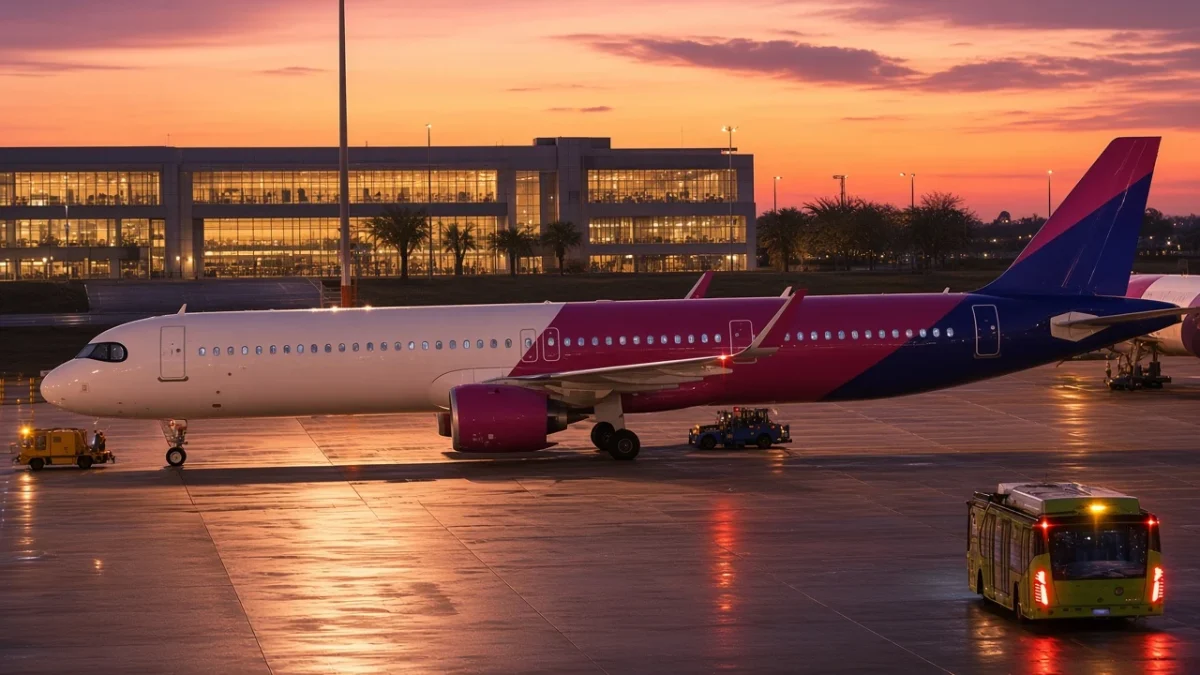
A commercial flight traveling from London to Bulgaria was intercepted in mid-air by a military fighter jet and forced to execute an emergency diversion after receiving an active mid-air bomb threat. The incident triggered high-level national defense protocols before emergency crews swept the passenger plane on the tarmac.
The disruption unfolded aboard Wizz Air flight 4302, which departed London Luton Airport bound for Sofia. Flight tracking records from FlightAware reveal the aircraft never made it to the Bulgarian capital, abruptly cutting its path short across Central Europe.
Instead, passengers watched as an armed military jet appeared off the wing to guide the commercial airliner directly into Budapest Liszt Ferenc International Airport.
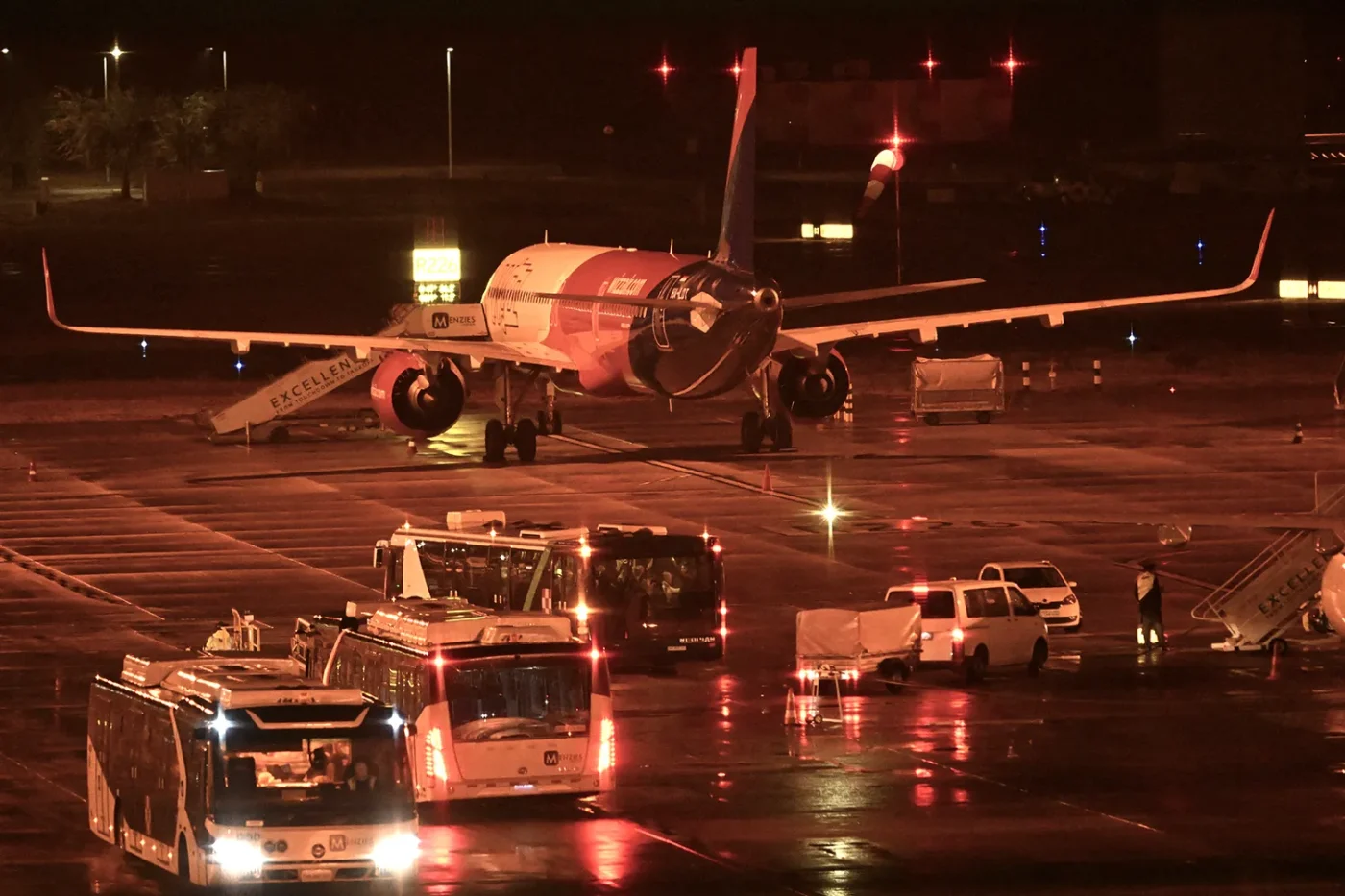
An aircraft operated by Hungarian low-cost airline Wizz Air on the tarmac at Budapest.
Fighter Jet Intercept in Hungarian Airspace
The pilot officially requested an emergency diversion to Budapest after the threat was received mid-flight. Hungary’s minister of defense, Romulus Ruszin-Szendi, confirmed the rapid military mobilization.
“Within minutes, a Hungarian Defence Forces Gripen fighter jet took to the skies and provided an escort for the passenger aircraft,” Ruszin-Szendi stated.
The fighter jet remained alongside the commercial carrier until it touched down safely in Budapest. Once on the ground, the military jet returned to base while local police units took control of the scene.
Protocol on the Tarmac
Following touchdown, standard international counter-threat procedures were executed immediately:
- The airliner was directed to an isolated, designated stand far from main terminal operations.
- Passengers and crew were disembarked to permit systematic security screening.
- Specialized security personnel carried out comprehensive physical inspections of the luggage and the aircraft interior.
An airline representative confirmed that emergency inspections were fully completed with nothing hazardous discovered on board. Officials have not established whether the warning was communicated from inside the cabin or called in from the ground.
A Coordinated Pattern of Airspace Disruption
The mid-air scare was not an isolated emergency. A sweeping wave of similar alerts targeted commercial transit routes immediately afterward.
International reports documented bomb threats against at least seven additional passenger flights across Europe, alongside a threat directed at a cruise ship. The targeted commercial flights included routes headed to:
- Rome, Italy
- Sofia, Bulgaria
- Warsaw, Poland
- Murcia International Airport, Spain
Every targeted aircraft landed safely, and subsequent investigations confirmed that no explosives were present on any of the flights.
“The lack of clear target state, airline, or route indicates that general disruption to aviation operations is the aim,” said Rhys Jones, analysis output manager at aviation risk advisory firm Osprey Flight Solutions.
Incident Summary and Security Response
A closer look at how authorities handled the diversion reveals the precise scope of the security operation.
| Operational Parameter | Incident Details |
|---|---|
| Flight & Route | Wizz Air 4302 (London Luton to Sofia) |
| Military Response | Hungarian Defence Forces Gripen fighter escort |
| Emergency Landing Site | Budapest Liszt Ferenc International Airport |
| Inspection Findings | Cleared; zero explosives discovered |
| Additional Targets Reported | At least 7 European passenger planes and 1 cruise ship |
Addressing Aviation Threat Realities
A common public misconception is that an armed fighter jet escort indicates confirmed physical danger inside the cabin. In commercial aviation, military interceptors are deployed as an automatic safeguard to monitor aircraft communications and secure national airspace regardless of whether a threat is verified.
Another frequent assumption is that rapid diversions mean physical explosives were identified. In documented aviation security cases, standard protocol requires treating every unverified message as an active crisis until full ground checks prove otherwise.
Aviation authorities and defense personnel treat these incidents with absolute urgency to protect commercial transit corridors from widespread chaos.
💬 Commercial aviation protocols prioritize total passenger safety, even when threats turn out to be coordinated hoaxes.
✨ Rapid military response times demonstrate how tightly international air defense works alongside civilian air traffic controllers.
📱 Have you ever experienced a mid-air flight diversion? Share your thoughts and travel experiences below.
 1
 2
 3
 4
